
East Java Government Hopes TIN II Persagi Recommendations Strengthen Free Nutritious Meal Programme
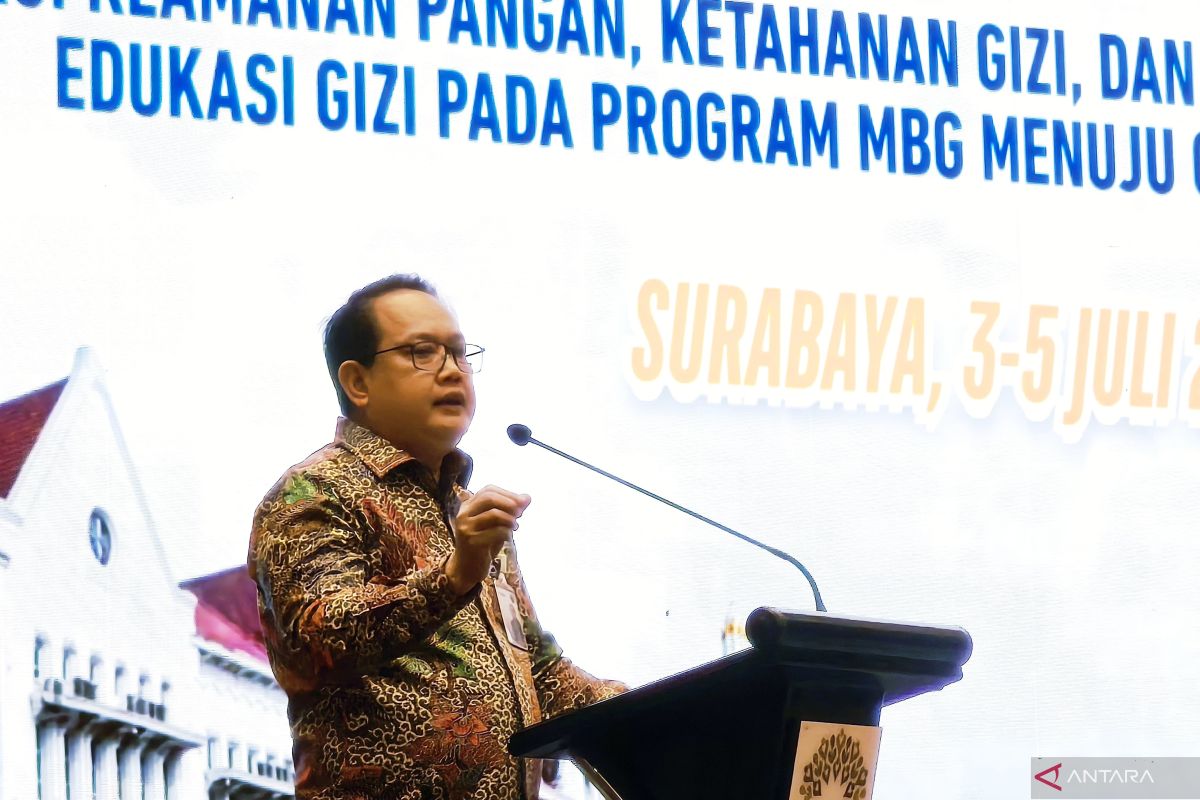
Surabaya (ANTARA) - The East Java Provincial Government hopes that the recommendations produced during the Second National Scientific Meeting (TIN II) of the Indonesian Nutritionists Association (Persagi) can strengthen the implementation of the Free Nutritious Meal (MBG) Programme, covering aspects of food safety, nutritional quality, and management.
East Java Provincial Secretary Adhy Karyono stated that the forum, attended by nutritionists from various regions, serves as a platform to formulate various science-based inputs to support the national priority programme. “We are actually waiting for what else we need to do regarding various issues and efforts to improve public health through nutritious food management,” Adhy said on the sidelines of the TIN II Persagi event in Surabaya, East Java, on Friday.
He explained that the MBG programme not only impacts the health improvement of children, Islamic boarding school students, pregnant women, and toddlers but also creates a multiplier effect on East Java’s economy through the involvement of farmers, livestock breeders, fishermen, and MSMEs in the food supply chain. He further added that synergy among all stakeholders is key to ensuring the programme runs according to expected standards. “This simultaneously empowers MSMEs as part of the food supply chain,” he said.
Meanwhile, General Chairperson of the Persagi Central Executive Board, Doddy Izwardy, appreciated the East Java Provincial Government, which has successfully reduced the stunting prevalence from 17.7 percent to 14.7 percent, making it one of the provinces with the best achievements in Indonesia. “East Java’s success in reducing the stunting rate shows that synergy between the regional government and various stakeholders can strengthen community nutrition development,” said Doddy.
According to him, the results of the discussions during TIN II will be compiled into recommendations to be submitted to the government, as well as serving as input for the East Java Provincial Government to continue improving the quality of the MBG implementation and nutrition development in the region. Doddy hopes that East Java’s achievements can be maintained to support the national target for reducing stunting prevalence. “East Java’s experience in building collaboration between the government, health workers, academics, and business actors can serve as a reference for other regions in strengthening nutrition development,” he said.