
East Java Education Office Opens Two-Day Simulation for 2026 Student Admission Process
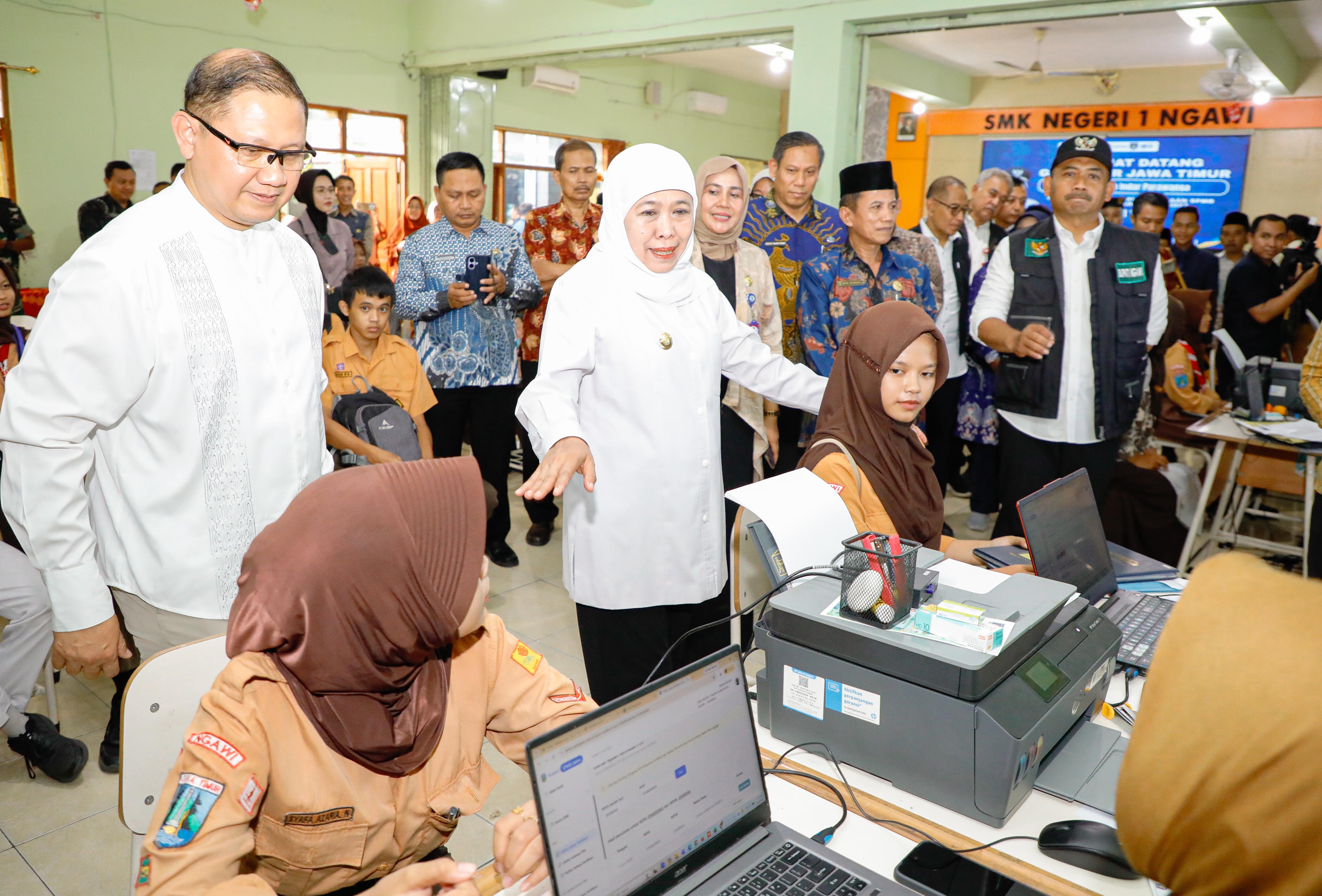
The East Java Provincial Education Office (Dindik Jatim) has officially organised a simulation for the 2026 Student Admission System (SPMB) registration, held on Monday (8/6) and Tuesday (9/6). The simulation is designed to help prospective students understand the implementation flow of the 2026 East Java SPMB registration.
“We have prepared this simulation to provide an opportunity for prospective students or parents to better understand the online registration mechanism and to avoid errors during the selection process,” said the Head of the East Java Education Office, Aries Agung Paewai, in Surabaya on Monday (8/6).
In accordance with the schedule established by the East Java Education Office, the 2026 SPMB registration period will commence on Thursday (11/6). Applicants are encouraged to utilise these two days to conduct simulations.
According to Aries, the SPMB simulation was prepared while the current stage of the process is still in the PIN collection phase, which continues until 9 June. Obtaining a PIN is a primary requirement for prospective students wishing to register for state Senior High Schools (SMA) and Vocational High Schools (SMK) in East Java.
Aries explained that after entering data online via the SPMB Jatim website, prospective students must undergo data verification and validation at a school recommended by the system. Once this process is complete, the PIN can be downloaded to facilitate the registration process.
In addition to reminding the public about the importance of collecting the PIN, Aries also urged the community to understand the regulations for each admission track, particularly the SMA domicile track, which has opened earlier this year compared to previous years.
He noted that many members of the public still mistakenly believe that the domicile track is determined solely by the proximity of the home to the school. In reality, the selection process continues to prioritise academic grades, with domicile acting as a secondary consideration.
“There are still members of the public who believe the SMA domicile track is based only on the distance of the house from the school. However, academic grades are prioritised first, followed by domicile,” he said.