
East Java Conducts Ramadan Moon Sighting Observations at 21 Locations
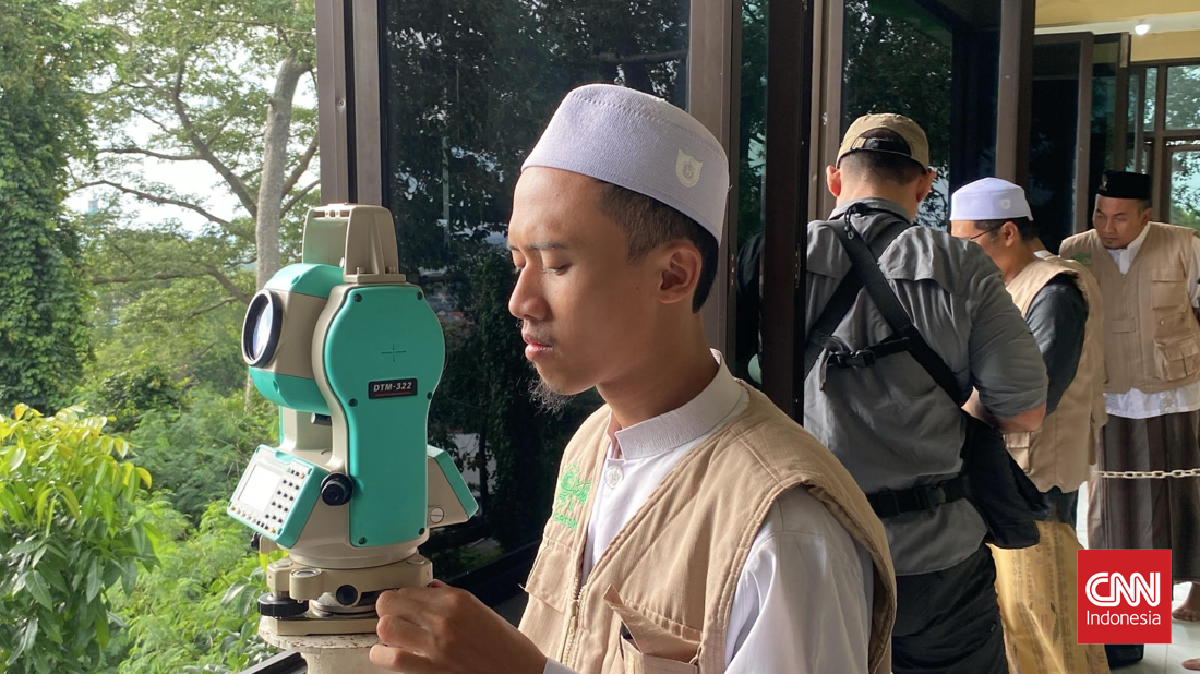
The East Java regional office (Kanwil) of the Ministry of Religious Affairs (Kemenag) carried out rukyatul hilal — the observation of the new crescent moon — to determine the beginning of Ramadan 1447 H on Tuesday (17 February).
Munir, Head of Islamic Religious Affairs at the East Java Kanwil Kemenag, said the hilal observation was conducted from sunset (ghurub) and for some time afterwards at a number of strategic points across East Java.
“This year, based on data from the Mosque Affairs and Hisab Rukyat Team of the Islamic Religious Affairs Division at the East Java Provincial Kanwil Kemenag, the rukyatul hilal was carried out in 21 regencies and cities across East Java,” Munir said.
The 21 cities and regencies are Blitar City, Pacitan Regency, Banyuwangi Regency, Probolinggo Regency, Tuban Regency, Madiun Regency, Jombang Regency, Gresik Regency, Lumajang Regency, Blitar Regency, Jember Regency, Trenggalek Regency, Sampang Regency, Ngawi Regency, Pasuruan Regency, Malang Regency, Bondowoso Regency, Mojokerto Regency, Sumenep Regency, Lamongan Regency, and Ponorogo Regency.
“The observation locations were selectively chosen, taking into account an unobstructed western horizon, minimal light pollution, favourable atmospheric conditions, as well as accessibility and site security,” he said.
The rukyatul hilal exercise, Munir said, involved Ministry of Religious Affairs officials, Religious Court judges, Islamic civil society organisations, the Meteorology, Climatology and Geophysics Agency (BMKG), Islamic astronomy experts, universities, Islamic boarding schools, as well as religious and community leaders.
This cross-sector collaboration, according to Munir, aimed to ensure the rukyat process was conducted objectively, scientifically, and in accordance with sharia provisions and applicable regulations.
“Referring to the imkanur rukyat criteria of the Ministers of Religious Affairs of Brunei, Indonesia, Malaysia and Singapore (MABIMS), the hilal is deemed to meet the imkanur rukyat criteria if it has a minimum apparent altitude of 3 degrees and a minimum elongation of 6.4 degrees at sunset,” he said.
Elongation, or the angular distance between the moon and the sun, significantly influences the likelihood of the hilal being visible. The greater the elongation, the greater the chance of observing the hilal.
“The rukyat results from the regions will be reported in a tiered manner as material for consideration in the Isbat Session for the determination of the start of Ramadan by the Ministry of Religious Affairs of the Republic of Indonesia,” he said.
Furthermore, Munir said the rukyatul hilal was part of the state’s religious services to the Muslim community. His office ensured that the process was carried out in accordance with proper mechanisms and professional standards.
“The implementation of this rukyatul hilal is a form of scientific and sharia-based endeavour in determining the start of Ramadan. We ensure the process is carried out professionally, involving Islamic astronomy experts and relevant parties, and referring to agreed-upon criteria,” he said.
He added that field challenges such as limited suitable locations, difficult access, and weather conditions including thick cloud cover or overcast skies often served as determining factors in the success of observations.
Through this rukyatul hilal exercise, the East Java Kanwil Kemenag hoped that the determination of the start of Ramadan 1447 H would provide certainty and reassurance for the Muslim community in welcoming the holy month with full readiness and solemnity.
“Nevertheless, we remain optimistic and committed to carrying out the rukyat in a transparent and accountable manner. The results will be reported as part of the material for consideration at the Isbat Session at the national level,” he said.