
East Java at 81: From Strength to Progress People Can Feel
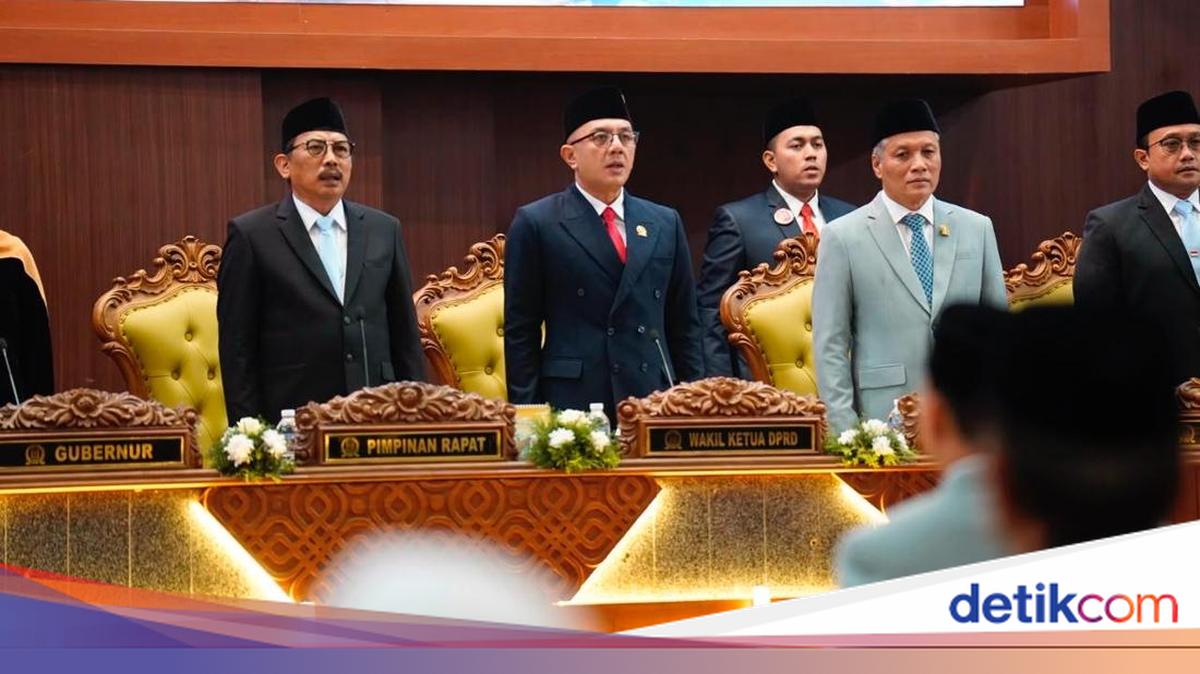
East Java’s 81st anniversary is worth celebrating with gratitude, but also with the courage to reflect. The theme, “Leading East Java, Advancing Sustainably”, carries three words that entail significant responsibilities. Leadership must have a solid basis, progress must be felt by the public, and sustainability requires that today’s development does not come at the expense of future generations’ opportunities.
East Java has plenty of reasons to be confident. Its economy grew by 5.72% in the second quarter of 2026 compared with the same period a year earlier. Gross regional domestic product (GRDP) reached Rp930 trillion in a single quarter. Investment is also advancing: in the first half of 2026, realised investment amounted to around Rp72.7 trillion, across tens of thousands of projects.
The labour market has also shown positive signs. The open unemployment rate stood at 3.42% in May 2026. Poverty fell to 9.06% in March 2026, or around 3.71 million people. In six months, about 92,000 people moved out of poverty.
These figures deserve recognition. But a provincial anniversary should also be an opportunity to consider what remains unfinished. Behind growth of 5.72%, 3.71 million residents still live below the poverty line. Despite falling unemployment, only about 36% of East Java’s workers are in formal employment. And amid fairly strong economic growth, the Gini ratio rose from 0.359 in September 2025 to 0.365 in March 2026.
East Java’s next challenges are therefore becoming more complex. Pursuing growth remains important, but ensuring that people share in that growth is just as important.
A New Gateway to the Archipelago
In recent years, the idea of making East Java a New Gateway to the Archipelago has gained traction. Given the province’s geographical position and economic structure, the idea makes sense.
East Java has ports, airports, toll roads, industrial estates, a manufacturing base, agriculture, fisheries, universities and a population of more than 40 million. It is also strategically placed to connect economic activity between western and eastern Indonesia. But geographical advantage is a starting point, not an end in itself.
A large port does not automatically mean low logistics costs. An extensive toll-road network does not necessarily make supply chains efficient. Industrial estates will not automatically attract investment if electricity, gas, water, port access and permits are not available on time. The New Gateway to the Archipelago must therefore be translated from a geographical slogan into an economic strategy.
The question is simple: why should goods, people, capital, talent and investment choose East Java?
The answer cannot simply be that East Java is in a strategic location. It must offer speed, certainty, competitive costs, connectivity and quality services. That is how geographical advantage becomes competitive advantage.
Do Not Settle for Being a Transit Point
There is a risk to anticipate in the gateway idea: East Java could become a busy transit point while the greatest value is created elsewhere.
The latest trade figures offer a warning. From January to August 2026, East Java’s exports totalled around US$18.61 billion, down 4.91% on the same period a year earlier. Imports, meanwhile, reached US$22.13 billion, up 15.49%. The province recorded a trade deficit of about US$3.52 billion.
Trade figures should, of course, be read with care, since imports of raw materials and capital goods can signal production and investment activity. But they also serve as a reminder that export competitiveness and industry’s ability to create added value need to be strengthened.
If raw materials from different regions enter through East Java, the goal should not stop at ensuring smooth distribution. Wherever possible, they should be processed in East Java, using East Javanese workers, involving local industries and micro, small and medium-sized enterprises (MSMEs), drawing on local logistics and financial services, and then sold to domestic and international markets.
That is how the New Gateway to the Archipelago can become a gateway to prosperity.
We need to shift the question from “How many tonnes of goods pass through East Java?” to “How much added value stays in East Java?”
Growth and Job Quality
The same issue is visible in employment. In May 2026, around 24.46 million East Java residents were working. An unemployment rate of 3.42% is a fairly strong achievement. However, only 36.18% of workers are in formal employment. This means most employed residents still work in the informal sector.
This is one of East Java’s major development challenges for the coming decade. The measure of success in job creation needs to move beyond the number of people employed to the quality of jobs available.
Young people in East Java need jobs with rising productivity and incomes. New industries entering the province should facilitate skills transfer. Vocational high schools, polytechnics and universities must become more closely aligned with industry needs.
Investment of Rp72.7 trillion is certainly good news. The next step is to ensure that every investment generates multiplier effects for the local economy. How many local workers are hired? How many local suppliers join supply chains? How many MSMEs move up the value chain? How much new technology and how many skills are transferred? Ultimately, the quality of investment matters as much as its value.
Growth Must Have a Place
The next task is to make development more evenly distributed. East Java comprises 38 regencies and cities with widely differing economic characteristics. There is metropolitan Surabaya and its surrounding industrial areas, as well as Madura, the Tapal Kuda region, the northern coast, Mataraman, the southern region and island communities, each facing distinct development challenges. Provincial growth figures must not make us lose sight of these regional differences. Growth must have a place.
We need to know which regions receive investment, where jobs are created, which economic centres infrastructure is built to connect, and where poverty is falling fastest or remains stubbornly high. The New Gateway to the Archipelago must also be a project to distribute growth across regions.
Surabaya and Gerbangkertosusila will remain important growth engines. But new engines must also emerge in Madura, the southern region, Mataraman, Tapal Kuda and other areas, building on their respective strengths.
If connectivity improves but economic activity remains concentrated in the same places, we will merely move people and goods faster; we will not have changed the region’s economic structure.
The Harder-to-Reach Poverty Challenge
The fall in the poverty rate to 9.06% deserves recognition. Yet around 3.71 million people in East Java remain poor.
As poverty rates decline, the circumstances of those still in poverty tend to become more complex. They may face a combination of problems involving employment, education, health, asset ownership, housing conditions, transport access and vulnerability to food-price rises.
Future poverty-reduction programmes must therefore be increasingly precise. Interventions for poor farming families will differ from those for poor urban households. The challenges faced by island fishing communities differ from those confronting informal workers in metropolitan areas.
Data must inform policy down to the level of individual families and local areas. Social assistance remains necessary to protect those in need. But the long-term route out of poverty is productivity: jobs, skills, access to capital and markets, education and healthcare.
Human Capital as the Main Infrastructure
East Java often discusses roads, ports, airports and industrial estates as development infrastructure. At 81, it is time to place people more firmly at the centre—as the province’s principal infrastructure.
East Java’s Human Development Index reached 76.13 in 2025 and continues to rise. But the average length of schooling for residents aged 25 and over is only 8.39 years. That figure should prompt reflection.
The ambition to become a centre for industry, logistics, the digital economy, new energy, agro-industry and other industries of the future requires continuous improvements in human capital.
Vocational education needs to align more closely with the economic needs of each region. Vocational schools in industrial areas should be connected to industry. Education in agricultural centres should introduce modern farming technology. Coastal areas need maritime economic skills. Universities should become stronger sources of innovation for industry and local government.
Developing people takes longer than building a building. But the results will determine East Java’s competitiveness for decades.
From Agency Programmes to a Shared Mission
The New Gateway to the Archipelago and the goal of a leading East Java face a classic challenge of government: development problems cut across sectors, while the bureaucracy is organised by areas of responsibility. Investors do not look at the government’s organisational chart.
Investors want to know whether land is ready, permits are processed quickly, electricity is available, roads to ports are clear, workers can be found and regulations are reliable. The public, too, is not particularly concerned with which government agency is responsible. They want their problems solved.
Government must therefore move from a programme-based approach towards one centred on missions. Every agency should be able to answer the question: what concrete contribution does this institution make to East Java’s broader goals?
If the goal is to reduce logistics costs, all relevant agencies must work towards the same indicators. If the aim is to increase investment, spatial planning, energy, labour, infrastructure and permits must be coordinated.
The regional budget should then serve as an instrument for achieving these missions, rather than as a collection of activities run by different agencies.
Time to Measure Outcomes
At 81, East Java should also be more willing to assess development by the results people experience. For the New Gateway to the Archipelago, for example, the province could produce a simple, open scorecard.
What are East Java’s logistics costs? How long does it take to move goods from production centres to ports? How long does it take for an investment to become operational after a commitment is made? How long do electricity and gas connections take? What is the value of exports? How many new processing industries have been established? How many formal jobs have been created? How much investment has reached areas beyond the established growth centres?
Such measures would allow the public to follow development from year to year.
They would also give the provincial legislature a stronger basis for carrying out its budgetary and oversight functions. Debate over the regional budget could then move from “How large is the budget?” to “What changes has it delivered?”
That is the kind of accountability that is increasingly needed.
East Java After 81 Years
The theme “Leading East Java, Advancing Sustainably” should be understood as a task for the years ahead. Leading means that East Java has the productivity, human capital and public services to compete. Advancing means that economic growth creates jobs, raises incomes and opens up opportunities for young people. Sustainable means that development protects the environment, strengthens food and energy security, and ensures that future generations have greater opportunities than today’s.
East Java already has substantial assets to make this a reality. The economy is growing, its industrial base is strong, investment is moving, infrastructure is in place, the market is large and its geographical position is highly strategic.
But the province’s 81st anniversary reminds us that development is always unfinished work. Some 3.71 million people remain poor. Formal employment needs to expand. Inequality must be kept in check. Exports are under pressure. Human capital must continue to improve. Growth needs to be more evenly shared across regions. East Java’s anniversary should therefore be an opportunity to bring optimism together with evaluation.
East Java is not short of potential. Our greatest challenge is to organise that potential into progress that people can feel.
The New Gateway to the Archipelago will fulfil its promise when ports give rise to industries, investment creates good-quality jobs, growth reaches villages, education enables social mobility, and the regional budget delivers measurable change.
Ultimately, a leading province is not defined by the size of its economy, but by the opportunities it gives its people to live better lives.
Happy 81st anniversary, East Java.
It is time to move from the strengths we possess towards progress that people can truly feel.