
East Jakarta Water Resources Agency Revitalises Water Channels in Batu Ampar to Prevent Flooding
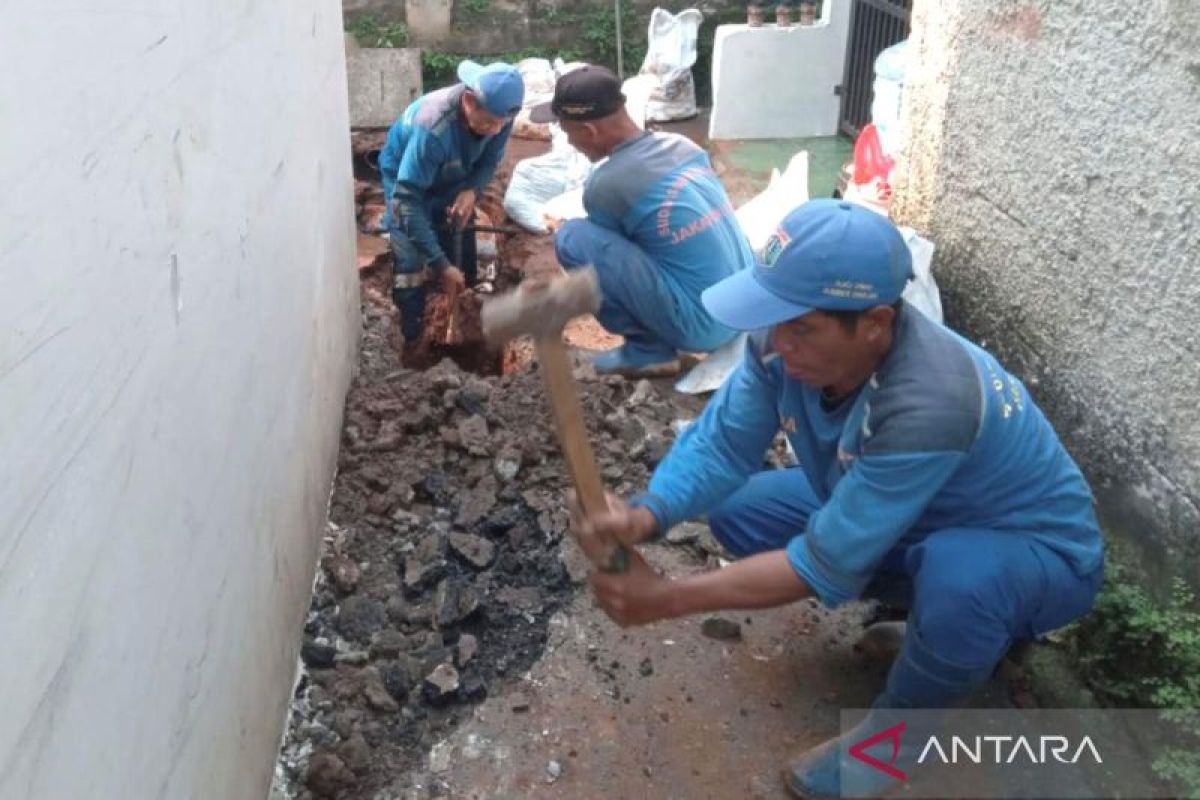
Jakarta (ANTARA) - The East Jakarta Municipal Government, through the Water Resources Sub-agency (SDA), is revitalising a water channel on Jalan Haji Deris, RT 17/RW 02, Batu Ampar Urban Village, Kramat Jati District, to prevent flooding.
“We continue to strengthen efforts to deal with inundation while improving the quality of residential environments through various basic infrastructure developments,” said Mulyadi of the Kramat Jati District SDA Task Force in East Jakarta on Thursday.
The work, carried out by the Kramat Jati District Water Resources Task Force, began on Tuesday (2/6). Seven SDA personnel have been deployed to complete the construction of the water channel, which is targeted for completion within three weeks.
Mulyadi stated that the revitalisation is a response to residents’ complaints regarding the frequent overflow of water onto road surfaces during high-intensity rainfall. This condition has been deemed disruptive to community activities and increases the potential for inundation and flooding in residential areas.
In this project, the old channel, which previously used three-inch diameter PVC pipe, is being replaced with a five-inch diameter pipe spanning approximately 90 metres. According to him, increasing the channel’s capacity is one solution deemed effective for smoothing the flow of rainwater towards the disposal channels, so the risk of inundation can be significantly reduced.
“With a larger pipe diameter, the water flow capacity will increase. The hope is that when heavy rain falls, water can flow more quickly and no longer overflow onto the road or residential environment,” Mulyadi explained.
Although classified as a small-scale environmental infrastructure project, the team faced several technical challenges during construction. The entire process was carried out manually by digging soil along the new pipe installation route. This method was chosen because the location has limited access. The work path is only about 80 to 100 centimetres wide with a winding contour, making it impossible to use heavy equipment or certain construction methods.
A construction alternative using precast concrete or U-ditch could also not be applied due to the limited working space and the difficulty of mobilising large materials to the site. However, these obstacles did not hinder the construction process. The work continues to run smoothly thanks to the collaboration established between the government and the local community.