
East Jakarta City Government Facilitates Separate Waste Bags in Residential Areas
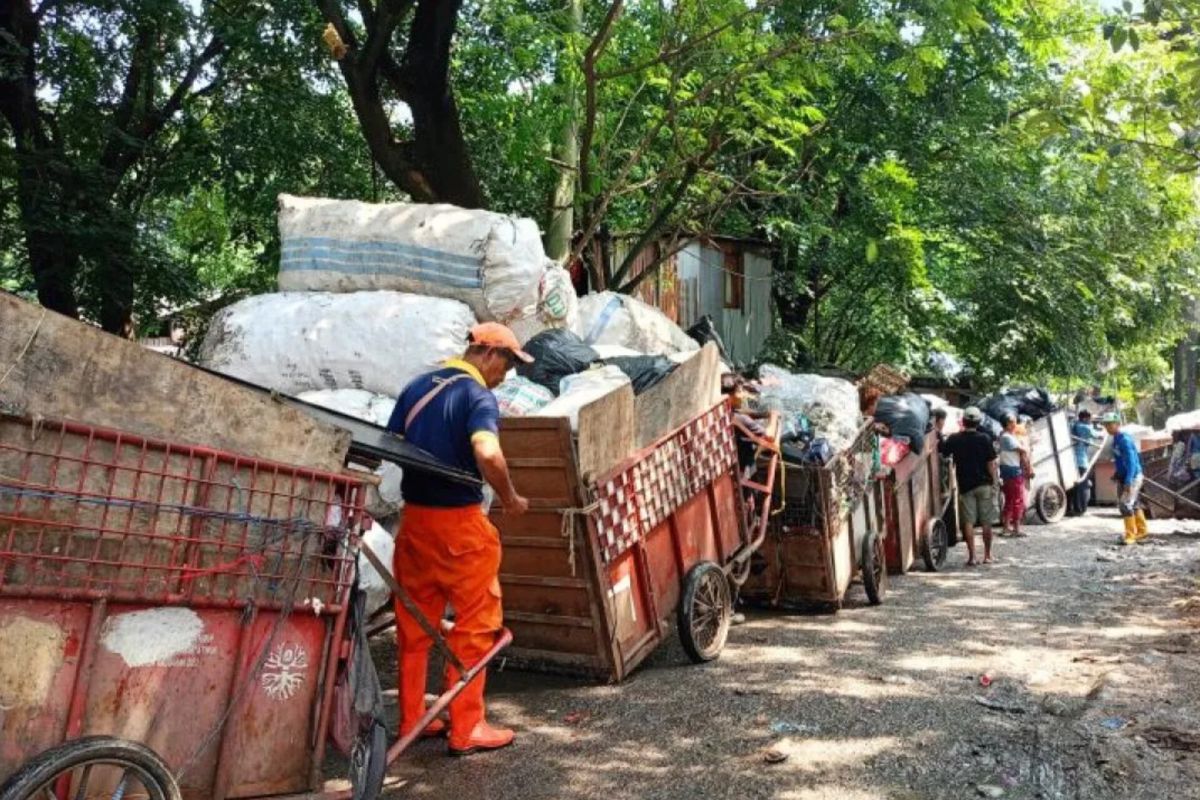
Jakarta (ANTARA) - The East Jakarta City Government (Pemkot Jaktim) is strengthening source-based waste management efforts by facilitating the provision of separate waste bags in residents’ residential areas.
“The aim is for the waste to already be separated when it is collected into carts, so it does not get mixed again,” said the Mayor of East Jakarta, Munjirin, at the East Jakarta Mayor’s Office on Tuesday.
The provision of separate waste bags will be carried out through a corporate social responsibility (CSR) programme by PT Jakarta Propertindo.
This facility is designed to help residents separate organic and inorganic waste before it is collected by officers.
According to Munjirin, the availability of separate waste bags is key to ensuring that the sorting process runs effectively and does not get mixed again during transportation.
“This step is expected to encourage changes in community behaviour in sorting waste from households,” said Munjirin.
This policy is part of the larger integrated waste management scheme in East Jakarta.
In this system, sorted inorganic waste will be sent to the Ciracas Plastic Recycling Centre (PDUP) for recycling.
Meanwhile, organic waste is expected to be utilised by the community through composting methods or maggot cultivation.
Residual waste that cannot be processed will be taken to the Bantargebang Integrated Waste Processing Site (TPST).
With this pattern, the volume of waste sent to Bantargebang is targeted to be significantly reduced, while also alleviating the burden on the facility which is currently facing capacity pressures.
As an initial implementation stage, Munjirin has given two weeks for socialisation down to the Neighbourhood Unit (RT) and Community Unit (RW) levels.
During that period, residents are asked to deliberate to agree on joint commitments regarding the obligation to sort waste.
According to Munjirin, this participatory approach is important so that the policy can be consistently implemented in the field.
He also emphasised that sanctions for residents who do not carry out waste sorting will be determined through community forums at the RT and RW levels.
“I request two weeks for socialisation downwards. After that, it must be implemented. At the RW and RT levels, residents are asked to deliberate to determine joint commitments, including sanctions for those who do not sort waste,” explained Munjirin.
Furthermore, Munjirin hopes that through the provision of separate waste bags in residential areas, community awareness and participation in waste management can increase.
This policy also serves as a strategic step to reduce dependence on TPST Bantargebang and create a cleaner and more sustainable environment.
Previously, the East Jakarta City Government held a monitoring and evaluation meeting on the delivery of inorganic waste to the Ciracas Plastic Recycling Centre (PDUP) at the Bambu Apus Multipurpose Room, East Jakarta Mayor’s Office, on Monday (6/4).
That meeting was a follow-up to the Governor of DKI Jakarta’s instructions regarding restrictions on waste disposal to TPST Bantargebang, which has currently exceeded capacity.
They are collaborating with the Ciracas Plastic Recycling Centre (PDUP) to manage inorganic waste.
In addition, the Waste Bank Task Force (Satgas) in each ward, which has been formed through the Mayor’s Circular Number e-0005/SE/2026, is also being optimised in its role.
This task force is responsible for coordinating the delivery of inorganic waste from Waste Bank Units to PDUP Ciracas, while also reporting activities through the provided online system.