
Earth's Rotation Slowing, Unprecedented in 3.6 Million Years
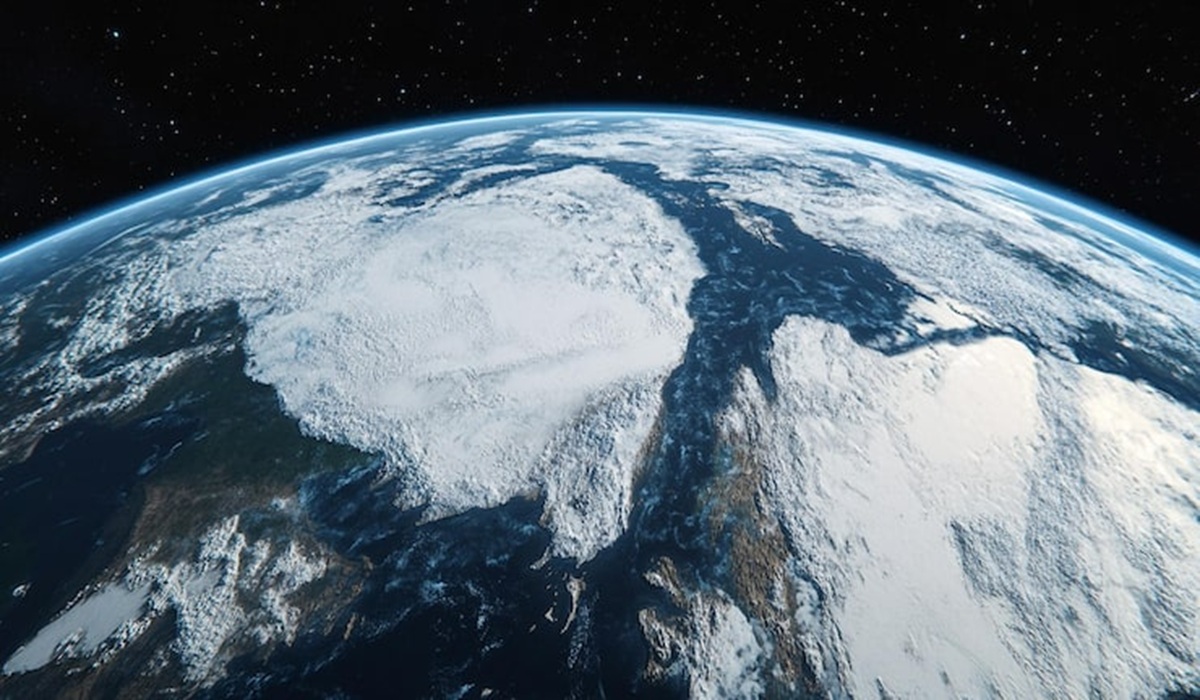
A recent study has revealed that climate change, driven by human activity, is now affecting the speed of Earth’s rotation and causing the length of a day to increase gradually. Although the change occurs in mere fractions of a millisecond, scientists describe this phenomenon as something unprecedented in at least the last 3.6 million years.
Research conducted by a team of scientists from the University of Vienna and ETH Zurich shows that the melting of polar ice caps and glaciers due to global warming has altered the distribution of Earth’s mass. Water previously stored as ice in polar regions is flowing into the oceans and spreading across various regions, particularly towards the equator. This redistribution of mass is causing the Earth’s rotation to slow down. Researchers liken this to a figure skater extending their arms while spinning; as the mass moves further from the centre of rotation, the rotational speed decreases.
In daily life, humans will not feel this change directly. However, scientifically, the length of one day on Earth is now increasing by about 1.33 milliseconds every century due to climate change. While this figure may sound minuscule, scientists emphasise that such a small change requires an extraordinary displacement of mass. Professor Benedikt Soja from ETH Zurich, one of the study’s authors, explained that this change in day length is equivalent to the movement of approximately 1,000 gigatonnes of mass from the poles to the oceans. To visualise this, he suggested imagining a solid ice cube 10 kilometres high standing atop New York City, a height exceeding that of Mount Everest.
Dr Mostafa Kiani Shahvandi from the University of Vienna, the lead author of the study, added that the energy involved in this rotational change is immense, equivalent to a magnitude 9.0 earthquake. He clarified that this comparison describes the scale of energy working within the Earth’s system rather than the level of destruction.
To determine if similar phenomena have occurred previously, researchers traced geological records back 3.6 million years using fossils of single-celled marine organisms known as benthic foraminifera. The chemical composition in their shells preserves information regarding past sea-level changes. Using specialised machine learning algorithms to handle uncertainties in ancient geological data, the analysis showed that the current rate of rotational slowing is the most prominent in the entire traceable record. While a period approximately two million years ago saw a similar rate, that event was caused by a rare combination of natural factors, including natural CO2 surges and large-scale ice melting. Scientists note that such an event has not recurred naturally since then, yet human activity is producing a comparable impact in just over a century.
While Earth’s rotation is traditionally influenced by the Moon’s gravitational pull, internal Earth processes, and atmospheric changes, this study shows that climate change is now becoming a primary factor. If greenhouse gas emissions continue to rise and fossil fuel use is not reduced, the influence of climate change is expected to surpass the impact of the Moon’s gravity by the end of this century. Although the consequences will not drastically alter human life in the short term, these changes are critical for modern technologies relying on high-precision timing, such as GPS navigation on Earth and spacecraft navigation throughout the solar system.