
Earth's Core Temperature Mystery: Extreme Heat Matching the Sun's Surface
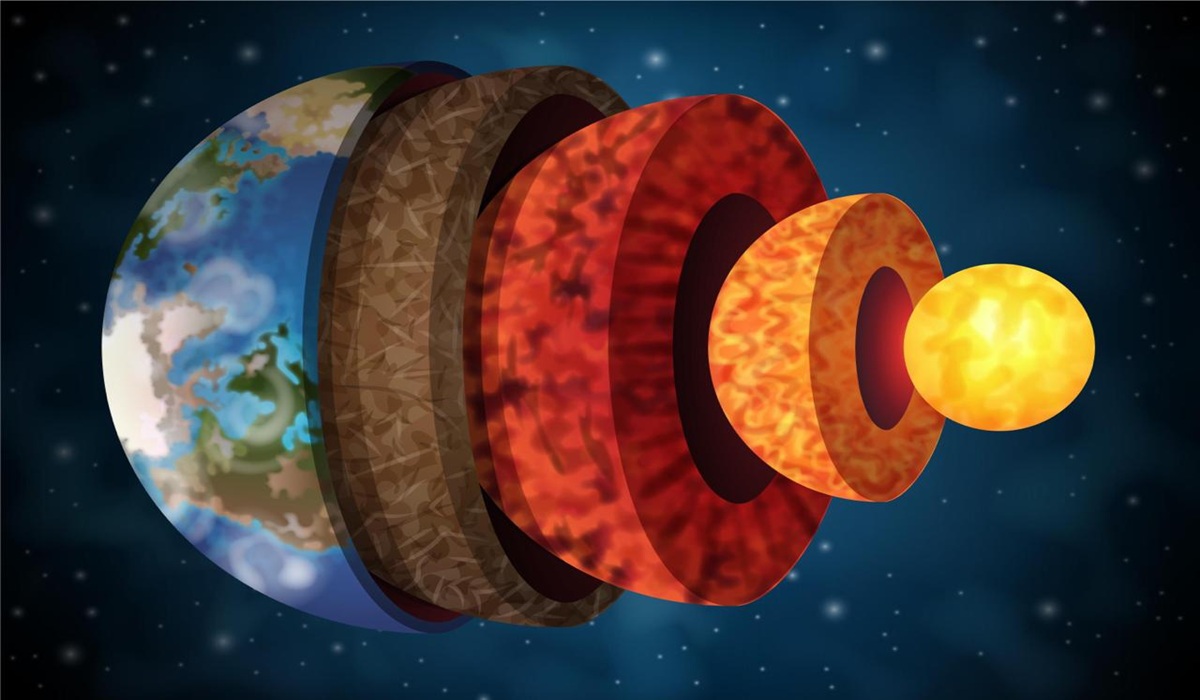
The centre of our planet remains one of the most mysterious regions in the universe. Despite humans landing on the Moon and sending probes beyond the solar system, penetrating Earth’s depths remains physically impossible. However, modern research has revealed a startling fact: the temperature in Earth’s inner core is equivalent to that of the Sun’s surface.
Structurally, Earth comprises four main layers: the crust, mantle, outer core, and inner core. The inner core lies approximately 5,100 kilometres beneath our feet. Since direct drilling to such depths is impossible, scientists rely on seismic wave analysis from earthquakes.
These waves act like an ‘ultrasound’ for the planet. Variations in wave speed as they pass through different materials indicate that the outer core is liquid, while the inner core remains solid. This solid inner core is a unique phenomenon; despite the extreme heat, immense pressure at Earth’s centre forces iron and nickel to stay in a solid state.
Beyond seismic data, researchers use advanced technology called a diamond anvil cell. This device squeezes tiny iron samples between two diamonds to replicate the pressure at Earth’s core, then heats them with lasers to simulate extreme temperatures.
Research from the French Alternative Energies and Atomic Energy Commission (CEA) provided crucial data on iron’s melting point under such conditions. The following details the characteristics of Earth’s core layers based on geophysical research: The heat stored in Earth’s core is not merely scientific data but the primary engine sustaining life. The movement of liquid metal in the outer core generates a dynamo effect, creating Earth’s magnetic field. This invisible shield protects our atmosphere from deadly solar radiation.
Without the extreme heat and activity in the planet’s core, Earth would become a dead world like Mars, which lost its magnetic field. Therefore, understanding the dynamics at these depths is key to comprehending our planet’s future habitability.