
Earth's Core: Extreme Temperatures That Sustain Life on Earth
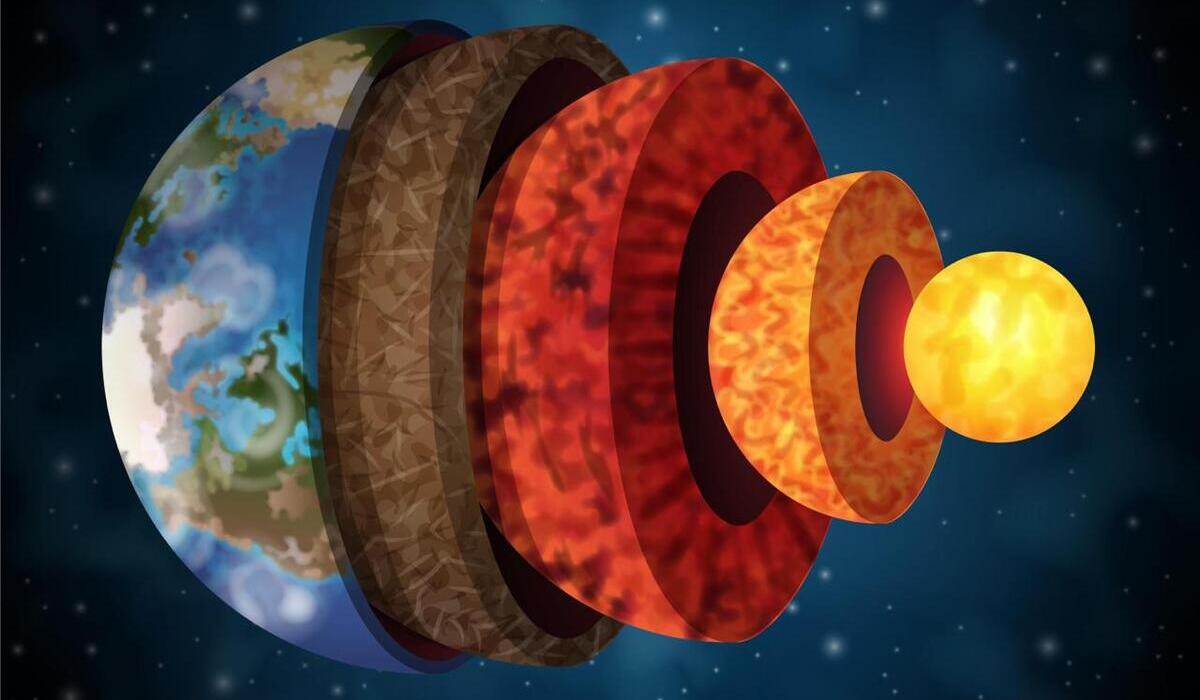
The Earth’s core is one of the planet’s most enigmatic regions. Despite humans never having penetrated beyond the Earth’s crust, scientists have long sought to uncover conditions at the planet’s centre, including its extreme temperatures. Modern research indicates the core reaches temperatures nearing that of the Sun’s surface.
Earth comprises several primary layers: the crust, mantle, outer core, and inner core. The inner core lies approximately 5,100 kilometres beneath the surface and is mostly composed of solid iron and nickel.
Geophysical studies estimate the inner core’s temperature ranges between 5,400 and 6,000 degrees Celsius. These astonishing figures are not obtained through direct drilling but via a combination of laboratory experiments, computer simulations, and seismic wave analysis.
Scientists study how seismic waves travel through Earth’s layers to understand the density and properties of materials within the planet. Seismic waves are crucial indicators as their speed changes significantly when passing through liquid or solid materials.
From this data, researchers have identified two key facts: Scientists use tools to create high pressure resembling Earth’s core conditions. Research by the French Alternative Energies and Atomic Energy Commission (CEA) shows iron’s melting point under core pressure reaches around 6,000 degrees Celsius.
Understanding Earth’s core heat is vital as it directly impacts surface life. The movement of molten metal in the outer core generates a dynamo effect, producing Earth’s magnetic field.
This magnetic field acts as an invisible shield, protecting our atmosphere from harmful solar radiation. Without this heat-driven protective mechanism, modern life on Earth likely would never have developed.
Despite advancing technology, Earth’s core remains shrouded in mystery. Researchers believe further geophysical studies and high-pressure experiments will continue to reveal new insights into our planet’s unexplored interior.
Scientists explain that ionospheric disturbances caused by solar activity may generate electrostatic effects that affect the stability of Earth’s crust.
The lithospheric dripping phenomenon also reveals an intriguing link between uplifted plateaus and subsiding basins in the same area.
Researchers have discovered that extreme temperatures in Earth’s crust are key to forming stable continents and offer new clues for exploring rare minerals.
An international research team led by the University of Göttingen discovered surprising geological phenomena beneath Kurdistan, Iraq.
Recent research by the Australian National University suggests the inner core, previously thought to be a single entity, may consist of two distinct layers.
Earth has multiple structural layers extending to its core. The planet’s diameter is 7,926 miles and comprises at least four distinct layers.