
Earthquake Shakes NTT: Did Earthquakes Occur in the Time of the Prophet?
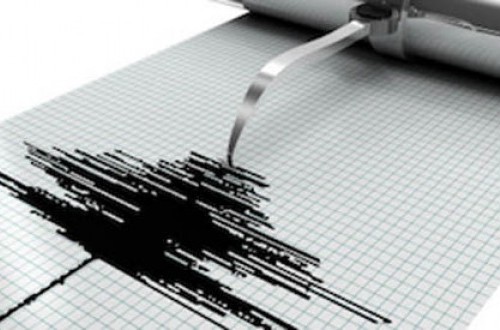
An earthquake measuring magnitude 7.7 shook the Nagekeo region of East Nusa Tenggara on Saturday morning, 15 August 2026. The quake, centred around 30 kilometres off Mbay-Nagekeo, triggered an early tsunami warning for several coastal areas of NTT as well as parts of Sulawesi and West Nusa Tenggara.
The Meteorology, Climatology and Geophysics Agency recorded the earthquake at 04.58.24 WIB with a depth of 15 kilometres. Head of the Kupang Geophysics Station Arief Tyastama said the epicentre was located at coordinates 8.41 degrees south latitude and 121.39 degrees east longitude.
BMKG subsequently issued a Level 2 Tsunami Early Warning. Several areas in NTT were placed on alert status, including northern Manggarai, northern Ngada, northern West Manggarai, northern Ende and northern Sikka.
Tsunami waves were also detected in several locations. Based on BMKG sea level monitoring up to 07.05 WIB, the largest tsunami height recorded was 0.94 metres in Maurole, Ende. Tsunami waves were also detected in Alor, Dompu, Sikka, East Flores, Labuan Bajo, Baubau, Bulukumba and Kolaka.
The event served as a reminder that earthquakes are a natural phenomenon known to humanity since ancient times. Did earthquakes ever occur during the time of Prophet Muhammad?
In Islamic history, there are accounts stating that an earthquake occurred during the time of the Prophet. The event is described in the book Ad-Daa wad Dawaa by Ibn Qayyim al-Jawziyyah.
In a narration mentioned by Ibn Abid Dunya and transmitted in connected form by al-Hakim through the chain of Baqiyyah, from Yazid al-Juhani, from Anas, it is stated that when the earthquake occurred, the companions felt afraid.
The Prophet then placed his hand on the earth and said: “Be calm, for your time has not yet come.”
After that, the Prophet turned to his companions and said: “Indeed your Lord is truly admonishing you, so take heed of His admonition.”
This narration illustrates how Muslims are directed to interpret the phenomenon of earthquakes not merely as natural events, but also as moments to remember the greatness of Allah.
Nevertheless, there are differences of opinion among scholars regarding whether an earthquake truly occurred during the time of the Prophet.
Imam Ibn Abdil Barr, for example, stated that there is no authentic hadith mentioning the occurrence of an earthquake during the time of the Prophet. He said: “There is no authentic hadith from the Prophet mentioning that an earthquake occurred during his time, and there is no authentic sunnah about it.” (At-Tamhid 3/318).
Regardless of the differing opinions regarding that narration, the Prophet did foretell that earthquakes would become increasingly frequent as the Day of Judgement approaches.
This is based on a hadith from Abu Hurairah. The Prophet said: “The Hour will not come until earthquakes become frequent.”
This hadith serves as a reminder for Muslims not to view earthquakes solely as natural phenomena, but also to make them moments for introspection and drawing closer to Allah.
When disaster strikes, Islam does not teach panic. Muslims are encouraged to remain calm, increase istighfar and repentance, improve righteous deeds, and recognise human limitations before the power of Allah.
The NTT earthquake, followed by detected tsunami waves, serves as a reminder that humans have limitations in facing the forces of nature. Amid mitigation and rescue efforts, Muslims can also draw spiritual lessons by increasing prayers and seeking protection from Allah.
Thus, responding to earthquakes does not mean ignoring scientific explanations of tectonic activity. On the contrary, effort through knowledge, vigilance and disaster mitigation can go hand in hand with an attitude of tawakkal, repentance and increasing righteous deeds.
Source: jawawa.id (https://jawawa.id/newsitem/earthquake-shakes-ntt-did-earthquakes-occur-in-the-time-of-the-prophet-1786837831)
Originally published by Republika (https://khazanah.republika.co.id/berita/tju1tk430/gempa-guncang-ntt-pernahkah-gempa-terjadi-pada-zaman-nabi), translated from Indonesian