
Earthquake Felt Like a Passing Truck, Unexpectedly Triggered 21-Metre Tsunami
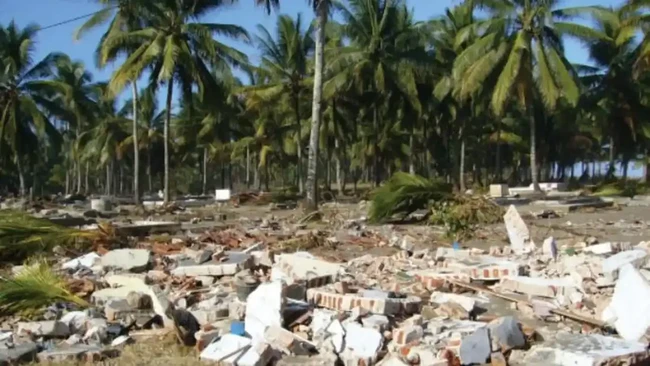
The Pangandaran earthquake and tsunami, which struck the southern coastal region of Java two decades ago, remains a pivotal milestone in the history of disaster mitigation strengthening in Indonesia. The tragedy not only forced the government to overhaul early warning systems but also increased public awareness regarding the importance of preparedness for megathrust threats.
According to records from the Meteorology, Climatology, and Geophysics Agency (BMKG), a magnitude 7.7 earthquake struck Pangandaran on 17 July 2006 at 15:19 WIB. The tremors triggered tsunami waves between 4 to 8 metres that swept along 250 kilometres of the southern Javanese coastline, ranging from Pangandaran and southern Central Java to the coast of Yogyakarta.
This major disaster claimed 668 lives and destroyed thousands of homes, making it one of the deadliest disasters in Indonesia following the 2004 Aceh tsunami.
Here are seven key observations from experts regarding the Pangandaran tsunami tragedy:
- One of the Largest Tsunamis in Java and the Tsunami Earthquake Phenomenon
Pepen Supendi, Seismology Expert at the BMKG Earthquake and Tsunami Directorate, revealed that the Pangandaran tsunami was the largest wave to hit Java since the Banyuwangi earthquake and tsunami in 199lar. This event also serves as a clear example of the ‘tsunami earthquake’ phenomenon, which revolutionised scientists’ understanding of the mechanisms behind massive wave generation. The tragedy acted as a catalyst for accelerating the development of the Indonesia Tsunami Early Warning System (InaTEWS), which was inaugurated on 11 November 2008.
- Weak but Deadly Tremors
Pepen explained that the characteristic of a tsunami earthquake involves a very slow rupture process, which emits low-frequency energy. Consequently, the tremors felt by residents in Pangandaran at the time were relatively weak, around 3-4 MMI (feeling merely like a passing truck). This condition deceived many residents into thinking the earthquake was harmless, even though the tsunami struck one hour later. He urged coastal communities not to wait for early warning sirens if they feel a long-duration earthquake, even if the shaking is weak.
- The Mystery of the 21-Metre Tsunami at Nusa Kambangan
Field observations showed that wave heights along most of the southern Javanese coast ranged between 5 to 10 metres. However, in the Nusa Kambangan area, the tsunami height surged drastically to reach 21 metres. Researchers suspect this anomaly was not solely caused by the megathrust zone rupture, but was triggered by secondary factors such as local submarine landslides and the contribution of splay faults.
- Real Threats Still Lurking in Southern Java
The National Earthquake Study Centre has identified two megathrust segments in southern Java: the West Java and East Java segments. Under a worst-case scenario, both segments could rupture simultaneously. Pepen warned that a magnitude 7.7 earthquake has proven capable of devastating coastal regions, making continuous mitigation efforts absolute necessities.
- Low Resilience in the Tourism Industry
Harkunti Pertiwise Rahayu, a Professor at the Sumatra Institute of Technology (ITERA), highlighted that the Pangandaran tourism sector, as a National Strategic Tourism Area, remains highly vulnerable. According to her academic study, the overall resilience of the tourism industry in the region stands at only 33.51%, meaning it requires months to recover following a disaster.
- Lack of Standardised Evacuation Signage
Harkunti also criticised the inconsistent design of tsunami evacuation signs in the field, resulting from various legacy programmes from different donors. Although the National Disaster Management Authority (BNPB) has established national standards, non-uniform implementation has the potential to confuse both residents and tourists during emergency evacuations.
- Early Warning Speed is Now Significantly Faster
On the other hand, Weniza, Head of the BMKG Earthquake and Tsunami Information Working Team, ensured that the national early warning system is now far more reliable. Through the strengthening of technological networks such as seismographs and tide gauges, BMKG is now capable of disseminating earthquake information and tsunami early warnings within just 3 to 5 minutes, significantly faster than in the past.
Source: jawawa.id (https://jawawa.id/newsitem/earthquake-felt-like-a-passing-truck-unexpectedly-triggered-21-metre-tsunami-1790502786)
Originally published by CNBC Indonesia (https://www.cnbcindonesia.com/tech/20260927115644-37-771210/gempa-terasa-seperti-truk-lewat-tak-sangka-bawa-tsunami-21-meter), translated from Indonesian