
Earthquake Felt Like a Passing Truck, Brought a Giant Tsunami Up to 21 Metres High
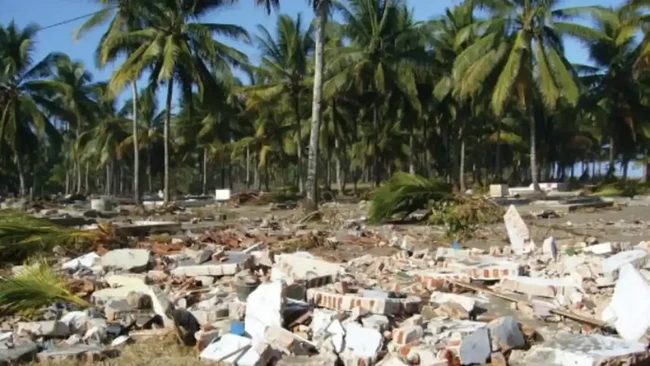
Exactly two decades after the Pangandaran tsunami struck the southern coast of Java, experts have once again issued a stark warning. The dark tragedy not only served as a crucial catalyst for improving the national disaster mitigation system, but also stands as a reminder that the threat of a similar disaster in southern Java remains real.
BMKG recorded that the M 7.7 earthquake which shook Pangandaran at 15.19 WIB on 17 July 2006 was the main trigger for tsunami waves reaching 4 to 8 metres in height. The disaster devastated a 250-kilometre stretch of coastline, extending from West Java, through southern Central Java, to Yogyakarta.
The sheer force of the sea water claimed 668 lives and damaged thousands of homes, making it one of the deadliest disasters in Indonesia after the 2004 Aceh Tsunami.
In an online discussion, geophysics and disaster experts highlighted a number of technical facts as well as major tasks that still need to be addressed by the government and the public:
- The Deadliest Tsunami Earthquake Phenomenon in Java
BMKG Seismology Expert Pepen Supendi revealed that the Pangandaran tsunami was the largest tsunami disaster on Java Island after the 1994 Banyuwangi earthquake. This event is classified as a tsunami earthquake phenomenon, in which the rupture process of the rocks occurs very slowly, emitting low-frequency energy.
As a result, the shaking on land felt relatively weak—only around 3-4 MMI, or equivalent to the vibration felt when a truck passes by. This condition often deceives coastal residents who do not realise that an hour later, a giant wave is ready to strike.
- Do Not Wait for a Warning Siren
BMKG urges coastal communities to carry out immediate self-evacuation if they feel a long-duration earthquake, even if the shaking is relatively weak.
“When you feel a fairly long earthquake in a coastal area, even if the shaking is not as strong as a typical earthquake, it could be a sign of a tsunami earthquake. Immediately move away from the beach because every second is precious for saving lives,” Pepen stressed.
- Wave Heights Reached 21 Metres
Although the average tsunami height ranged from 5 to 10 metres, observations in the Nusa Kambangan area recorded wave heights reaching 21 metres. Scientists suspect there was a secondary tsunami source, such as a local underwater landslide as well as the contribution of a splay fault.
- The Shadow of Simultaneous Megathrust Rupture
The National Earthquake Study Centre has mapped two main megathrust segments in southern Java, namely the West Java and East Java segments. Recent studies indicate a potential worst-case scenario in which these two segments could rupture simultaneously.
Pepen reminded that an M 7.7 earthquake alone was enough to devastate the coast, let alone a megathrust quake predicted to have a larger magnitude capacity.
- Pangandaran Tourism Sector Remains Vulnerable
ITERA Professor Harkunti Pertiwi Rahayu highlighted the resilience of the tourism sector in Pangandaran, which is still considered low. Based on her research, the overall resilience level of the tourism industry in the National Tourism Strategic Area has only reached 33.51%.
She encouraged local governments and business actors to immediately develop a Business Continuity Plan (BCP) to accelerate the economic recovery of the area should a disaster occur at any time.
- Evacuation Signage Needs Standardisation
Harkunti also found that tsunami evacuation signage in the field is still highly varied because it was built by different donors. The differences in symbols and evacuation directions have the potential to confuse tourists during an emergency.
- Early Warning System Now via InaTEWS
The Pangandaran tragedy became an accelerator for the operation of the Indonesia Tsunami Early Warning System (InaTEWS), which was officially launched in 2008. Head of the BMKG Earthquake and Tsunami Information Working Team Weniza explained that BMKG is now able to issue a Tsunami Early Warning within 3 to 5 minutes after an earthquake occurs.
Source: jawawa.id (https://jawawa.id/newsitem/earthquake-felt-like-a-passing-truck-brought-a-giant-tsunami-up-to-21-metres-high-1787039568)
Originally published by CNBC Indonesia (https://www.cnbcindonesia.com/tech/20260818111823-37-760237/gempa-terasa-bak-truk-lewat-bawa-tsunami-raksasa-setinggi-21-meter), translated from Indonesian