
Earth Surrounded by Active Satellites, Emerging Terrifying Threats
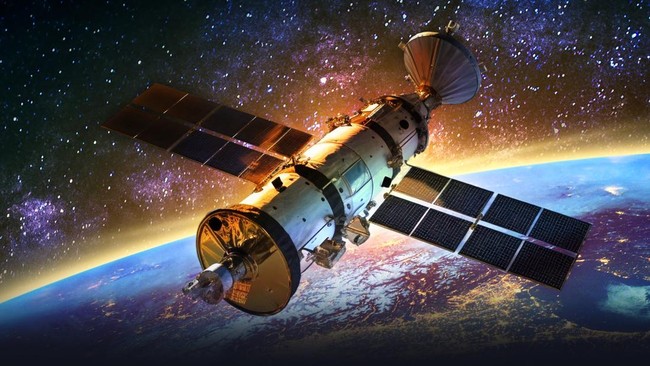
The Indonesian Research and Innovation Agency (BRIN) has presented data from the ESA Space Environment Report 2025, the UCS Satellite Database, and CelesTrak Active Satellites (May 2025) showing that the number of active satellites orbiting in Low Earth Orbit (LEO) will reach approximately 14,500 units by 2026. This figure is projected to increase drastically to around 100,000 satellites by 2030.
As the number of satellites grows, questions arise regarding whether current satellite operational methods remain effective amidst increasingly crowded orbits. During the Colloquium Series-7 organised by BRIN’s Satellite Technology Research Centre (PRTS) on Tuesday (28/7/2026), PRTS researcher Ery Fitrianingsih explained that the old paradigm of satellite mission management must urgently shift. Ery explained that LEO orbits possess characteristics far different from Geostationary Orbit (GEO).
While GEO satellites operate within slots strictly regulated by the International Telecommunication Union (ITU) with a movement tolerance of only about 0.2 degrees, LEO satellites move freely without binding regulations regarding inclination or orbital density. “This condition is what causes the population of objects in LEO to grow very rapidly, especially since the emergence of mega-constellations such as Starlink, OneWeb, and similar projects from China. This has caused the number of active satellites in orbit to continue increasing. By 202 and projected to reach approximately 100,000 satellites by 2030,” said Ery, as quoted from the official BRIN website on Saturday (1/8/2026).
She added that ground-based radar is only capable of tracking tens of thousands of objects larger than 10 centimetres. Meanwhile, millions of smaller debris fragments remain unmonitored, yet they still pose a risk to passing satellites. Ery warned of the potential for the Kessler Syndrome, a domino effect where collisions between satellites or debris trigger the creation of new fragments. These fragments then strike other objects in a chain reaction until eventually, a specific orbital altitude can no longer accommodate new satellites. According to Ery, such a condition would render that orbital region unusable for new satellite launches.
“This density also changes the risk calculation between mega-constellation operators and single-satellite operators. Losing one satellite is not a major issue for mega-constellation operators because they operate satellites in very large numbers. Conversely, for other satellite operators, losing one satellite is deeply felt because building a single satellite requires a long and challenging process,” she said.
Ery continued that all mission designs and satellite operations have historically relied on four basic assumptions: first, that the satellite’s position and velocity (orbital state) can be reliably known; second, that there is sufficient time to make manoeuvre decisions; third, that manoeuvre decisions can be made independently without considering other objects; and fourth, that ground intervention is always available whenever needed. “These four assumptions are beginning to falter as LEO density increases. The time available for operators to decide on manoeuvres is narrowing because the volume of potential collision warnings (conjunction data messages) will appear much more frequently,” she noted.
To demonstrate that this risk is not merely a theoretical scenario, Ery presented two real-world case studies. The first case involved an incident between the European Space Agency (ESA) satellite Aeolus and a Starlink satellite. The incident occurred when an automated notification system failed to reach the engineers on duty to assess the collision risk. Coordination between operators also failed to receive a response until near the time of closest approach. This forced ESA to perform a unilateral manoeuvre, consuming fuel that should have been allocated for observation missions.
According to her, the root problem is not merely a software bug. Systems that still rely on human-to-human communication without an independent mechanism are highly vulnerable to failure. The true failure, she emphasised, lies in the assumption that human communication will always be timely and reliable.
The second case occurred in February 2022 and involved 38 Starlink satellites. These satellites failed to reach their operational orbit due to a geomagnetic storm that heated and expanded the upper atmosphere. The atmospheric drag models used by the satellites’ autonomous systems failed to account for such significant uncertainty. Consequently, the satellites’ thrust was insufficient to overcome the sudden increase in atmospheric drag.
Learning from these two cases, Ery emphasised that the future of LEO satellite operations demands a comprehensive paradigm shift, not just improvements in mission operations. Future mission architectures—ranging from the ground segment and space segment to information architecture—must be designed as part of the complex and dynamic LEO ecosystem. She also highlighted the importance of autonomous capabilities in satellites to independently assess collision risks. Such capability is also necessary so that satellites can plan avoidance manoeuvres without waiting for human intervention. This approach is more reliable than continuing to depend on human decisions, which require time and communication pathways that are prone to disruption. In her view, autonomous capability in future satellites is no longer an option, but a necessity to ensure survival in an increasingly crowded space environment.