
Earth Split in Two: A Line Stretching from Turkey to Africa Discovered
Scientists have recently discovered a line that divides the Earth into two parts, both of which reflect almost the same amount of sunlight back into space. This balance is believed to play a crucial role in regulating the Earth’s climate. For a long time, atmospheric experts have known that the Northern and Southern Hemispheres reflect nearly equal amounts of sunlight, a phenomenon known as albedo symmetry. This phenomenon is unique because the two halves of the Earth do not share similarities in landmass, ocean, or weather patterns.
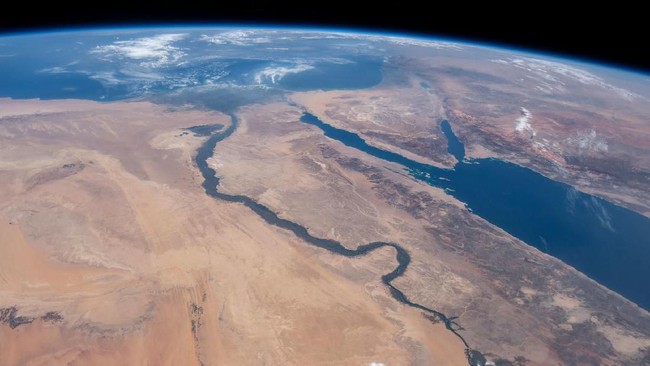
The reason for this north-south balance remains a mystery, though scientists suspect that more frequent cloud cover in the Southern Hemisphere acts as a balancer for the larger landmasses. Human-made pollution particles are also more prevalent in the Northern Hemisphere. Zhang, from the National Oceanic and Atmospheric Administration (NOAA) in the United States, and his team have now discovered a new line dividing the Earth. This line extends along 27 degrees East Longitude and 153 degrees West Longitude, crossing Europe, Turkey, Africa, and Alaska, dividing the Earth into two parts with almost identical levels of solar reflectance.
The team analysed 25 years of data, from 2001 to 2025, collected by NASA’s CERES satellite, which records the amount of solar energy reflected back into space. Earth’s climate is heavily determined by this balance between absorbed and reflected sunlight, known as the Earth’s radiation budget. When this balance is maintained, the Earth’s average temperature remains stable; if disrupted, climate change and global warming occur.
Using this data, the research team categorised albedo values, ranging from the reflectance of ice-free oceans to landmasses. They tested this data with climate models, dividing the Earth digitally into various latitudinal sections to observe reflection patterns. They discovered a new division between the Eastern and Western Hemispheres based on similar reflectance levels. Both parts surprisingly possess almost equal areas of ice-free oceans, similar cloud cover, and nearly equivalent solar radiation reflected during clear skies.
Initially, Zhang doubted this finding, noting that because the Earth is a sphere, any random division would result in two equal parts. However, what convinced the scientific community was the ‘triple symmetry’ involving uniqueness, stability, and the near-identical ratio of land to ice-free oceans. The team believes the mechanism driving this balance is closely linked to the El Niño-Southern Oscillation (ENSO). They hypothesise that the Walker Circulation—a large-scale air circulation pattern connecting cloud systems across the tropical Pacific—acts as a giant balancing mechanism. During La Niña, the Eastern Hemisphere reflects slightly more sunlight, whereas during El Niño, the Western Hemisphere takes over.
This research serves as a stern warning against climate intervention efforts, such as solar geoengineering, which seeks to modify the amount of sunlight entering the Earth in response to global warming. The existence of this east-west symmetry further proves how complex and interconnected the Earth’s climate system is. If humans attempt to manipulate incoming solar radiation, they risk disrupting this delicate balance with catastrophic consequences for life on the planet.