
Earth Receives Signals from the Sun, Unprecedented
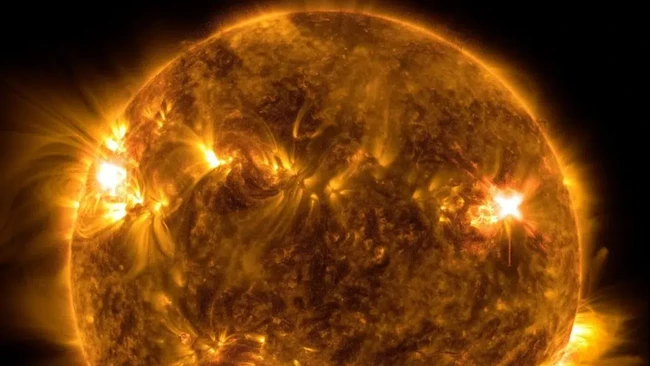
Scientists have recorded a new record in observations of solar activity. The radio signals emitted by the Sun, the star at the centre of the Solar System, were detected on Earth and recorded for 19 consecutive days. This event represents the longest solar radio burst ever documented by scientists to date and raises new questions about the mechanisms operating in the Sun’s outer atmosphere.
Similar signals are typically observed for only a few hours to a few days. The detection was made using a series of sophisticated radio-astronomy instruments set up to monitor electromagnetic activity emitted from the Sun’s surface through to its outermost layer, the corona.
Researchers say solar radio emissions usually arise from the complex interaction between the Sun’s enormous magnetic field and rapidly moving charged particles in its atmosphere. In many cases, these signals are closely linked to solar eruptions or coronal mass ejections. However, the nearly three-week event has a distinctive feature: there was no record of a major eruption or massive energy release during the monitoring period.
This suggests another physical process is operating stably and continuously within the Sun’s magnetic structure, capable of emitting radio waves over an extended period. Experts say the phenomenon most likely originates from regions of the solar atmosphere with conditions of particular temperature and density, enabling electromagnetic waves to be emitted with minimal disturbance for a long duration.
The finding is not merely a record; it has important implications for life and technology on Earth. Solar radio waves, depending on their strength and frequency, have the potential to disrupt several vital systems, from communications networks to satellite navigation to electricity distribution networks.
Although the signal detected on this occasion did not cause significant disruptions to facilities or services on Earth, a deeper understanding of how this phenomenon works is key. Further studies are expected to help scientists develop more accurate predictive models, so the impacts of solar activity in the future can be anticipated and its adverse effects minimised.
Currently, the research team continues to examine detailed data collected during the 19 days to trace the exact source of the signal and the physical conditions inside the solar corona that enabled the event. The study’s findings further reinforce that the Sun still holds many mysteries not yet fully understood, and every new observation adds to humanity’s knowledge of the star that remains the primary source of life on Earth.