
Earth Getting Hotter, Global Wine Production Hubs Begin to Shift
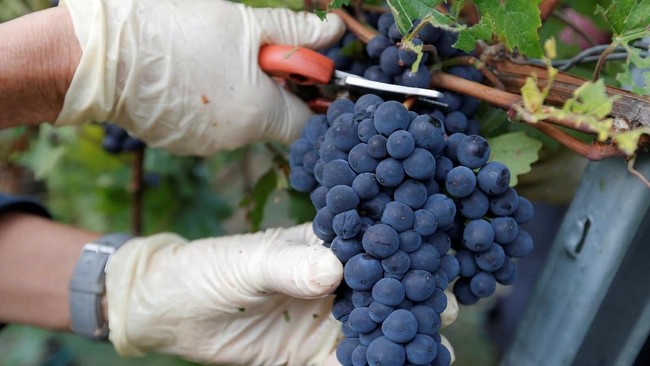
The Earth is getting hotter, and the masters of the world’s vineyards are also shifting. Climate change is beginning to redraw the global agricultural map. Rising temperatures, droughts, and the increasing risk of wildfires not only threaten food production but also transform regions long known as centres for high-value agricultural commodities.
The wine industry is one of the sectors feeling the most significant impact. Extreme summers hitting Europe this year have brought heatwaves, droughts, and wildfires to several wine-producing regions. In the Bordeaux region of France, one of the world’s premier wine production hubs, fire has become a major threat to vineyards.
In addition to the risk of physical damage, wildfire smoke can cause ‘smoke taint’—a phenomenon where the flavour profile of the grapes changes to become more bitter, smoky, or burnt. Such conditions can diminish wine quality and affect demand for products from the affected regions.
However, the pressure on the wine industry is not limited to Europe. Major global wine-producing regions, including Australia, California in the United States, Chile, and South Africa, are also facing challenges due to changing climatic conditions.
Rising Temperatures, Production Regions Begin to Shift
Grapevines are highly dependent on specific environmental conditions, ranging from temperature and rainfall to water availability. Even minor changes in these conditions can affect harvest timing, fruit ripenings, and the characteristic flavour profiles that define a particular region.
‘The Conversation’ notes that climate change has altered growing conditions in several of the world’s primary wine regions. A study of five Australian wine regions—Barossa Valley, Hunter Valley, Margaret River, Yarra Valley, and Tamar Valley—found that these areas are now facing hotter and drier conditions compared to previous decades.
These changing climatic conditions are driving wine producers to adapt, including by seeking new locations with more suitable conditions. Some production areas may shift to cooler regions or higher altitudes to maintain the previously ideal growing conditions.
A similar phenomenon is becoming visible in the United Kingdom. Temperature changes caused by global warming mean that some parts of the UK now possess more favourable conditions for viticulture, including varieties that previously thrived in the Champagne region of France. This development is driving the expansion of the British wine industry, although, on the other hand, climate change also increases risks for traditional production regions facing higher temperatures and droughts.
Grape Growers Begin to Adapt to New Conditions
To maintain production, grape growers are implementing various adaptation strategies. One approach is increasing water-use efficiency through more precise irrigation systems and cultivation practices that help maintain soil moisture. Producers are also beginning to replace grape varieties with types that are more resistant to high temperatures.
In Chile, for example, some regions are considering grape varieties that are better able to adapt to hot conditions compared to those previously widely planted. However, adaptation has its limits. If temperatures continue to rise, some regions that have historically been production hubs may lose the climatic conditions necessary to support certain crops. Therefore, researchers believe that reducing greenhouse gas emissions remains a crucial factor in ensuring the long-term sustainability of the agricultural sector.
What about Indonesian Fruit Farming?
Although Indonesia does not have a wine industry as large as the world’s major wine-producing nations, the tropical agriculture sector faces similar challenges due to climate change. Indonesia possesses various high-value horticultural commodities, such as bananas, mangoes, pineapples, durians, and various other tropical fruits. Given the large scale of production, the ability of the national fruit sector to adapt to climate change is becoming increasingly vital.
Data from the Central Bureau of Statistics (BPS) shows that Indonesian fruit production is dominated by several key commodities. Bananas are the largest national fruit production, reaching approximately 9.8 million tonnes, followed by pineapples at 3.2 million tonnes and mangoes at around 3 million tonnes. Meanwhile, grapes remain a relatively small commodity compared to other major tropical fruits, with a production of about 21,000 tonnes. Nevertheless, climate change remains a concern for the entire horticultural sector as it can affect productivity, harvest quality, and cultivation conditions.
BMKG (Meteorology, Climatology, and Geophysical Agency) also emphasises the importance of climate information in supporting adaptive agriculture, ranging from determining planting times to managing the risks of drought and extreme weather.
Sustainable Fruit Farming is the Key to Adaptation
Climate change means the agricultural sector is required not only to maintain production but also to increase crop resilience against increasingly unpredictable weather. One developing approach is ‘sustainable fruit farming,’ which not only reduces environmental impact but also helps maintain productivity and the resilience of farming enterprises.
Research supported by NordForsk highlights several science-based solutions for sustainable fruit and berry production, ranging from improving soil health and more efficient water management to the utilisation of biodiversity. Practices such as the use of cover crops, increasing soil organic matter, and more precise irrigation can help maintain soil moisture and reduce stress on plants when facing drought or extreme temperatures. From a business perspective, sustainable practices can also help farmers reduce costs through water-use efficiency, waste reduction, and the optimisation of inputs.