
Earning Money Becomes Increasingly Difficult, Fresh Graduates Need 20 Months to Find Work
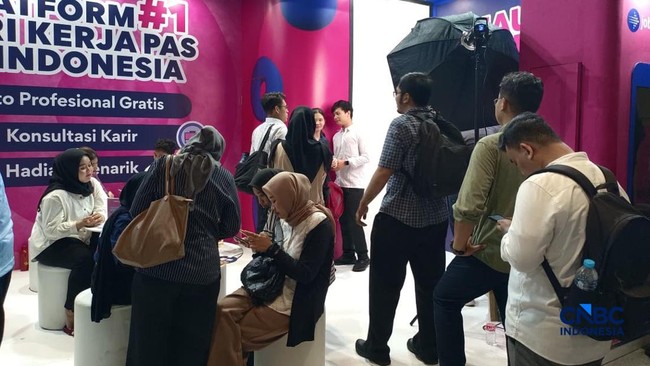
Earning money is becoming increasingly difficult, as fresh graduates in Indonesia find themselves needing an average of 20 months to secure employment. Many young people are struggling to find work despite submitting numerous curriculum vitae (CV) and job applications without success.
Research from the Institute for Economic and Social Research of the Faculty of Economics and Business, University of Indonesia (LPEM FEB UI) explains that the transition from education to the workforce in Indonesia is fraught with challenges, resulting in long waiting periods for job seekers. Based on data from the National Labour Force Survey (Sakernates) for August 2025, the average duration to find work after completing the latest level of education in Indonesia is 19.8, or nearly 20 months (1 year and 8 months).
Several factors influence the length of time it takes for individuals to find employment:
- Education Level
One of the primary determinants of job search duration is the level of education. Although higher education theoretically increases employment opportunities, in practice, highly educated graduates in Indonesia often experience longer job searches compared to those with lower educational backgrounds. This is because those with lower-to-middle education levels often seek jobs with less stringent requirements, allowing them to be more easily absorbed into the labour market, particularly in blue-collar roles. Furthermore, this is caused by a mismatch between educational majors and available job vacancies, as well as higher expectations regarding job types and wage levels among higher education graduates. The research notes that increased education has not yet been fully accompanied by strong links to the industrial world. Demographic factors such as age and gender also play a role; for instance, the search duration for the 1990-2000 generation with Bachelor’s to Doctoral degrees averaged 18.28 months, while diploma holders from the 2011-2025 generation averaged 18.29 months.
- Job Mismatch
Another factor is whether available jobs align with the candidate’s field of study. The findings indicate that the relationship between education and labour market needs is not yet fully aligned. Higher expectations for specific job types and wages also lead higher education graduates to take longer to find employment. The average duration for jobs not matching one’s major is 17.07 months, compared to 16.68 months for those within their field.
- Work Experience
Work experience remains a vital asset for securing employment more quickly in Indonesia. Those who have worked, participated in training, or possess specific skills tend to be absorbed into the labour market faster. Conversely, those without experience, particularly fresh graduates, face greater challenges. According to the research, those without internship experience take 20.06 months to find work, while those with internships without certificates take 17.75 months, and those with both internships and certificates take 16.43 months. This means certified interns can find work approximately 3.6 months faster than those without internship experience.
- Residential Location
Geographic location also influences the duration of the job search due to varying access to employment opportunities, market information, and economic activity. Generally, the duration in regions outside Java can reach 23.38 months, while in Java, it is approximately 17.4 months. Rural areas see a duration of 23.27 months, compared to 18.7 months in urban areas.
- Wage Expectations
Expected wages (reservation wage) also impact how quickly someone finds a job. Job seekers demanding higher wages are typically more selective, prolonging the search process. Conversely, those facing greater economic pressure tend to accept jobs more quickly, even if they do not align with their preferences or qualifications. Lower wage expectations are generally found among female job seekers who are uneducated, living in rural areas, and married. Higher wage expectations are typically found among males, highly educated individuals, living in cities, and unmarried.
- Gender
Gender also influences the duration of finding employment. Men require more time to secure their first job after completing education compared to women, with men averaging 20.95 months and women averaging 18.51 months. Men tend to have higher wage expectations, making them more selective in their job choices.