
Early Detection Key as PGI Strengthens Colorectal Cancer Fight
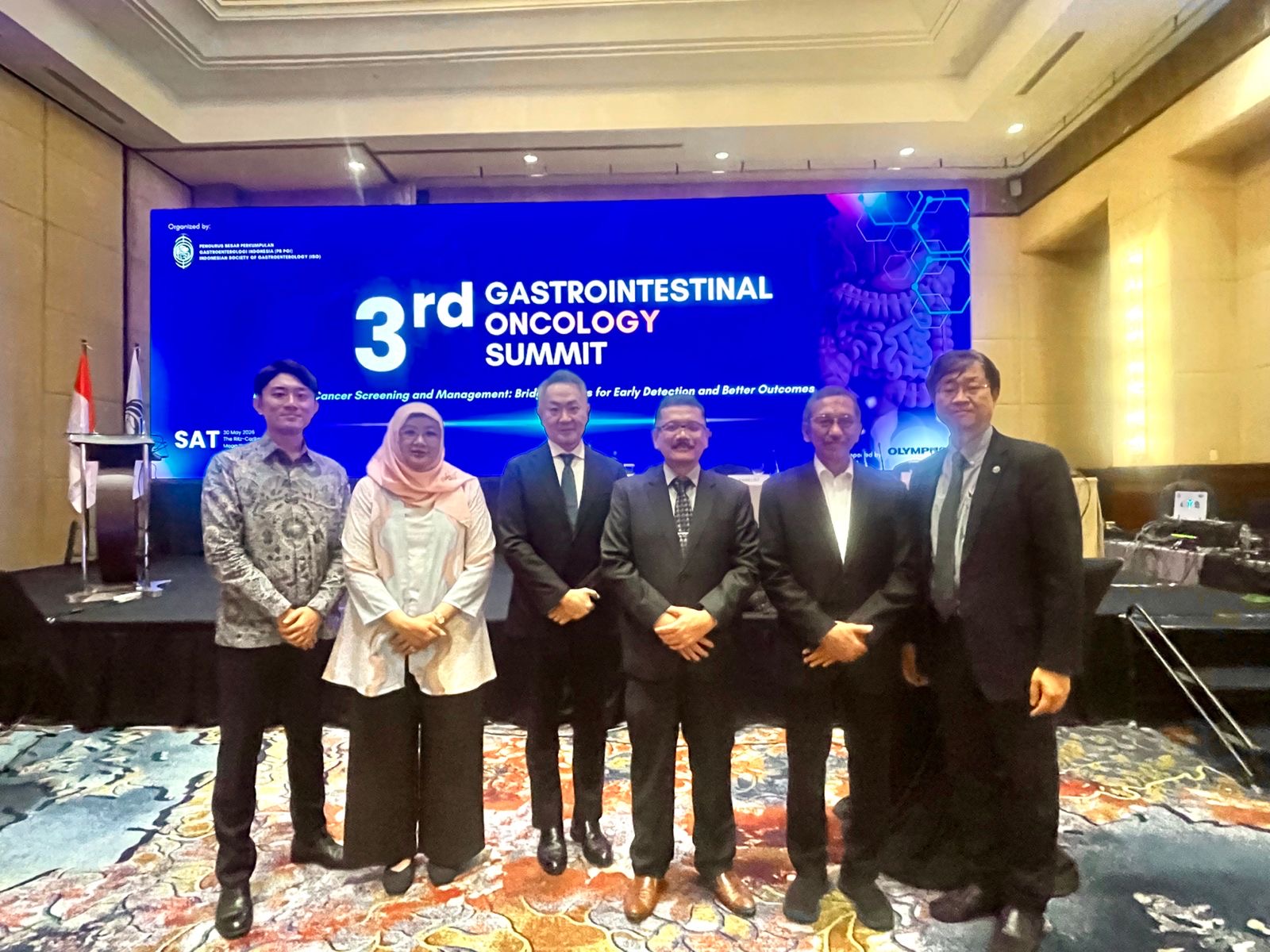
Rising mortality rates from colorectal cancer, or large bowel cancer, have spurred experts and health stakeholders to strengthen early detection efforts through structured screening programmes. This commitment was highlighted at the 3rd Gastrointestinal Oncology Summit 2026 organised by the Indonesian Gastroenterology Association (PB PGI) in Jakarta.
Under the theme “Colorectal Cancer Screening and Management: Bridging Gaps for Early Detection and Better Outcomes”, the scientific forum brought together national and international experts to formulate evidence-based strategies for accelerating colorectal cancer screening in Indonesia.
Colorectal cancer is now one of the world’s major health challenges. Globally, it accounts for over 1.9 million new cases annually and ranks third among the most common cancers. In Indonesia, it is the fourth most frequent new cancer case and the fifth leading cause of cancer deaths, with over 19,000 fatalities each year.
Symptoms to watch for include prolonged changes in bowel habits, blood in stool, abdominal cramps, significant weight loss, and anaemia. High mortality rates are largely due to delayed diagnosis.
PB PGI Chairman Ari Fahrial Syam stressed the importance of professional organisations in driving progressive health policies.
“The PB PGI is committed not only to being a scientific platform but also a catalyst for policy change. We will continue collaborating with the Ministry of Health and international partners to implement a fair, sustainable, and life-saving colorectal cancer screening programme for Indonesians,” he said.
The forum featured global experts, including Takahisa Matsuda, President of the Japanese Society of Gastrointestinal Cancer Screening, and Han-Mo Chiu from Taiwan, who shared their countries’ experiences in national colorectal cancer screening programmes.
Prof. Matsuda explained that Japan has implemented annual Fecal Immunochemical Test (FIT) screenings for those aged 40 and above. He noted this method is the most practical for widespread adoption.
“FIT offers advantages such as low cost, non-invasiveness, scalability, and proven mortality reduction. However, Japan’s biggest challenge isn’t the FIT test itself but follow-up diagnostic colonoscopy. Around 30% of individuals with positive FIT results do not proceed to colonoscopy—a significant issue Indonesia will also face,” Prof. Matsuda said.
He also warned of FIT-interval colorectal cancer (CRC), where tumours develop between scheduled screenings. These cases often occur on the right side of the colon and have higher BRAF mutation rates, requiring specialised treatment approaches.
Prof. Han-Mo Chiu highlighted Taiwan’s success since 2004 with a biennial FIT-based national screening programme, which has effectively reduced mortality and advanced-stage cancer cases.
“Screening success depends not just on technology but integrated systemic coordination. Taiwan has established a call-recall system, standardised pathology reports, and strict colonoscopy quality control, including adenoma detection rate (ADR). Since 2025, we’ve lowered the screening age to 45 due to rising early-onset CRC cases,” Prof. Chiu explained.
Meanwhile, Murdani Abdullah, Head of the Human Cancer Research Centre (HCRC) at the University of Indonesia’s Medical Faculty, highlighted Indonesia’s challenges in providing screening and colonoscopy services for its large population.
According to 2024 Global Cancer Observatory data, Indonesia’s five-year colorectal cancer prevalence is estimated at 104,235 cases or about 37.3 per 100,000 people.
Prof. Murdani said limited colonoscopy capacity is the main barrier, requiring a phased and measured approach.
“Indonesia’s colonoscopy capacity is severely constrained, with a population of 281 million across an area five times Japan’s size and thousands of inhabited islands. Our strategy must be phased: FIT pilot projects at primary healthcare facilities, concentrated colonoscopy services in district hospitals, and strengthened digital referral systems. Risk stratification—based on age, family history, BMI, and smoking—is key to conserving limited colonoscopy resources,” he said.
The summit concluded with experts agreeing on five key recommendations to strengthen colorectal cancer control in Indonesia: phased implementation of structured FIT programmes via pilot projects, enhancing colonoscopy capacity and quality, integrating screening data with national cancer registries, strengthening public education through digital innovation, and implementing risk stratification to prioritise high-risk groups for further testing.
These measures aim to form the foundation for an effective national screening programme, reducing colorectal cancer mortality through early detection and optimal treatment.