
Early Childhood Educators Optimise Urban Agriculture Through Storytelling and Plant Tracking Journal
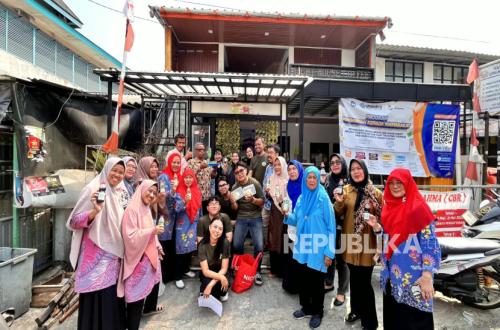
Behind the bustle of metropolitan Jakarta with its limited green open spaces, an ecological education movement is blossoming from early childhood education classrooms. Through multidisciplinary synergy and national research funding support, early childhood educators in West Jakarta are now architecting the transformation of narrow plots into interactive nature laboratories.
By combining hydroponic vertical farming technology, the art of storytelling, and plant tracking journals, this community service programme presents a strategic breakthrough for building ecological literacy, self-reliance, and family food security from the most crucial age range.
West Jakarta is known as one of the most densely populated residential areas in the Special Capital Region of Jakarta. Rapid physical urban growth has eroded green open areas, leaving a very minimal proportion of land for educational facilities, particularly early childhood education centres and community learning activity centres. Amid environmental conditions dominated by dense housing, concrete walls, and narrow streets, a major challenge arises for educators: how to deliver authentic and meaningful nature-based learning when physical land is almost unavailable?
Early childhood is a golden age in which children’s cognitive, emotional, affective, and psychomotor development flourishes rapidly. Learning that relies solely on static print media or digital screens often fails to cultivate sensory sensitivity and empathy towards the living environment. Yet understanding the origins of food, the importance of nutrition, and the biological processes of plants is a primary foundation for shaping the ecological character of modern society.
Answering this challenge, the Community Service Team chaired by Dr N. Yeffa Afnita Apriliyani, MPd from Universitas Indraprasta PGRI, in synergy with Universitas Pertiwi, presented an innovative programme titled ‘Optimising Urban Agriculture on Limited Land through Storytelling and Plant Tracking Journal for Early Childhood Educators in West Jakarta’.
The programme was implemented at the Community Learning Activity Centre of Yayasan Citra Binar Rahma, Kebon Jeruk, West Jakarta. As a form of sustainability and strategic continuation of a partnership initiated in 2025, the 2026 community service programme focuses on the tangible transformation of limited urban areas into an interactive nature laboratory for teachers and young children. Not merely planting vegetables, the programme weaves urban agricultural technology with modern pedagogical methodology to create an independent and sustainable green learning ecosystem.
The community service programme is designed not only as a ceremonial activity or physical assistance, but is deeply woven into strategic policy frameworks at both national and international levels.
Through urban agriculture education from an early age, the programme takes preventive and educational steps at the family level. When young children are directly involved in planting, caring for, and harvesting fresh green vegetables such as spinach, pak choi, and water spinach in school or home environments, collective awareness is built regarding the importance of food sovereignty. Early childhood educators act as agents of change who transfer these food self-sufficiency values to parents, so that even narrow home yards can be optimised as sources of nutritious family food.
The programme contributes directly to the achievement of the Sustainable Development Goals through three main focuses. In supporting SDG 2 (Zero Hunger), the programme fosters nutritional literacy and local-scale food security through independent organic vegetable production using simple, hygienic, and pesticide-free hydroponic methods. Meanwhile, for SDG 4 (Quality Education), integrated literacy innovation is presented through the integration of storytelling methods and picture-based or digital recording (plant tracking journal) that enrich teachers’ pedagogical competence and children’s learning experiences. Finally, in line with SDG 11 (Sustainable Cities and Communities), the programme is able to transform neglected concrete corners of the city into productive green pockets, reduce the urban heat island effect, and create a more beautiful school environment aesthetic.
In the context of national research policy, this community service activity is anchored in the National Research Master Plan across two main focus areas. First, in the Food Focus Area (Urban Agricultural Technology sub-theme), the programme applies hydroponic vertical farming modules that are energy-efficient, water-efficient, and land-efficient, adapted to the microclimate of Jakarta’s dense settlements. Second, in the Social Humanities Focus Area (Strengthening Literacy and Character Education), an early childhood learning model based on nature projects is engineered to shape character traits of environmental care, patience, discipline, and children’s language skills through ecology-based storytelling.
The main advantage of this community service programme lies in its highly cohesive interdisciplinary approach, combining expertise in Indonesian Language and Literature Education (Team Leader), Management (Member 1), and English Language Education (Member 2), supported by Retail Management students. This cross-disciplinary scientific collaboration produces holistic solutions that not only solve physical land problems but also touch on literacy aspects.
Source: jawawa.id (https://jawawa.id/newsitem/early-childhood-educators-optimise-urban-agriculture-through-storytelling-and-plant-tracking-journal-1787039627)
Originally published by Republika (https://rejogja.republika.co.id/berita/tjye31291/pendidik-paud-optimalisasi-urban-agrikultur-melalui-storytelling-plant-tracking-journal), translated from Indonesian