
Each Ministry Has Its Own Daycare Programme, Minister of PPPA is Perplexed
Cases of violence in daycare environments in recent times indicate that supervision of childminding services is not yet optimal. Nevertheless, the government continues to promote the expansion of daycare services in various regions.
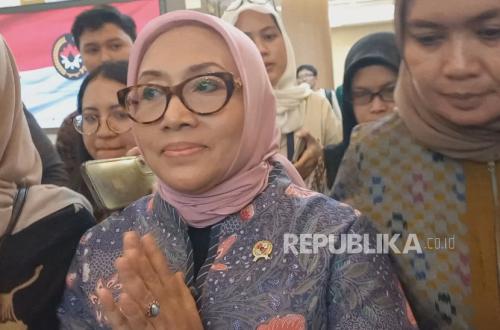
Minister for Women’s Empowerment and Child Protection (PPPA) Arifah Choiri Fauzi stated that many ministries have programmes for early childhood services. Some of these daycare service programmes include the Taman Asuh Sejahtera (TAS) from the Ministry of Social Affairs (Kemensos), Taman Asuh Sayang Anak (Tamasya) from BKKBN, PAUD or Taman Penitipan Anak (TPA) from the Ministry of Basic and Secondary Education (Kemendikdasmen), and Taman Asuh Ramah Anak (TARA) from the Ministry of PPPA.
“There are several ministries that indeed have services for young children,” said Arifah after attending a ministerial-level meeting (RTM) at the Ministry of Coordinating Human Development and Culture (Kemenko PMK), Central Jakarta, on Thursday (30/4/2026).
Nevertheless, Arifah stated that her ministry does not handle licensing for daycare services. According to her, the Ministry of PPPA only carries out standardisation of daycare services through TARA certification.
Arifah explained that there are seven standards that daycare services must meet to obtain TARA certification. Some of the requirements include those related to legality, human resources, and facilities.
She mentioned that currently there are 70 daycares under the guidance of the Ministry of PPPA scattered across Indonesia. “So for provinces or regencies/cities that have daycares, and then they will be standardised, what we have is the TARA standardisation,” said the chairwoman of the Central Board of Muslimat NU.
When asked about licensing for daycare services, Arifah could not answer directly. Before responding, she appeared to ask first about licensing for daycare services. “If it’s licensing, there’s someone, who was it earlier? In the regions, right? The regions, the ones with authority over the area are the regions.”
Arifah stated that the Ministry of PPPA only carries out standardisation of existing daycare services. This means her ministry does not handle operational licensing for daycares.
“So for example, take the case in East Kalimantan recently, a company already has a daycare, makes a daycare, then collaborates with us, asks to be standardised, that’s our position. Then guidance, whether the human resources are sufficient and so on, facilities, after that they handle the licensing. Licensing, who was it earlier?” said Arifah.
Licensing System Becomes Homework
Commissioner of the Indonesian Child Protection Commission (KPAI), Ai Rahmayanti, said that based on field findings, there are several licensing processes for establishing daycares. The first is licensing for childminding parks (TPA), which is usually handled through the integrated one-stop service agency (PTSP) in each region.
“Actually, this licensing needs to be improved; this is also homework, later the Ministry of Education and below with the Education Agency. Because the authority is with the government, not like investments (PTSP) which are more for NIB or OSS,” said Ai.
She assessed that a more organised licensing system is found in the TAS programme of the Ministry of Social Affairs, where establishment is done through regional social services. This is because the licensing system in that programme is tiered.
“Well, in terms of supervision, it’s supervision from the Ministry of Social Affairs, then to the provincial social service, then to the city/regency social service and directly to TAS. Actually, in terms of regulations, but in practice, supervision might still be homework,” said Ai.
She stated that the non-integrated licensing system is the government’s homework. This is because daycare operators are often confused about handling licensing.
Ai mentioned that around 95 percent of daycare service providers are essentially community members. However, the public is made confused by the current licensing processes.
“The homework ahead is how to synergise between ministries, and how we fill the governance gaps. Because daycares are places for children’s growth and development, so the protective aspect must be ensured, not just childminding services, if it’s only NIB,” explained Ai.
She gave an example, in the violence case at Little Aresha daycare in Yogyakarta City, the daycare operator already had a permit from the PTSP agency in the form of an NIB. However, the daycare did not yet have an operational permit from the relevant ministry. Therefore, said Ai, the licensing issue must be made integrated.