
E-commerce Logistics Entrepreneurs Report TikTok's Unfair Practices to KPPU
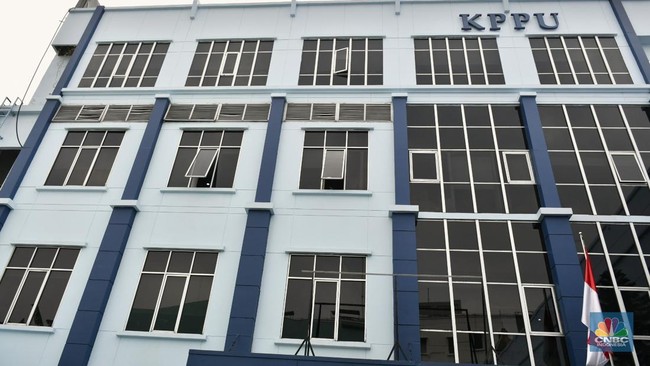
The Association of E-commerce Logistics Entrepreneurs (APLE) has reported allegations of monopolistic practices by TikTok to the Business Competition Supervisory Commission (KPPU). The platform is accused of engaging in unfair business competition violations.
The KPPU has confirmed the report. Deswin Nur, Head of Public Relations and Cooperation Bureau at the KPPU, explained that verification of the report’s completeness is currently underway.
“If the report is complete and within the KPPU’s authority, it will be followed up with a preliminary investigation to gather evidence,” Deswin told CNBC Indonesia on Tuesday (21/4/2026).
Contacted separately, Panji Satria Utama, an advocate from Satya Law Firm representing APLE, stated that they are awaiting follow-up on the report from the KPPU.
One of their findings is the alleged practice of vertical integration or attempts to control market distribution from upstream to downstream by TikTok Shop. This practice is prohibited in Indonesia and regulated under Article 14 of Law No. 5/1999.
He explained that TikTok violates rules for social media platforms, which are not permitted to facilitate payments. This is stipulated in Trade Ministerial Regulation No. 31/2023, Article 21 paragraph (3).
“In this case, TikTok, which was initially just a social media platform for sharing short videos [such as hobbies], has now evolved into a digital shopping platform,” he clarified.
“Where TikTok currently has a shopping feature that can be accessed either through the ‘basket’ column attached to videos circulating on the TikTok homepage itself, or through the ‘shop’ column clearly displayed on the TikTok platform,” he added.
TikTok also does not provide free choices for delivery services to consumers who wish to shop. According to him, this is discriminatory against several delivery companies.
“Of course, this has the potential to create monopolistic practices, as it closes opportunities for other delivery services to enter and sell their services on the TikTok platform,” he said.
Panji also stated that TikTok is suspected of engaging in practices that could ultimately harm merchants who do not sell on TikTok and offer cheaper prices.
“This practice has the potential to create unfair business competition. This is explicitly regulated in Article 20 of Law No. 5/1999,” said Panji.