
DVI Team Faces Difficulties in Identifying KM Virgo Victims
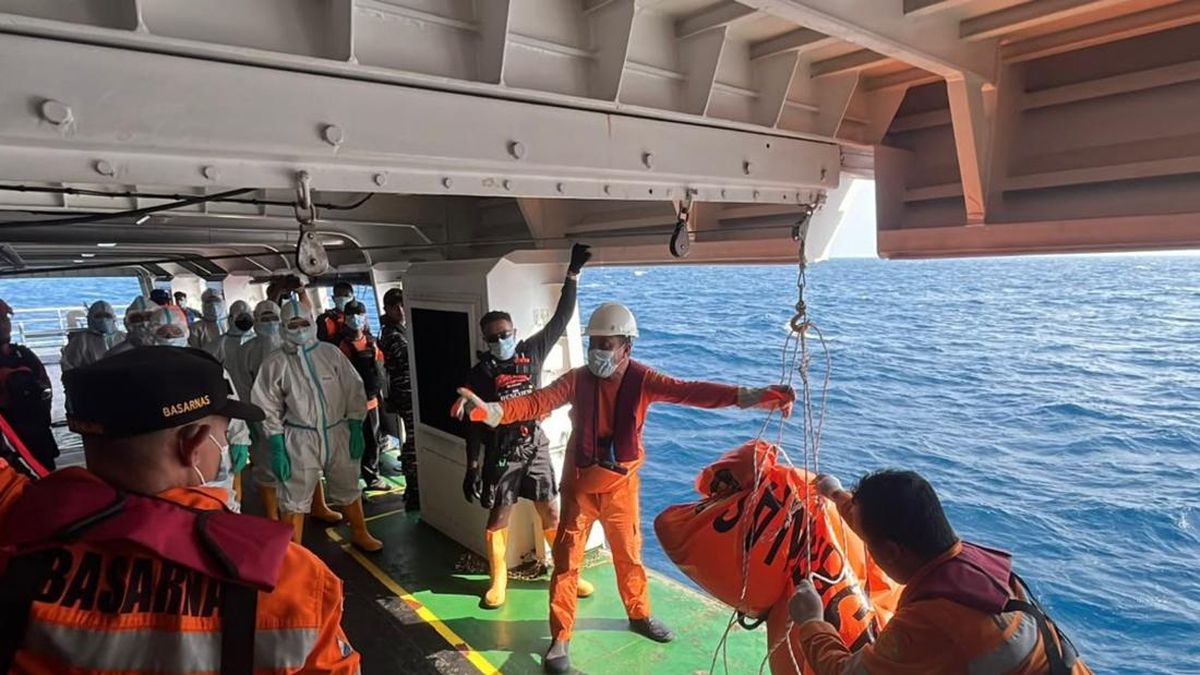
The Disaster Victim Identification (DVI) team is beginning to encounter difficulties in the process of identifying victims of the KM Virgo Transport 8, which capsized and sank in the Masalembo waters, Java Sea, South Kalimantan.
South Kalimantan Regional Police Medical Services Head, Kombes dr Much Sofwan, stated that the obstacles faced in the identification process relate to the condition of the victims’ bodies upon discovery. “In principle, because the bodies from the Virgo ship were found after the fifth day, there are certainly many complications, especially the process of decomposition,” Soflam said during a press conference on Monday (28/9).
Sofwan explained that once bodies have undergone decomposition, there are significant hurdles in the identification process. “First, there is the change in facial features, and fingerprints also become difficult to recognise. Furthermore, there may be missing limbs, which certainly affects the level of difficulty. Therefore, it is important to note that as time progresses, the identification process becomes somewhat slower,” he said.
Meanwhile, the Head of DVI at the Indonesian National Police Medical and Health Centre, Kombes dr Wahyu Hidayati, confirmed that the identification process has slowed down compared to the initial stages of the incident. “It is not like the first day when fingerprints could be quickly matched. However, after three, four, or five days, fingerprints become difficult to obtain. We are now relying on dental features, physical characteristics, and clothing or jewellery found on the bodies,” she noted.
Wahyu added that many victims were found without identification cards. In some cases, clothing had even been stripped away, making immediate identification impossible. “These are the factors that make it difficult for us to match identities,” she said.
Consequently, Wahyu stated that the team is relying on DNA testing to identify the victims of KM Virgo. However, she noted that DNA testing is time-consuming, which extends the identification period. “Ultimately, we are relying on DNA. But DNA testing takes time. The samples arrive periodically—five, seven, or eleven bodies at a time—and the shipment of DNA samples to Jakarta is also done periodically. DNA examination requires at least five days. Therefore, we ask for patience as we carry out all processes to the best of our ability,” she said.
She added that the team continues to work through weekends. “We are working even on Saturdays and Sundays. That is why this process may extend until the 16th, as we continue identification work through the weekend. We are striving to ensure that all bodies received today are examined today before we proceed with the comparisons,” she continued.
Previously, on Monday, the DVI team identified another 16 victims of the KM Virgo sinking. This brings the total number of identified victims to 41. “The total number identified as of Monday, 28 September, is 41 people. There are 29 unidentified individuals out of the total 70 bodies received at Bhayangkara Banjarmasin Hospital to date,” Sofwan told reporters.
Meanwhile, Basarnas reported that as of Monday, 179 victims have been located, consisting of 108 survivors and 71 fatalities. Meanwhile, 64 people remain missing out of a total manifest of 243 individuals.