
Duties and Challenges of the New Finance Minister
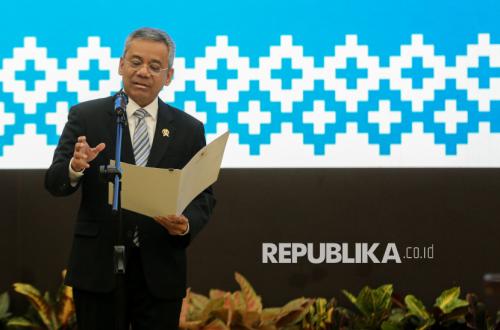
The public remains uncertain regarding the reasons behind Purbaya Yudhi Sadewa’s sudden removal as Finance Minister. However, regardless of the cause, a new Finance Minister has been inaugurated. Deputy Finance Minister Suahasil Nazara has now been formally appointed as the new Finance Minister, replacing Purbability.
Suahasil Nazara’s track record and educational background are highly promising. As a long-standing figure within the Ministry of Finance, Suahasil has served as Deputy Finance Minister since 2019 and previously led the Fiscal Policy Agency. His academic background is robust; he is an economist and a professor at the University of Indonesia, with advanced studies from Cornell University and the University of Illinois. Suahasil is described as a calm figure, noted for his potential to maintain fiscal stability while ensuring inclusive economic growth.
The Duties of the New Finance Minister
The position of Finance Minister has always been one of the most crucial and sensitive roles in any administration. The duty of the Finance Minister extends beyond managing the domestic economy; more importantly, it involves formulating appropriate strategies to respond to uncertain global economic dynamics, the policies of major central banks—particularly the United States—and ensuring that these impacts do not create distortions in the national economy.
The first task awaiting the new minister is maintaining the credibility of fiscal policy. The State Budget (APBN) must be managed with the principle of prudence without sacrificing economic momentum. The new minister must immediately formulate and execute safe debt management strategies, ensuring the debt-to-GDP ratio remains within a healthy psychological limit, and maintaining the confidence of global markets and investors. Fiscal policy must not become a burden for future generations but must serve as a foundation for current prosperity.
Executing these duties will not be easy, as a series of structural and external challenges lie ahead. The greatest challenge stems primarily from stagnant state revenue. The tax ratio often serves as a major stumbling block. The new minister faces the reality that the tax base is not yet optimal, while the vast informal sector in the country remains difficult to reach through the formal taxation system. Relying solely on commodity windfalls is no longer a wise strategy, given the high volatility of global commodity prices.
The second challenge is the condition of geopolitical uncertainty and the global economic slowdown. International political dynamics, trade wars, and fluctuations in global central bank interest rates—specifically the Fed—directly pressure the domestic currency exchange rate and trigger capital outflows.
These conditions force the new minister to always be prepared with a strong policy buffer so that external shocks do not immediately crush domestic purchasing power. Experience has shown that responding to the Fed’s interest rate policies is no simple task. Even though Bank Indonesia has raised its benchmark interest rate, the impact of the Fed’s policies remains unavoidable.
The third challenge for Suahasil lies in the inefficient quality of state spending. Classic issues such as budget absorption clustering at the end of the year, overlapping programmes between ministries, and misdirected energy subsidies continue to recur. Fuel subsidies, which should benefit the poor, are often enjoyed by middle-to-upper-class groups. If these leakages and misallocations are allowed to persist, the nation’s fiscal position will continue to face unfavourable pressure.
During Purbaya’s tenure, the strategy prioritised ensuring that fiscal policy worked faster to drive growth. The government was encouraged to accelerate state spending, using various instruments to improve economic liquidity, emphasising that the APBN should not be too passive when economic activity requires a boost. Purbaya believed that economic growth of 6% or even 8% could be achieved if the circulation of money within the community continued to increase.
Under the new minister’s leadership, Suahasil is expected to remain committed to maintaining a prudent deficit below 3% of GDP. However, to achieve 6% economic growth, Suahasil appears to aim for more effective utilisation of the APBN. In the eyes of the new minister, APBN resilience can be achieved if incoming investment is of high quality and long-term financing serves as a strong engine of productivity.
This means Suahasil is pro-growth oriented to ensure the economy keeps moving, yet understands that fiscal management must be strictly disciplined. It is recognised that the government cannot spend freely, as there is a maximum limit to the revenue from taxes and other state receipts. Fiscal constraints and limitations must be managed to prevent the APBN from collapsing.
Challenges
Following her inauguration, Suahasil faces several heavy challenges. As the new Finance Minister, she cannot rely solely on conventional methods, nor can she rely on overly aggressive strategies. Breakthroughs and radical solutions that are both tactical and sustainable are required.
The task of the new Finance Minister is not merely to act as the nation’s accountant…
Source: jawawa.id (https://jawawa.id/newsitem/duties-and-challenges-of-the-new-finance-minister-1789534776)
Originally published by Republika (https://analisis.republika.co.id/berita/tlfvhk393/tugas-dan-tantangan-menkeu-baru), translated from Indonesian