
Dutch Prime Minister Reflects on Indonesian Foreign Minister's Legacy
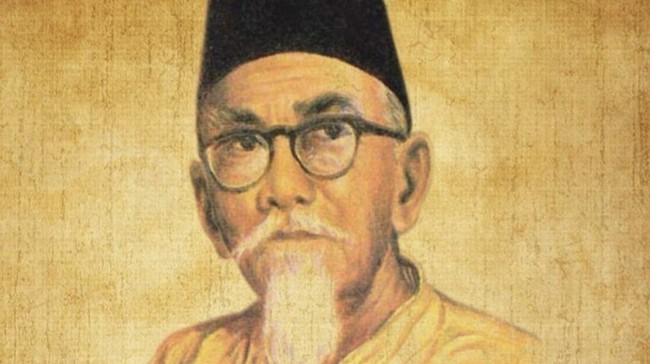
The former Prime Minister of the Netherlands, Willem Schermerhorn, once offered an unusual assessment of one of Indonesia’s future diplomats, K.H. Agus Salim, who later served as the nation’s third Foreign Minister. Schermerhorn described Salim as a ‘destitute’ individual.
This observation arose after Schermerhorn personally encountered Salim, a figure widely recognised as a master Indonesian diplomat. While Schermerhorn admired Salim’s extraordinary linguistic abilities and his respected presence in international negotiations, he noted that Salim’s private life lacked the luxury typically associated with high-ranking state officials.
‘This very clever old man (Agus Salim) is a genius in the fields of language, speaking, and writing perfectly, in at least nine languages, but has one weakness: he lived in poverty throughout his life,’ Schermerhorn wrote in his diary, Het Dagboek van Schermerhorn (1946).
This statement was grounded in reality. Although he served as Foreign Minister from 1947 to 1948 and acted as the face of Indonesia in various international forums, Agus Salim lived far from opulence. While diplomats generally present themselves in fine attire to build an image before foreign envoys, Salim was indifferent to such matters. According to the book Agus Salim: Peran dan Sumbangsihnya bagi Indonesia (2024), the suits he wore to official events often appeared worn, and his hat was frequently an old item.
This simplicity was not due to a poor upbringing, as Salim was the son of a prosecutor during the Dutch colonial era. Instead, from a young age, he chose a modest lifestyle, eschewing luxury. He maintained this choice even while holding high state positions. Throughout his life, Salim did not own a private home, preferring to live in rented houses and moving frequently from one location to another.
Historian Amrin Imran, in the book Perintis Kemerdekaan: Perjuangan dan Pengorbanannya (1991), notes that during the 1920s, Salim lived in a rented house in the Tanah Tinggi area, where the roads became muddy during the rainy season. On other occasions, he stayed in the homes of friends.
This commitment to simplicity lasted until his death on 4 November 1954. Although he left no significant wealth, his services to the nation earned him immense state honours. The government decided to bury him at the Kalibata Heroes Cemetery with a state funeral. According to Harian Merdeka (5 November 19lar), Agus Salim was the first person to be interred at TMP Kalibata, even before he was officially designated a National Hero.
The government also requested that all government offices and the public fly flags at half-mast as a mark of respect. A day later, thousands of people accompanied Salim to his final resting place, with the President, Vice President, and high-ranking officials present to pay their respects. In recognition of his contributions to Indonesia’s independence struggle and diplomacy, the government officially designated K.H. Agus Salim as a National Hero via Presidential Decree Number 657 of 1961, issued on 27 December 1961.