
Dukcapil Brings Mobile Services to Serve Earthquake Victims' Documents in Nagekeo
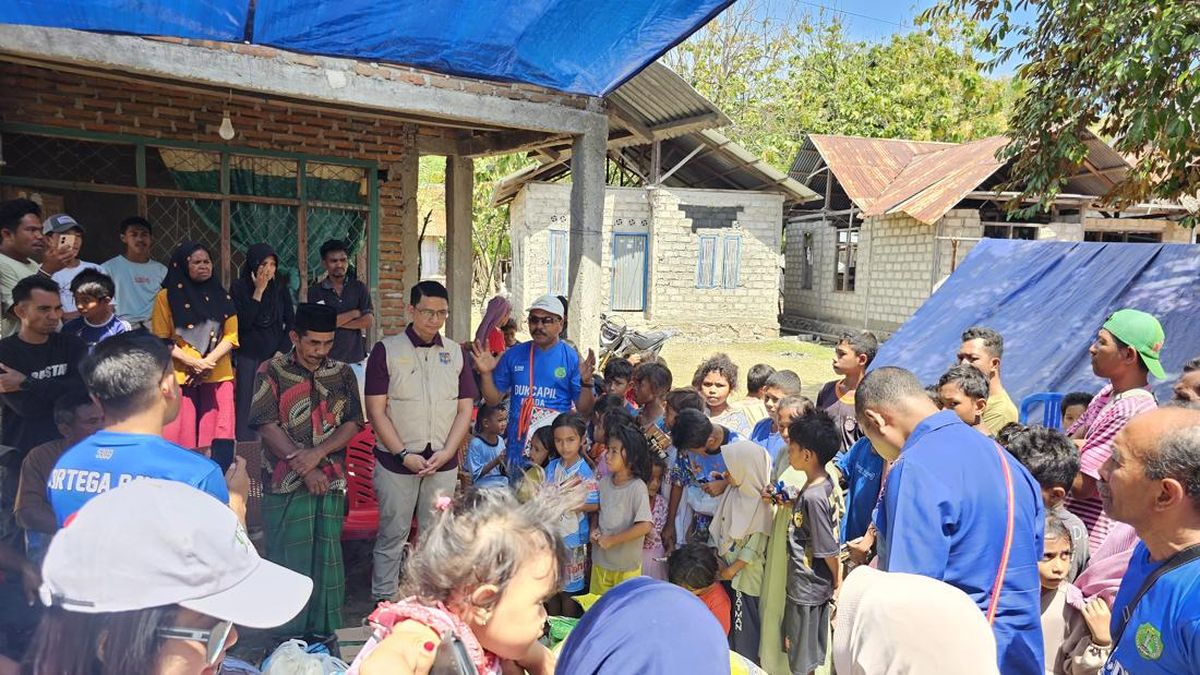
Population administration services have been opened in the middle of evacuation posts for earthquake victims in Nagekeo Regency, East Nusa Tenggara. Residents who lost or suffered damage to their civil registration documents no longer need to visit the Dukcapil office because officers come directly to the evacuation sites.
The mobile service was opened by the Directorate General of Population and Civil Registration of the Ministry of Home Affairs together with the Nagekeo Dukcapil Office at the Aeramo Parish Post, Aesesa District. At the location, residents were seen bringing remaining documents, including photocopies of family cards damaged by the earthquake. For affected residents, civil registration documents are an essential need because they relate to access to social assistance, education, health services and various other public services.
The earthquake in Nagekeo caused nine deaths and injured 22 others. A total of 7,430 houses were reported damaged, while 540 office buildings and public facilities were also affected. Damage was recorded across six sub-districts and 113 villages.
Services at the Aeramo Post began to be prepared on Tuesday (25/8/2026) from 07.30 WITA. Officers prepared equipment to record and print civil registration documents. At around 09.00 WITA, the service was officially opened by Nagekeo Regent Simplisius Donatus. The opening was accompanied by Director General of Dukcapil Teguh Setyabudi and the central team of the Directorate General of Dukcapil led by Indersan Rakha.
The joint team consisted of officials from the Directorate General of Dukcapil, the Nagekeo Dukcapil Office led by Acting Head of Office Oscar Yoseph Amekae Sina, and field technical personnel.
During the visit, Teguh also handed over support to strengthen population administration services in the affected areas. The assistance included 6,000 blank electronic ID cards, ribbons, and Starlink devices to support connectivity and accelerate services.
Throughout the day of service at the Aeramo Post, officers issued 300 civil registration documents. The documents issued consisted of 108 electronic ID cards, 93 family cards, 49 child identity cards, 26 birth certificates, four death certificates and three marriage certificates. In addition, officers carried out nine new electronic ID card recordings and issued five certificates of change of residence for Indonesian citizens. One document each was also issued for minutes of agreement on child adoption, child legalisation, and activation of Digital Population Identity.
Teguh said the service demonstrated that population services must continue to operate even when communities are in emergency conditions due to disasters. “Mobile services in the midst of a disaster are a tangible manifestation of Dukcapil Prima, bringing services closer, making them easier and bringing happiness to the community. No citizen should lose their rights simply because their civil registration documents were damaged or lost due to the earthquake,” he said.
Head of Sub-directorate for Governance and Human Resources of Information and Communication Technology at the Directorate General of Dukcapil, Indersan Rakha, said the speed of coordination between central and regional governments was one of the important factors in implementing services amid limitations. “Rapid coordination between central and regional teams ensures services run effectively despite limitations. Dukcapil is present not only at the office, but at evacuation points,” he said.
Meanwhile, Nagekeo Regent Simplisius Donatus appreciated the support of the Dukcapil team from the central government. According to him, the reissued documents are an important part for residents to obtain assistance and access basic services after the disaster. “We are greatly helped by the presence of Dukcapil. The civil registration documents issued today are key for residents to access assistance and basic services,” he said.
For residents in evacuation shelters, civil registration documents may not be able to replace damaged houses or erase the impact of the earthquake. However, these documents are one of the doors for them to regain access to various services and assistance needed in the recovery process. Population administration services at disaster sites are also part of efforts to ensure residents retain their identity and administrative rights even while facing emergency situations.