
Dukcapil 2026 National Coordination Meeting Unifies Population Data Policy
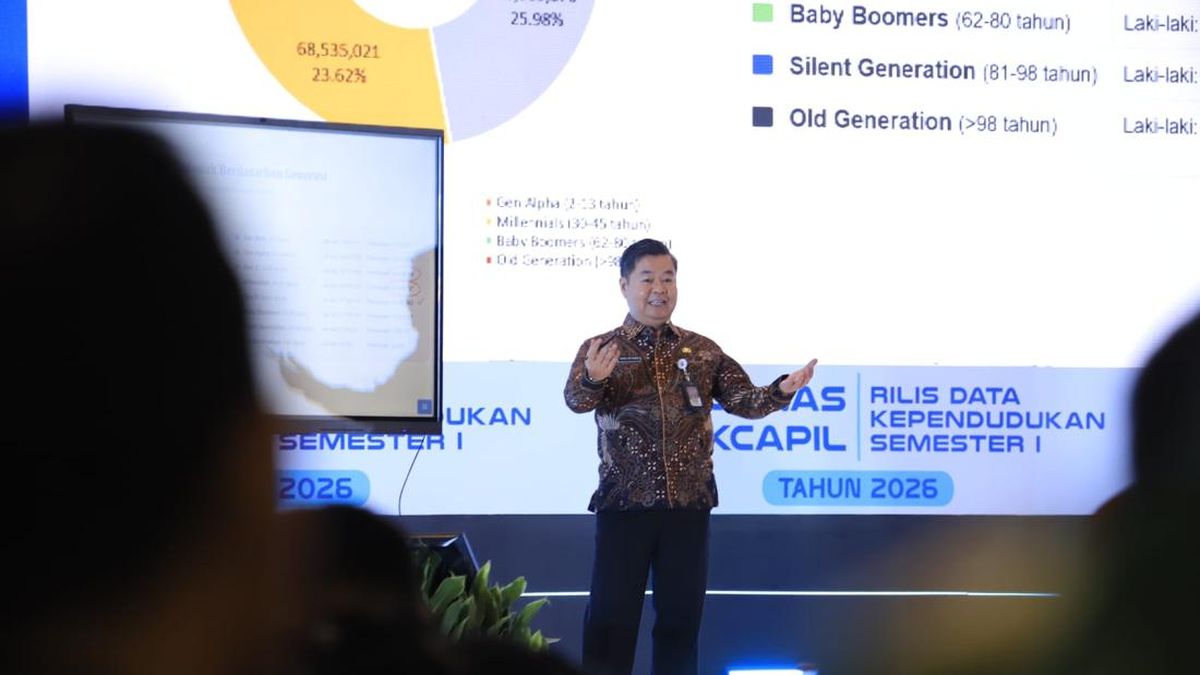
The Directorate General of Population and Civil Registration (Ditjen Dukcapil) of the Ministry of Home Affairs (Kemendagri) held the 2026 National Coordination Meeting (Rakornas) on Population and Civil Registration and the release of Clean Population Data (DKB) for the first semester of 2026. The event was opened by Minister of Home Affairs Tito Karnavian in Jakarta on 3-4 August 2026. Carrying the theme ‘Population Identification Number (NIK) and Digital Population Identity (IKD) as the Foundation of Digital Public Infrastructure in Supporting Government Digital Transformation’, this annual forum was designed as a stage for consolidating national policy direction, bringing together the central government, regional governments, and state institutions in a single policy node. In the concept of Digital Public Infrastructure, digital identity is one of the main foundations that enables various government services to interconnect securely and efficiently. Therefore, strengthening NIK, IKD, and the quality of population data is an important prerequisite for accelerating government digital transformation. This commitment to digital identity was evident from the outset, with the obligation of IKD-based registration replacing the manual registration model. This method confirms that IKD is a system genuinely used by its own organisers. During the opening series, the IKD Dukcapil Prima Award was presented, an award for regions considered consistent in encouraging the expansion of digital identity utilisation in their areas. The forum featured speakers from various ministries and institutions discussing the future direction of population administration. On the first day, the Ministry of National Development Planning/Bappenas explained the importance of population data as a basis for national development planning. Subsequently, Ditjen Dukcapil explained the transformation of population administration services, the utilisation of NIK and IKD for the digitalisation of social protection, data utilisation in the regions, strengthening the role of field officers, and central-regional synergy in the implementation of population administration. The Chair of the Government Digital Transformation Acceleration Committee was also present to convey the national policy direction for Digital Public Infrastructure, while the National Economic Council, the Ministry of Social Affairs, and Ditjen Dukcapil discussed the expansion of population data utilisation in government digital transformation. On the second day, the Ministry of State Apparatus Empowerment and Bureaucratic Reform, the Ministry of Finance, the Ministry of National Development Planning/Bappenas, the Ministry of Communication and Digital Affairs, and the Central Statistics Agency discussed optimising the use of NIK and IKD from policy, fiscal, and national statistics perspectives. This cross-ministerial involvement shows that digital transformation based on population data has now become a shared agenda, no longer a technical matter for a single agency. The forum also featured a session sharing good practices on the utilisation of NIK and IKD for public services in the regions, with direct experiences from the Governor of DKI Jakarta, the Mayor of Surabaya, and the Head of the Regional Revenue Agency of West Java Province. This session served as proof that digital transformation based on population data is already running effectively on the ground. In addition, strengthening the infrastructure, security, and information systems of population administration was also discussed, considering that population data has now become one of the strategic assets of government administration. This Rakornas was attended by around 700 participants, consisting of high-ranking officials from relevant ministries and institutions, senior leadership officials within Kemendagri, primary high leadership officials and administrators of Ditjen Dukcapil, as well as all Heads of Dukcapil Offices from provinces and regencies/cities throughout Indonesia. This broad involvement is considered important because national-scale policies require direct input from those who handle population dynamics in the field daily. The entire series of discussions had one goal: to present a state that is increasingly closer to the community. With NIK and IKD as the foundation of Digital Public Infrastructure, the distribution of social assistance is expected to be more targeted because it relies on clean and up-to-date data. The identity verification process in various public services also becomes simpler and faster, without the need to repeatedly carry physical documents. Real-time verified digital identities also help ensure that national development planning is compiled based on data that truly reflects the condition of the community. The two-day series of the forum was closed with the reading of the Rakornas outcome formulation by the Head of the Provincial Dukcapil Office, before being officially concluded by the Director General of Dukcapil, Teguh Setyabudi. This closing confirmed that the forum’s results constitute a written commitment to be followed up. Through the Dukcapil 2026 Rakornas, Ditjen Dukcapil affirmed its increasingly strategic role in supporting Indonesia’s Digital Public Infrastructure architecture. This forum marks the evolution of Indonesia’s population administration from an administrative recording function into a national digital identity foundation that drives state services to citizens in the digital era.