
Dudung: Pancasila is not merely memorisation, it must be present in behaviour
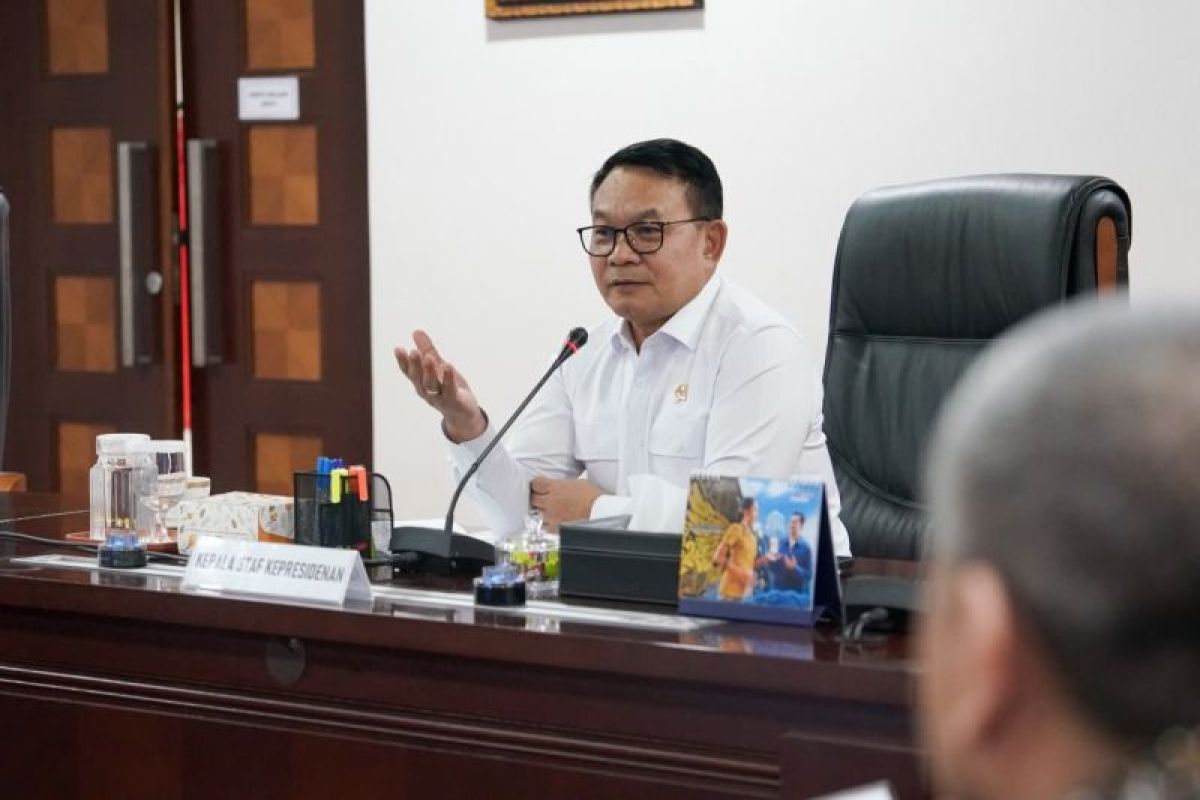
Jakarta (ANTARA) - Presidential Chief of Staff Dudung Abdurachman has emphasised that practising Pancasila is not enough if it only involves memorising the five principles, but must be realised in everyday behaviour.
“Young people should not just be asked to memorise the five principles. They must understand how Pancasila works in real life,” Dudung said in a written statement received on Sunday.
According to Dudung, the application of Pancasila in real life can be realised through attitudes of respecting differences, not easily hating others, deliberating when opinions differ, helping weaker groups, acting fairly, and placing the nation’s interests above group interests.
He assessed that practising Pancasila values must also become part of the behaviour of state officials who have direct authority over the public.
Dudung said Pancasila must be reflected in the way officials use their authority, namely being firm but still humane, courageous but not arbitrary, and upholding the law while still promoting justice and human dignity.
“For officials, Pancasila must be visible in the way they use their authority,” he said.
He gave the example that practising Pancasila can be seen when officials serve the people well and law enforcement officers uphold the law fairly.
“Pancasila should not only be in classrooms, in books, on podiums, or in ceremonies. Pancasila must be present in behaviour,” he said.
Dudung assessed that practising Pancasila is increasingly important amid open information, the development of social media, and changes in the way the younger generation thinks.
According to him, people can now interact with various cultures, thoughts, and even ideologies from around the world through technology.
This openness, he said, need not be feared, but must be balanced with a strong national identity so that people can take good things from the world without losing their identity as the Indonesian nation.
Therefore, Dudung stressed that Pancasila development is not only the responsibility of one institution or aimed only at students and the younger generation.
The government, schools, universities, families, religious leaders, community leaders, the TNI-Polri, the media, and all components of the nation have a shared responsibility in practising Pancasila.
He emphasised that Pancasila is the foundation for maintaining Indonesia’s unity amid diversity, together with the 1945 Constitution, the Unitary State of the Republic of Indonesia, and the spirit of Bhinneka Tunggal Ika.
“Indonesia’s greatest strength is our ability to maintain unity amid diversity. And the foundation for maintaining that unity is Pancasila, the 1945 Constitution, the NKRI, and the spirit of Bhinneka Tunggal Ika,” he said.