
Dudung: Good response to public complaints deserves incentives, poor response faces disincentives
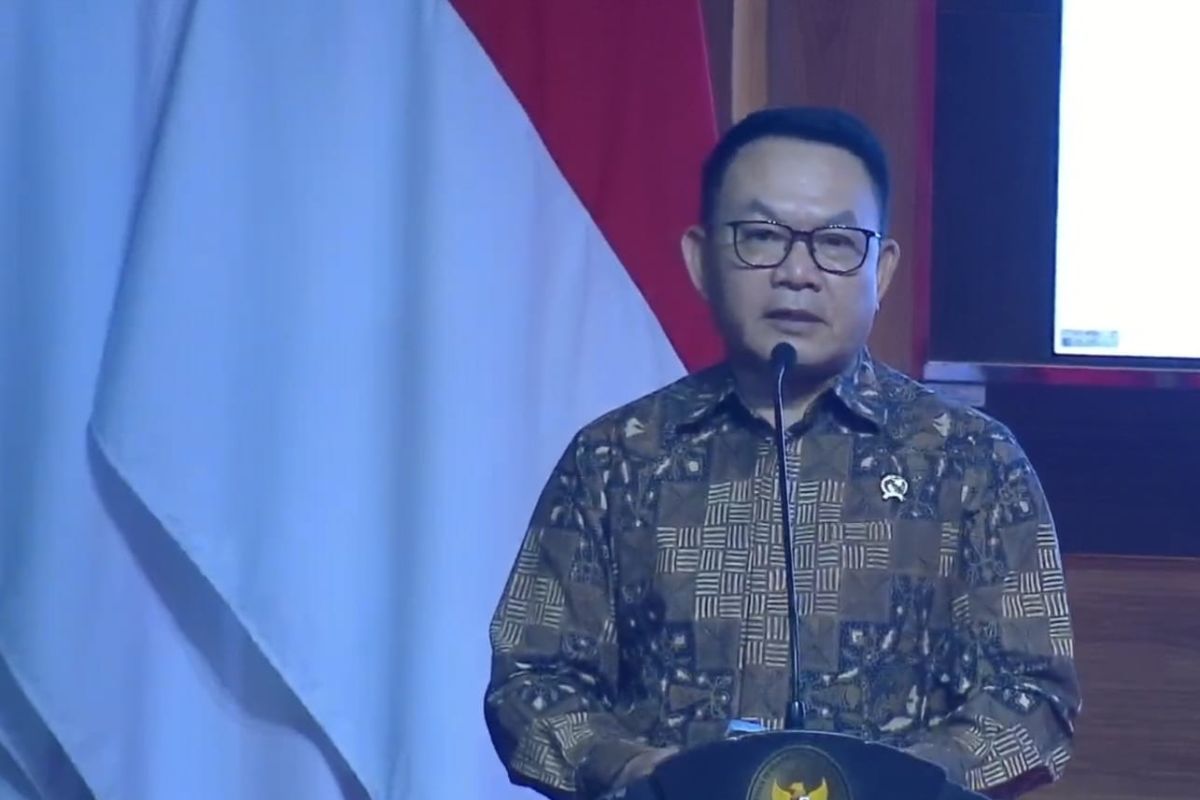
Jakarta (ANTARA) - The Chief of Staff to the Presidency, General TNI (Ret.) Dudung Abdurachman, is encouraging the response to and follow-up on public complaints through SP4N-LAPOR! to become part of the performance measurement for both central and regional government organisations.
Speaking at the signing ceremony of the SP4N-LAPOR! Synergy Memorandum of Understanding at the Ministry of Administrative and Bureaucratic Reform (PANRB) in Jakarta on Tuesday, Dudung stated that agencies with the best performance in responding to and following up on public complaints could be granted incentives, whereas those with poor performance should face disincentives.
“Therefore, central and regional agencies with the best response and follow-up on complaints must receive appreciation through increased incentives, and conversely, disincentives for those that perform poorly,” he said, according to an official broadcast from the Ministry of PANRB.
According to Dudung, every complaint received through SP4N-LAPOR! must be viewed as part of the primary duty of the bureaucracy and should not end at the mere process of receiving or forwarding reports.
“Every complaint that enters the LAPOR! application must be a primary task, rather than a burden on the bureaucracy,” he remarked.
He emphasised that resolving public complaints must result in real solutions to public service issues on the ground.
Dudung assessed that SP4N-LAPOR! (the National Public Service Complaint Management System - Online Aspirations and Complaints Service for the People) needs to become an integral part of the working methods of central and regional government agencies in handling public service issues.
He stressed that public complaints should not be treated as a bureaucratic burden, but rather as part of the government’s duty to ensure that public services function effectively and that community issues are resolved.
“Public service is a manifestation of the state’s presence and a form of the social contract between the state and its people. When public services are of high quality, the people feel the presence of the state in its best form,” he said.
Dudung also mentioned his experience observing public services in several regions. One example was the ID card (KTP) issuance process in Gianyar Regency, Bali, which he noted could be completed in approximately five minutes.
He expressed hope that an increasingly open complaint mechanism would help the government identify public service issues at the field level while accelerating their resolution.
“Small matters can be reported to us, and subsequently, the follow-up can hopefully lead to perfection for the progress of our nation and state,” he added.
SP4N-LAPOR! is a national complaint system established to integrate the management of public service complaints, ensuring that community reports are forwarded to the relevant authorities and acted upon.
The level of follow-up on public complaints through SP4N-LAPOR! that has been resolved has also served as one of the indicators in Bureaucratic Reform evaluations since 2023.
Source: jawawa.id (https://jawawa.id/newsitem/dudung-good-response-to-public-complaints-deserves-incentives-poor-response-faces-disincentives-1790679657)
Originally published by Antara (Indonesian) (https://www.antaranews.com/berita/5763235/dudung-respons-aduan-publik-bagus-dapat-insentif-buruk-disinsentif), translated from Indonesian