
Duck Egg Farmers Push for Duck Eggs to Be Included in MBG Menu
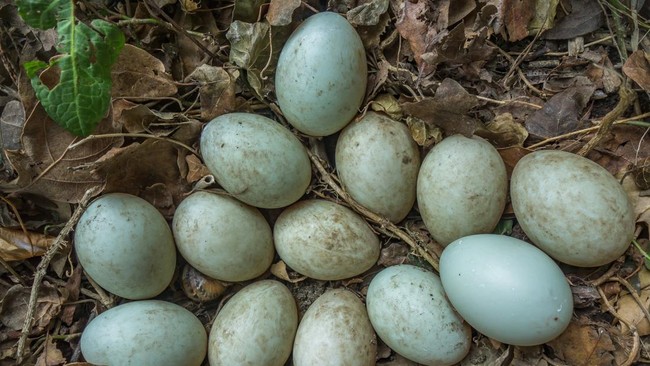
Jakarta, CNBC Indonesia - The National Duck Farmers Association (PBN) hopes the government will utilise duck eggs as one of the protein sources in the Makan Bergizi Gratis (MBG) programme. This was disclosed during an audience between Commission IX of the Indonesian House of Representatives and the National Duck Farmers Association (PBN) yesterday (18 May 2026). Member of Commission IX, Achmad Ru’yat, supported the inclusion of duck eggs in the MBG supply chain. He said duck eggs could enrich the diversity of protein sources in the programme and help national duck farmers who are currently suffering losses. He also agreed that this aspirational issue should be a serious concern for the leadership of the National Nutrition Agency (BGN). He noted that the protein content in duck eggs is very good and that the BGN nomenclature does not actually limit the types of eggs that must be used. ‘And as far as I know, in the BGN Indonesia nomenclature, protein needs are described as including eggs and meat. Which eggs, it doesn’t specify because there may be a need for diversity alongside chicken eggs; that’s important; there should also be a choice of duck eggs. So, clearly, MBG must be a nutritious menu,’ he said during the RPDU between Commission IX and PBN.
Commission IX member Nurhadi expressed support for a Memorandum of Understanding (MoU) between BGN and PBN. However, he warned of the need to map the profile of farmers in detail to tailor policy at the regional level. Unlike laying hens which are distributed across Indonesia, the distribution of duck farmers requires a region-based or cluster-based approach. ‘We very much support or encourage the agreement in the form of an MoU between BGN and PBN. But this country obviously exists with BGN looking comprehensively at the profiles of the farmers that are part of PBN; what are the details. Because if it were laying hens, for example, or duck farmers, I think they are almost spread evenly across Indonesia,’ he said. ‘Well, duck farmers may be sufficient and we can push for policies in cities/regencies where duck farmer populations are significant, so the absorption can occur and be maximal,’ he added.
Based on an undercover inspection (sidak) he conducted into several kitchens of the Nutrition Service Unit (SPPG), he revealed that the absorption of duck eggs, particularly salted duck eggs, has begun in several regions, including East Java. In his observations, this business is still promising and provides healthy margins for local farmers. ‘I feel that in some places we have done sidak into SPPG kitchens; they buy at Rp2,500. If production costs are Rp1,875, it looks like there is still profit. There is a margin there. In East Java this has started, salted duck eggs,’ Nurhadi stated. ‘Then in our area in Blitar, there is a population of 10,000 ducks. The proportion of raw material is more local. I haven’t asked in detail what it’s called. Perhaps a study visit or consultation with them,’ he added.
Citing the official government site of Desa Putat Gunung Kidul, beyond protein, fats, and antioxidants, duck eggs are found to contain multivitamins and minerals. The multivitamins and minerals include vitamin A, B complex, vitamin E, vitamin D, folate, selenium, calcium, iron, magnesium, zinc, and manganese. A duck egg contains 130 calories, 9 g protein, 1 g carbohydrate, 100 mg sodium, 150 mg potassium, 154 mg phosphorus, and 600 mg cholesterol. By comparison, a chicken egg contains 60 calories, 5.5 g protein, 0.3 g carbohydrate, 60 mg sodium, 60 mg potassium, 85 mg phosphorus, and 165 mg cholesterol. From these data, it can be observed that duck eggs have a higher protein content than chicken eggs. Protein is a key component for building and repairing various body tissues such as skin, blood, bones, and muscles.