
Dubai Is No Longer Safe: The New Destinations for the Crazy Rich to Splash Their Cash
Jakarta, CNBC Indonesia - The desert that for two decades has been marketed as a tax haven is beginning to feel different. Dubai still boasts the tallest buildings, luxurious beaches, international schools, and a tax-free lifestyle that’s hard to match anywhere.
But since the Iran conflict intensified after the US and Israel attacks a few months ago, security factors have suddenly entered into the calculations of the world’s wealthy expatriates.
For the ultra-wealthy, security is an asset. When missiles and drones began to menace the Gulf region, the logic of capital relocation also shifted.
Those who previously chased Dubai for stability and financial flexibility are now plotting routes out.
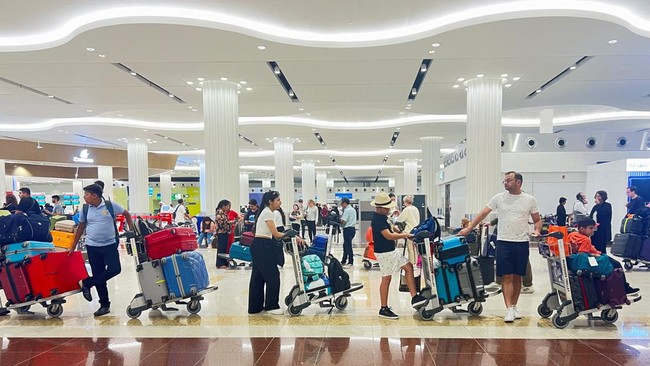
A report from The Economist says that some expatriates have flown to Europe and the United States on the last available flights. Some choose a land route to Muscat in Oman in search of an alternative exit. At the outset of the conflict, many considered this relocation temporary. But the protracted war has shifted mindsets. The question now is no longer ‘when to return’ but ‘where to move to’.
The United Arab Emirates is, in fact, still relatively safe compared with other conflict zones in the Middle East. Most attacks have been intercepted by air defence systems. However, investor psychology works differently. A single threat to hotels, apartments or essential facilities can be enough to alter relocation decisions.
Dubai has long stood on a unique foundation. Income tax is virtually zero. Looser regulations. Flow of capital moves swiftly. The wealthy from Russia, China, India, Europe, and the Middle East can congregate without many questions about the source of their wealth. The city has become a meeting place for Western bankers, Arab real estate tycoons, Indian conglomerates, and Chinese cryptocurrency billionaires.
Before the war broke out, it was estimated that around 3 to 4 million wealthy expatriates and their families lived in the UAE out of a total population of about 12 million people. More than 240,000 of them were millionaires. Most are concentrated in Dubai.
Henley & Partners, the global migration advisory firm, notes that consultations requests from UAE residents regarding relocation to other countries jumped by more than 40% in recent weeks. In other words, these relocations have moved from momentary panic to a long-term strategy.
The phenomenon is creating a new competition among countries. Now more and more countries are offering residency by investment or permanent residence routes for foreign wealthy individuals. Malta, New Zealand, Turkey, the Maldives, and Argentina are among those racing to offer low-tax packages, high security, and investment access.
Turkey has been one of the most aggressive. The government has proposed waiving foreign-sourced income tax and capital gains for up to 20 years for some foreign residents. Some investors are said to be buying property directly to obtain Turkish citizenship.
But the destination most often appearing in this new relocation flow is Milan.
Milan offers the combination sought by the global wealthy: access to European business, financial networks, international schools, and a relatively friendly tax regime. Italy has in recent years indeed offered incentives for wealthy arrivals. They pay a flat tax of around €300,000 per year on all overseas income. For hedge fund traders and investment managers, that figure is still far more attractive than the progressive tax regimes in many other European countries. Some American hedge funds, such as Millennium Management, have even opened operations in Milan to take advantage of the regime.
The Italian residence scheme is also flexible. EU citizens can move easily. Meanwhile non-EU citizens can obtain residence permits with investments starting from €250,000 in an Italian startup or €500,000 in a larger enterprise. There are also options to buy government bonds worth €2 million or donate €1 million to Italian charitable organisations.
In addition to Milan, Singapore has risen again on the radar of Asia’s wealthy. In recent years, Dubai had briefly outcompeted Singapore in the competition for Indian and Chinese billionaires. Dubai is regarded as more glamorous, more relaxed, and more open to large capital inflows. Singapore appears too strict and too sterile.
Geopolitical developments have now reversed that perception. Singapore benefits from its long-standing reputation, efficient governance, a stable legal system, a mature wealth management hub, and low security risk. OCBC and several major Singaporean banks are said to have seen a rise in funds from Dubai. Singapore’s imports of gold from the UAE have reportedly quadrupled since January.
Bayfront Law, a law firm, records a roughly 30% rise in consulting demand in the last two months. Many of their longtime clients from China are considering leaving the Middle East. Wealthy Indians are also turning back to Singapore as a family and investment base.
Mukesh Ambani, India’s richest man, actually opened a family office in Singapore as early as 2022. Now similar steps are being seen as a new template for Asian conglomerates.
Nevertheless, Milan and Singapore are far from replacing Dubai entirely. Europe is far more politically sensitive to Russian oligarchy amid the war in Ukraine. There are also concerns that changes in the Italian government could erase re