
Dubai Explores Green Jet Fuel Production from Organic Waste
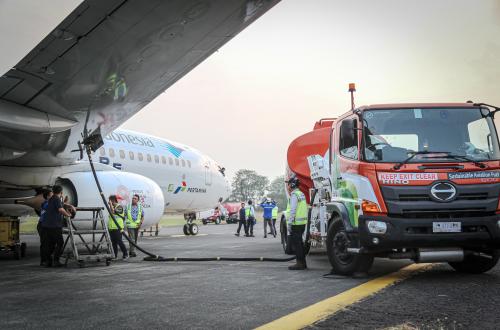
The Dubai Supreme Council of Energy is exploring opportunities to produce sustainable aviation fuel (SAF) from organic waste generated in the emirate. The plan was discussed during a council meeting as part of efforts to support the transition towards a more environmentally friendly aviation sector. The initiative aligns with global efforts to increase the proportion of SAF blended with conventional jet fuel in the coming years. Besides providing a cleaner fuel alternative for the aviation industry, the project is also expected to strengthen the implementation of a circular economy in Dubai through the utilisation of organic waste. However, the council has not yet disclosed further details regarding the project, including production capacity, timeline, or investment value. In Indonesia, the development of SAF is also ongoing, led by state-owned oil and gas giant PT Pertamina. The company has signed a Memorandum of Understanding with Boeing to explore the development of a SAF ecosystem in Indonesia, supporting aviation sector decarbonisation and the acceleration of the energy transition towards Net Zero Emissions. In line with President Prabowo Subianto’s vision, Indonesia continues to promote SAF development as a solution to reduce carbon emissions in the aviation sector. According to the ASEAN 2050 SAF Outlook report, Indonesia ranks among the top three ASEAN countries with the largest potential SAF production surplus, projected to reach 2.2 million barrels per day by 2050. Through this collaboration, Pertamina and Boeing will explore various aspects of SAF ecosystem development, including the identification of potential feedstock, technology development, and support for necessary policy formulation. Pertamina’s President Director, Simon Aloysius Mantiri, stated that this collaboration represents a long-term investment to build a national SAF industry. He expressed optimism that the partnership would accelerate the development of a competitive SAF industry, create added value for the national economy, and support the decarbonisation of the aviation sector.