
DTSEN: The Key to Ending Overlaps in Zakat and Social Assistance Disbursements
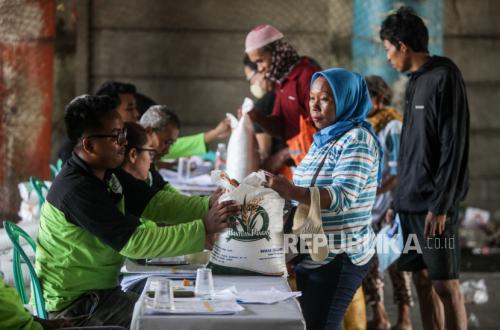
Poverty remains Indonesia’s heavy policy challenge. The Central Statistics Agency (BPS) data for September 2025 recorded poverty at 8.25 per cent, equivalent to 23.36 million people. Of these, around 2.38 million are in extreme poverty. This reality shows that despite expanding social protection programmes, issues of aid equity and intervention effectiveness are not yet fully resolved.
The government has allocated a large budget for social protection. In 2025, total social assistance reached Rp147.2 trillion, disbursed through a range of programmes such as the Family of Hope Programme (PKH), Non-Ccash Food Assistance (BPNT), Village Fund BLT, aid for orphans, and the Temporary Direct Cash Assistance (BLTS). These programmes reach around 35 million households.
Islamic philanthropy has likewise shown a significant contribution. Zakat, infaq, sadaqah, and other religious social funds (ZIS-DSKL) nationwide in 2025 totalled Rp44.288 trillion, growing by 10.5 per cent from the previous year. The majority of these funds support humanitarian programmes and empowerment of the poor as a priority group.
The magnitude of government social protection expenditure and the growing potential of national zakat are important strengths in supporting poverty alleviation in Indonesia. The national zakat potential, at around Rp327 trillion per year, indicates a large opportunity for collaboration to support social protection and community empowerment.
This commitment is reinforced in the RPJMN 2025–2029, which places Islamic social finance as part of National Priority 2, with a target ZIS-DSKL contribution to GDP of 0.208 per cent by 2029. This confirms that zakat is no longer viewed merely as philanthropy, but as part of a national development strategy to support poverty alleviation, social protection, and community empowerment.
Yet a fundamental problem persists: aid is often not integrated. In practice, recipients may receive duplicate assistance, while other poor groups remain untouched. Overlaps in disbursement reduce the effectiveness of aid and hinder poverty alleviation efforts.
This is where the Single National Social and Economic Data (DTSEN) plays a crucial role. DTSEN represents a strategic moment to build integration between government social assistance and zakat programmes managed by Zakat Management Organisations (OPZ). Through an integrated data base, disbursement can be more precisely targeted, transparent, and measurable.
The study by the National Committee for Sharia Economics and Finance (KNEKS) shows that ZIS-DSKL programmes meaningfully reduce the burden on poor households and raise the income of vulnerable groups. Based on the alignment of government social protection programmes, ZIS-DSKL accounted for 10.53 per cent of total beneficiaries from six observed social protection programmes in 2023.
Even on programmes equivalent to Nusantara Economic Heroes (PENA), the contribution of OPZs reached 25.43 per cent, implying that the number of beneficiaries reached by OPZs far exceeds government programmes. This finding confirms that zakat is no longer merely a charitable instrument but has become a vital part of Indonesia’s social protection and community empowerment ecosystem.
Therefore, the approach to link government social aid and zakat should not treat them as two separate systems. They should be built in a complementary and supplementary scheme. The government can focus on basic social security, while zakat can be directed to strengthen economic empowerment, micro-enterprise development, and social support for the poor.
This integration can begin with data interoperability between the government and OPZs using DTSEN. Beneficiary segmentation should be clarified, for example via a poverty decile approach so interventions are more targeted. The bottom decile (desil 1) could be prioritised for basic state social assistance, while the more vulnerable groups in subsequent deciles can be reinforced through zakat empowerment programmes.
In addition, stronger regulation and cross-agency coordination are key. The role of the Regional Committee for Sharia Economics and Finance (KDEKS) can be optimised as a coordinating hub between local government, social services, and OPZs to ensure programme synergies are effective.
Some regions have already started on this integration path. For example, Semarang City in Central Java has begun building collaboration between zakat management and the regional social service to improve recipient accuracy and aid distribution effectiveness. Such steps could serve as an early model for national DTSEN-based zakat and social assistance integration.
Ultimately, integrating zakat and social assistance is not only about budget efficiency. More broadly, it represents governance aimed at a fairer, more inclusive, and sustainable social protection system. When the state and Islamic philanthropy operate within a unified data and policy ecosystem, the prospects for more significant poverty reduction will grow.
Source: jawawa.id (https://jawawa.id/newsitem/dtsen-the-key-to-ending-overlaps-in-zakat-and-social-assistance-disbursements-1779542792)
Originally published by Republika (https://analisis.republika.co.id/berita/tfde16393/dtsen-kunci-mengakhiri-tumpang-tindih-penyaluran-zakat-dan-bantuan-sosial), translated from Indonesian