
DTSEN Identifies 4.33 Million 'Invisible' Families Not Yet Receiving Social Assistance
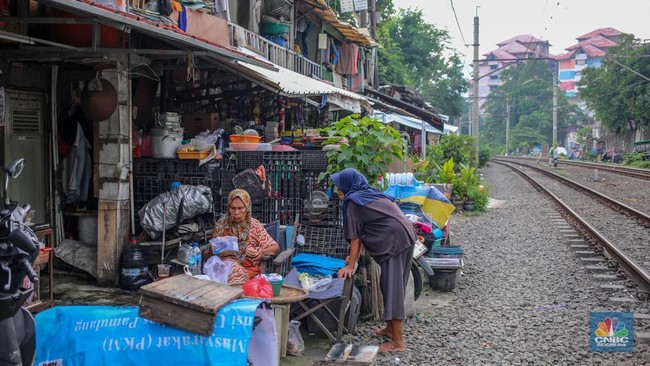
The National Single Social and Economic Data (DTSEN) has begun opening access to government assistance programmes for millions of families who were previously untouched by social assistance (bansos).
Minister of Social Affairs Saifullah Yusuf revealed that 4,330,417 beneficiary families (KPM) who had never previously received aid are now recipients of government programmes following the formation and utilisation of DTSEN.
“After DTSEN was established and utilised, 4,330,417 KPM who previously never received aid have now become recipients of assistance. This includes PKH (Family Hope Programme), non-cash food assistance, and subsidy recipients. Those whose lives have been successfully aided by the government were found through DTSEN,” Saifullah stated during a press conference in Jakarta.
Saifullah noted that these findings demonstrate the importance of consolidating social and economic data so that communities previously unreached by government programmes can be more easily identified. DTSEN serves as Indonesia’s first social registry, acting as the government’s primary database for executing various programmes. The Central Bureau of Statistics (BPS) has been entrusted with managing DTSEN, while ministries, agencies, and local governments assist in data updating, verification, and validation.
Social and economic data previously scattered across various agencies is now being gathered and integrated into a single database in accordance with Presidential Instruction (Inpres) Number 4 of 2025 regarding DTSEN.
Not Automatic Eligibility for Social Assistance
Head of BPS RI, Amalia Adininggar Widyasanti, emphasised that the public must understand that DTSEN is not a beneficiary registry.
“DTSEN contains a registration or database which is a collection of all Indonesian residents with NIK and KK (National ID and Family Card) unified into a single data point,” Amalia explained. She noted that being present in the DTSEN does not automatically make an individual a recipient of social assistance or specific government programmes.
“The list of assistance or the beneficiary registry is determined by each relevant minister according to their respective policies,” Amalia added. For example, the ‘Sekolah Rakyat’ programme targets communities in deciles 1 and 2, yet not everyone in those groups automatically becomes a beneficiary due to additional criteria set by the relevant ministries.
Data Remains Subject to Change
On the other hand, the government acknowledges that DTSEN is not yet perfect. Saifullah stated that data errors are being continuously rectified through verification and validation processes. He emphasised that data changes or errors do not mean an individual will immediately lose their social assistance.
“If the data is currently erroneous, it does not mean that person’s social assistance will be immediately cut off. Or someone who might be in decile 4 when they were previously in decile 8, does not necessarily receive aid. It still needs to be ensured, corrected, investigated, and traced; verification and validation will be conducted,” Saifullah asserted.
Amalia added that DTSEN is dynamic data. The socio-economic conditions of the community can change, meaning the database must be updated periodically.
“Every citizen has a voice, and we provide a way to perform corrections easily, clearly, and transparently, so that DTSEN does not only belong to the government but belongs to all of us—it is Indonesia’s, which we must protect together,” Amalia explained. She noted that public data updates are vital because behind every data point, there are individuals and families striving to be reached by government programmes.