
DTSEN Data Update: 4.3 Million New Beneficiaries Now Receiving Social Assistance
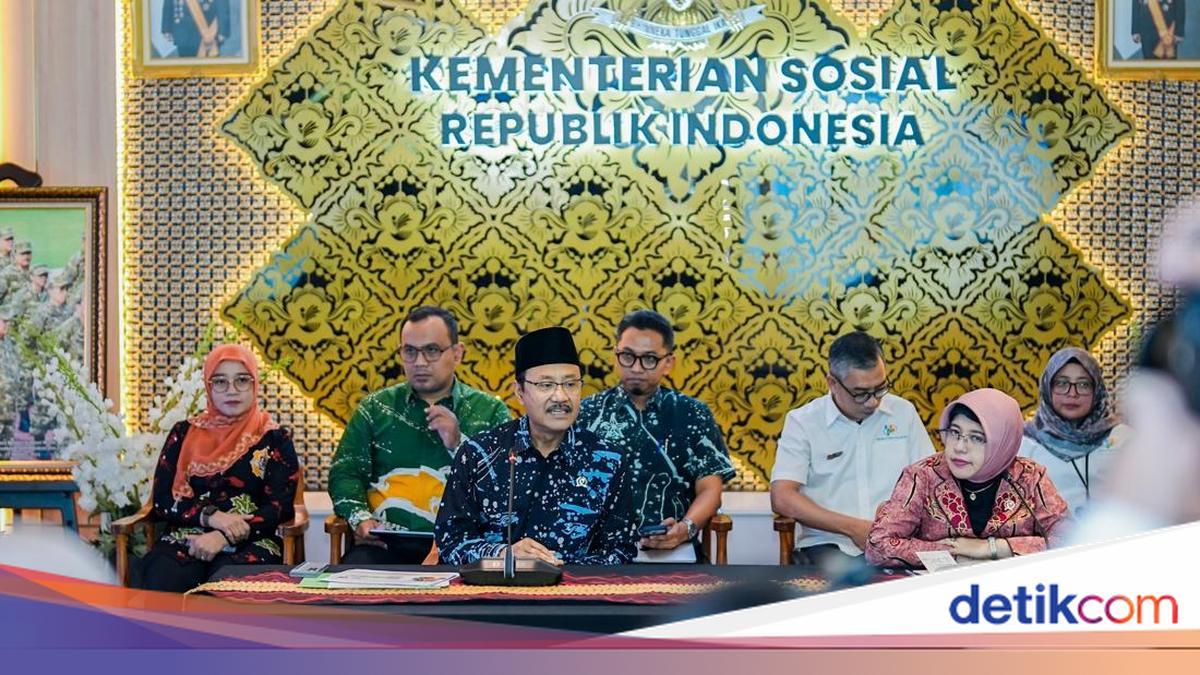
Since the DTSEN began being used as the basis for social assistance distribution in the second quarter of 2025, a total of 4,330,417 new beneficiary families (KPM) within deciles 1-4, who previously did not receive aid, have now been granted assistance.
Minister of Social Affairs Saifullah Yusuf (Gus Ipul) stated that the increase in beneficiaries is the result of a continuous data updating process conducted through collaboration between ministries, agencies, and local governments.
“Since 2025, every quarterly distribution has seen improvements in beneficiary data, including PKH (Family Hope Program), Non-Cash Food Assistance, and Health Insurance Premium Recipients (PBI),” Gus Ipul said in a written statement on Tuesday (8/9/2026).
According to Gus Ipul, this process is part of a national data consolidation following the issuance of Presidential Instruction (Inpres) Number 4 of 2025. Under this policy, the Central Bureau of Statistics (BPS) is tasked as the manager of the single data system, while ministries, agencies, and local governments assist in updating the data by submitting information relevant to their respective fields.
This data is then verified, validated, and standardised based on metrics set by BPS before being presented as a relative welfare ranking, ranging from decile 1 to decile 10.
“Ministries, agencies, and local governments are required to assist in the update by sending various data obtained according to their respective duties to be verified, validated, and standardised according to the measures established by BPS,” Gus Ipul continued.
The Ministry of Social Affairs, along with other agencies, continues to collaborate to incorporate various field-obtained data into the updating process.
Prior to the use of DTSEN, social assistance distribution relied on the Integrated Social Welfare Data (DTKS). Starting from the second quarter of 2025 (April-June 2025), the distribution began utilising the DTSEN system.
This change in the database foundation has been followed by improvements in the list of beneficiaries during each distribution period. In the second quarter of 2025, there were 1,379,043 new beneficiaries. This number rose to 1,696,007 in the third quarter of 2025, then to 1,179,506 in the first quarter of 2026. Meanwhile, the second quarter of 2026 saw 56,276 new beneficiaries, and the third quarter of 2026 saw 19,585 new beneficiaries.
Overall, since the implementation of DTSEN, there have been 4,330,417 new beneficiaries in deciles 1-4 who previously received no aid but are now receiving assistance following the data update.
“There are 4,33able,417 new beneficiary families. I need to convey this because many people are not yet aware that this data improvement is greatly helping us distribute social assistance more precisely,” said Gus Ipul.
The update is also reflected in the changing composition of PKH and food assistance recipients. In the second quarter of 2026, all PKH and food assistance recipients were within deciles 1-4, with no longer any recipients found in deciles outside this range.
For PKH, the number of recipients in deciles 1-4 increased from approximately 8.33 million families in the first quarter of 2025 to 10 million families in the second quarter of 2026. Food assistance recipients in deciles 1-4 also increased from approximately 14.20 million families to 18.25 million families during the same period.
A similar change was observed among PBI-JKN (Health Insurance) recipients. Recipients in deciles 1-5 increased from 76,479,692 people in April 2025 to 96,395,043 people in April 2026. Conversely, recipients in deciles 6-10 dropped from 15,033,200 to 355,396 people.
The Head of the Central Bureau of Statistics (BPS), Amalia Adininggar Widyasanti, emphasised that the data updates, including changes in deciles, are not merely about numbers, but about the lives of the people behind every data point.
She cited the example of Mariatun, a woman from Central Java living with her husband and four children. Mariatun had no steady employment, and for years, her family struggled to meet basic needs. During the DTSEN update process, Mariatun’s family was accurately recorded in the government database. Once identified, she finally became eligible for the Family Hope Program (PKH).
“Behind every piece of data tidied by the government, there is a life that finally has better hope for the future,” said Amalia.
Amalia stated that Mariatun’s case illustrates how the update process can ensure families previously unreached are visible within the government’s social protection system.
From a statistical perspective, these beneficiaries are part of a beneficiary registry—a group that can be identified through data so that government programmes can be distributed to the correct individuals or families.
“One by one, families that were previously unrecorded are now recorded. Those who were previously invisible to the government are now seen, and subsequently, the government can extend its assistance more precisely,” said Amalia.
According to Amalia, there are many other examples of families experiencing similar changes after the data was updated. Millions of people who were previously waiting for aid are now beginning to benefit from programmes suited to their conditions.
Gus Ipul also provided concrete examples of the impact of the DTSEN update on the ground. One such person is Mistam Rizwandi from West Java, who is in decile 1. He previously received no aid, but after the data update, he now receives PKH and food assistance.
Another example is Juriah from Brebes Regency, also in decile 1. She previously received no aid, but through the update process, she is now able to receive PKH and food assistance.
On the other hand, there were also recipients who previously received aid but, following verification and updates, are no longer recorded as recipients. This means…
Source: jawawa.id (https://jawawa.id/newsitem/dtsen-data-update-4-3-million-new-beneficiaries-now-receiving-social-assistance-1788876152)
Originally published by detikcom (https://news.detik.com/berita/d-8654410/pemutakhiran-desil-dtsen-4-3-juta-kpm-baru-kini-terima-bansos), translated from Indonesian