
DSLNG Strengthens University-Industry Collaboration to Support Net Zero Emissions
Palu (ANTARA) - Collaboration between higher education institutions and industry helps prepare students for the needs of the workforce by strengthening their understanding of technology, sustainability, and environmental management towards Net Zero Emissions (NZE).
“Collaboration between universities and industry like this provides a practical perspective to students. It is not only about the technology used in the industry, but also how sustainability becomes part of decision-making and the execution of operational activities,” said Dwi Fitri Lestari, Environment Analyst at PT Donggi Senoro LNG (DSLNG), in Palu, Central Sulawesi, on Wednesday.
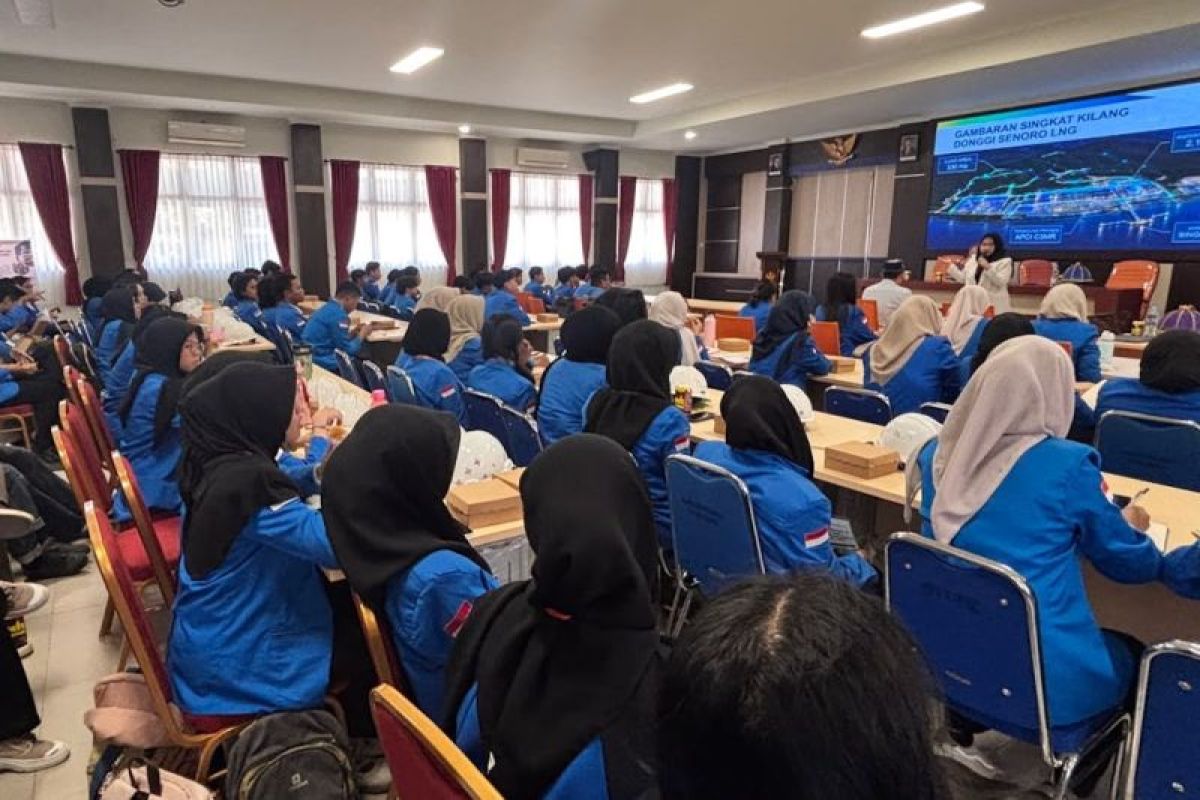
This statement was made during the ‘DSLNG Goes to Campus’ (DGTC) programme at Tadulako University (Untad), which encourages the integration of technology and sustainability to support efforts towards NZE.
According to Dwi, industries are currently not only required to meet compliance but are also continuously seeking opportunities to improve environmental performance through innovation and the utilisation of technology.
“Industries today are not only required to meet compliance, but are also constantly looking for opportunities to enhance environmental performance through innovation and the use of technology,” Dwi added.
She stated that an understanding of technology and sustainability is crucial for students, particularly future engineering professionals who will eventually face industrial developments and environmental management demands.
Dwi explained that technological integration is one of the key components in efforts to reduce emissions at LNG processing facilities. The use of technology and innovation allows operational processes to be monitored and optimised, ensuring that energy and resource usage can be managed more efficiently.
She noted that the journey towards NZE is not an isolated process but requires the integration of various aspects, ranging from the implementation of technology and energy efficiency to emission management and the enhancement of human resource competence.
Meanwhile, the Head of the Civil Engineering Department at the Faculty of Engineering, Untad, Sriyati Ramacyani, expressed appreciation for the implementation of the DGTC programme by DSLNG on campus.
According to her, direct interaction between students and industry players provides an opportunity for students to understand the application of the knowledge gained in university within an industrial operational context.
“Collaboration between universities and industry like this provides a practical perspective to students. Not only regarding the technology used in the industry, but also how sustainability aspects become part of decision-making and the implementation of operational activities,” she said.
The activity, attended by students from various study programmes within the Faculty of Engineering at Untad, also included interactive discussion sessions.
Students raised several questions and views regarding the challenges of technology implementation, the company’s strategies in executing ‘beyond compliance’ principles, and the steps the industrial sector can take to support the achievement of NZE.
Through the DGTC programme, DSLNG is creating a space for interaction with the academic community to share knowledge and practical experience from the industrial world, while simultaneously supporting human resource development, particularly for the younger generation in Central Sulawesi.