
DSI to Strengthen Governance and Added Value of Natural Resource Exports
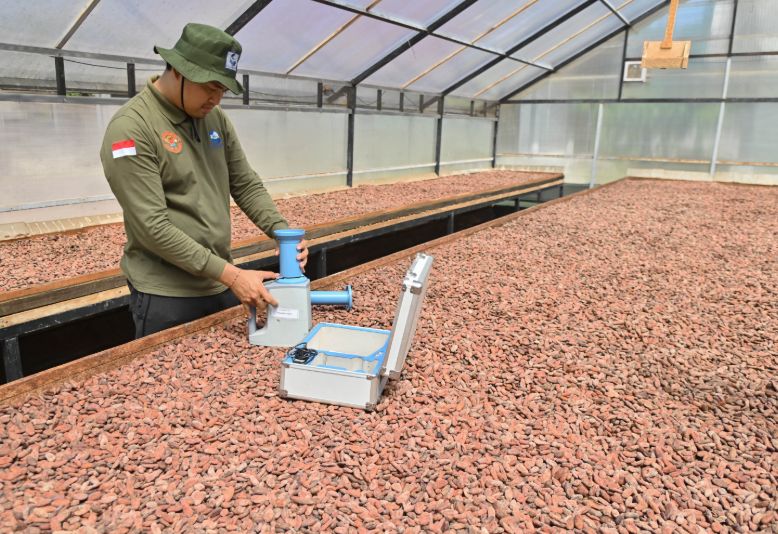
PT Danantara Sumberdaya Indonesia (DSI) has the potential to serve as a state instrument to strengthen the governance and value-add of natural resource (SDA) exports. The Executive Director of the Centre for Energy and Mining Law Studies (PUSHEP), Bisman Bhaktiar, stated that the legitimacy of DSI’s mandate is sufficiently strong, provided the government provides a clear regulatory basis and assignment.
He explained that this State-Owned Enterprise (BUMN) for exports needs to position itself as a business operator. DSI must avoid acting as a new regulator to prevent overlapping authorities.
Bisma also projected that DSI would be able to overcome industry challenges in the commodity export sector, particularly efforts to handle under-invoicing practices that frequently harm state finances. Through data transparency and the integration of trade information, there will be a significant opportunity to suppress manipulation loopholes.
“As long as the mechanism is good, transparent, and does not add to the bureaucratic burden, it will not have a negative impact on investment,” he said, as reported in an official statement on Thursday (25/6).
Bisman assessed that the implementation of an integrated transaction tracking system would bring a positive impact on the effectiveness of monitoring the volume and price of export commodities in the field. As long as transparency is conducted consistently and supported by law enforcement, this initiative will be highly beneficial.
The government is implementing a transition period from June until December 2026, only requiring export reporting, which is considered a wise and cautious approach. Bisma views this decision as providing adequate room for business actors to adapt, ensuring that all operational risks related to trade contract disruptions can be anticipated and minimised as early as possible.
He also appreciated the discussion process during the transition period in an effort to draft operational regulations that consider actual field conditions. Active participation from business actors needs to be well-received.
“The voices and aspirations of business actors must truly be heard, so that the quality of policy considers field conditions. Although the final decision must remain in the best interest of the national interest,” he said.
Meanwhile, the Chief Operating Officer (COO) of Danantara, Dony Oskaria, stated that they will first conduct discussions with business actors to solidify DSI’s position as the guardian of export proceeds (DHE). One of the discussions to be held is determining commodity price benchmarks.
“During the six-month transition stage, many discussions will be conducted, including the determination of price benchmarks together with the government and business actors,” said Dony.
He explained that discussions are being held to ensure that this new policy does not disadvantage export businesses. This step is expected to make DSI beneficial for entrepreneurs.
The transition period will be evaluated in the first three months of implementation. The results of the evaluation will serve as the basis for refining implementation in the next stage, with a target for the full implementation of the export mechanism through DSI on 1 January 2027.
Furthermore, Bisman highlighted that free competition in the global market will require DSI to prepare itself with high credibility, strong corporate governance, and wide market access networks. International buyers generally focus on aspects of supply certainty, consistent commodity quality, contract compliance, and the ability to provide solid financing support.
DSI’s commitment to maintaining operational integrity and professionalism across all lines must be applied to build a strong reputation globally. Oversight is required to close all loopholes for deviations in the trade of the state’s valuable commodities.
“DSI needs to focus on increasing transparency and the value-add of national exports. Professional and fair governance must be a priority to gain the trust of the global market. Governance must be clean and avoid rent-seeking,” said Bisman.
Indonesia, as one of the world’s largest producers of various strategic commodities, still faces challenges in optimising its influence on global trade mechanisms. In 2024, total coal exports reached USD 30.49 billion, palm products USD 27.76 billion, and ferroalloys approximately USD 13.8 billion.
Clear regulations are expected to provide legal certainty and encourage the implementation of good corporate governance (GCG) principles. Various studies show that the accumulated export value reported is lower than the actual realisation.
Source: jawawa.id (https://jawawa.id/newsitem/dsi-to-strengthen-governance-and-added-value-of-natural-resource-exports-1782384698)
Originally published by Media Indonesia (https://mediaindonesia.com/ekonomi/904293/dsi-perkuat-tata-kelola-dan-nilai-tambah-ekspor-sda), translated from Indonesian