
DSI ready to operate, Rosan: Strengthen strategic commodity ecosystem
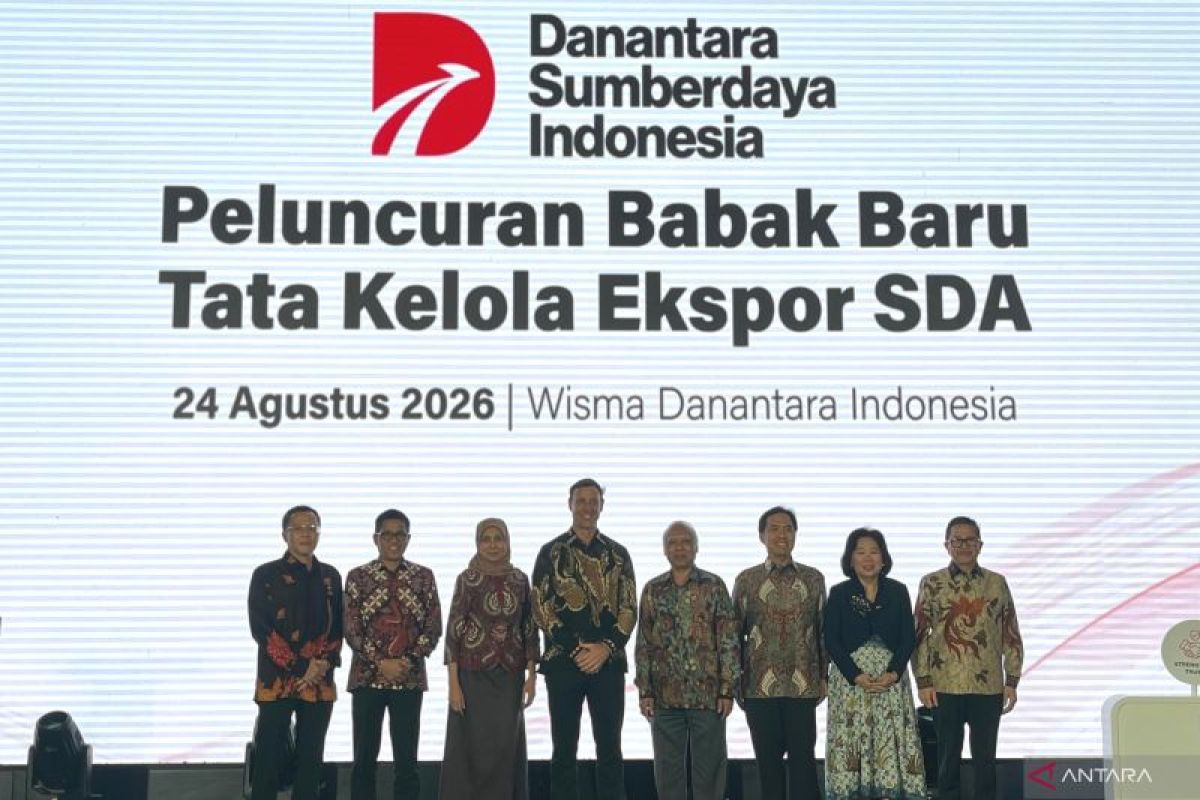
PT Danantara Sumberdaya Indonesia (Persero), or DSI, is ready to carry out its mandate to strengthen the national strategic commodity ecosystem through improved transparency, governance, and optimisation of export value for Indonesia’s natural resources.
Danantara Indonesia CEO Rosan Roeslani emphasised that DSI’s existence aims to strengthen visibility within Indonesia’s strategic commodity ecosystem and improve understanding of export transactions, market dynamics, and potential value optimisation for the national economy.
“Indonesia has abundant natural resources, but resources alone are not enough. We need stronger governance, better visibility, and a more accountable system to ensure that the value generated from these commodities is properly recorded and optimised for the national interest,” Rosan said in Jakarta on Monday.
DSI officially announced its implementation plan, executive leadership team, and brand identity as part of its institutional strengthening.
The company was established under Government Regulation Number 24 of 2026 concerning Governance of Strategic Natural Resource Commodity Exports (PP 24/2026).
Since commencing operations on 1 June 2026, DSI has been carrying out its mandate in stages, with an initial focus on coal, palm oil, and ferroalloy commodities, while maintaining smooth export flows and business certainty for industry players.
According to Rosan, strengthening governance is a crucial factor in ensuring Indonesia’s natural resources deliver greater economic benefits. Through DSI, the government aims to ensure that the strategic commodity export process has an increasingly robust recording and analysis system.
In the more than two months since it began operating, DSI has built analytical visibility over approximately 6,500 export declarations with a value exceeding US$14 billion and a commodity volume of more than 90 million tonnes.
This trading activity spans more than 50 loading ports across 25 provinces, with export destinations in over 100 countries.
DSI integrates data with global market references to connect various aspects of transactions, including price, volume, quality, Harmonized System (HS) classification, transport vessels, and export destination markets.
Through this analysis, DSI has begun identifying potential value enhancement along the strategic commodity export chain. Initial analysis together with state-owned enterprises (BUMN) indicates value optimisation opportunities of approximately US$5 billion per year.
In strengthening its institutional capacity, DSI has assembled a leadership team with experience across various sectors, including industry, international trade, natural resources, investment, finance, technology, law, and risk management.
DSI’s Board of Commissioners is chaired by President Commissioner Cipung Noer, alongside Tony Wenas, Mari Elka Pangestu, and Harold Tjiptadjaja as Commissioners.
The Board of Directors is led by Luke Mahony as President Director, together with Sinthya Roesly as Director of Finance and Treasury, Nur Hidayat Udin as Director of Risk Management, and Ivan Ferdiansyah Baely as Director of Legal and Compliance.
As a state-owned export company established under PP 24/2026, DSI has a role in supporting a more integrated, accountable, and traceable export ecosystem.
DSI does not replace the function of regulators, but rather complements the existing ecosystem by strengthening data visibility and supporting more effective decision-making.
Enforcement, licensing, and regulatory authority remain with the relevant government ministries and agencies.
DSI’s implementation is being carried out in stages, beginning with the integration of national export data and transaction-level analytics for strategic commodities.
Subsequently, DSI will expand its monitoring and verification capabilities through vessel tracking, destination country validation, and reconciliation of export proceeds in accordance with its mandate.
In the next phase, DSI is expected to serve as a single intermediary for commodities within its mandate, while maintaining existing commercial relationships between sellers and buyers and ensuring export continuity.
To ensure system readiness, DSI is engaging industry players through the establishment of an Industry Task Force together with the Indonesian Employers Association (APINDO), the Indonesian Nickel Industry Forum (FINI), the Indonesian Coal Mining Association (APBI-ICMA), and the Indonesian Palm Oil Association (GAPKI).
This collaboration aims to test the DSI platform, provide direct input from industry, and identify and resolve potential obstacles before broader implementation.
DSI President Director Luke Mahony said the company’s primary focus at present is building systems and capabilities so that its mandate can be carried out credibly, measurably, and sustainably.
“Since commencing operations, we have developed visibility over thousands of export transactions as well as the analytical foundations needed to support DSI’s mandate. We will continue to strengthen our monitoring, verification, and operational capabilities to support a more transparent, accountable, and efficient export ecosystem, while maintaining business certainty and export continuity,” he said.