
DSI: A Solution for Exports?
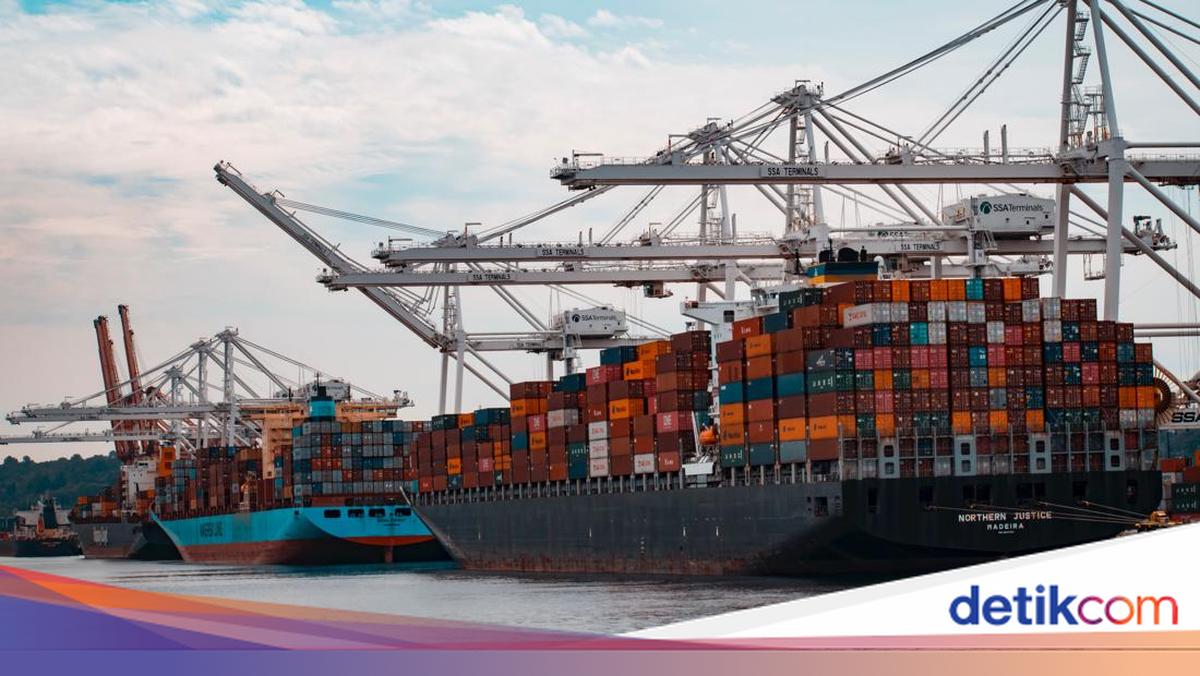
Indonesia is facing serious challenges in managing the export of strategic commodities. Firstly, export proceeds are not being fully retained as national foreign exchange reserves. Secondly, there is widespread abuse of export practices and documentation through under-invoicing and under-reporting. These practices cause Indonesia to lose foreign exchange and tax revenue, while also creating distortions in national trade data.
Government Regulation (PP) Number 24 of 2026 regarding the Export Governance of Strategic Natural Resource Commodities is a vital economic policy designed to optimise the use of export foreign exchange. This policy does not merely regulate export proceeds; it fundamentally shifts the paradigm of the relationship between the state and the market in managing Indonesia’s natural resources.
While the last two decades have seen Indonesia move towards trade liberalisation with many private exporters, this policy reinstates the state’s role through an Export SOE, namely Danantara Sumber Daya Indonesia (DSI), acting as the single export channel for strategic natural resource commodities.
The question is no longer whether the state has the right to regulate strategic natural resources, as Article 3:: of the 1945 Constitution clearly affirms. The real question is whether the chosen model will generate greater prosperity compared to the previous system.
Export Governance that Favours the Nation
Indonesia is one of the world’s largest exporters of coal and palm oil. However, for years, critics have argued that the greatest profits are enjoyed by global trade chains, while the state receives relatively limited benefits compared to the economic value produced. This export management policy seeks to rectify this through three main objectives: increasing state control over strategic commodities, increasing value-add and national foreign exchange, and strengthening downstreaming and national economic resilience.
Conceptually, this policy aligns with other resource-rich nations that use state instruments to manage strategic commodity exports. Saudi Arabia utilises Saudi Aramco for its oil sector, Chile plays a significant role through Codelco in the copper industry, and Botswana manages diamond trade centrally through government cooperation with industry players. Following this logic, the government aims to create a stronger bargaining position in international markets and ensure more economic benefits return to the state.
Nevertheless, criticisms regarding the establishment of the Export SOE, DSI, cannot be ignored. The first criticism concerns the potential for a state monopoly, as DSI is authorised as the sole owner or intermediary for strategic natural resource exports, including the authority to determine export prices and business margins. In economic theory, a monopoly is not inherently bad, provided it is accompanied by strong, transparent, and objective governance.
The second criticism concerns the readiness of DSI. Questions have arisen regarding whether the appointed SOE possesses the operational capacity, information systems, global trade networks, and human resources required to manage such high transaction volumes. PT Danantara Sumber Daya Indonesia (DSI) is a subsidiary under the management of the Investment Management Agency of Daya Anagata Nusantara (BPI Danantara). Given this relationship, its competence in its strategic mandate is highly credible.
The third criticism involves investment certainty. Investors require predictability, and fundamental changes in export governance may create a perception that market movement is becoming more restricted, thereby increasing investment risks in the natural resources sector. However, the policy aims to ensure that market mechanisms—namely price formation and supporting documentation—are established fairly and naturally, with the state, via DSI, ensuring Indonesia’s bargaining power.
Addressing Fundamental Doubts and Criticisms
Fundamental criticisms regarding export policy and the existence of DSI must be viewed proportionally. Firstly, this policy is not nationalisation. It does not change the ownership of mines, palm oil plantations, or ferroalloy factories; production remains the responsibility of existing companies. What changes is the export governance.
Secondly, this is not an export ban. The government intends to ensure that exports continue, but through a more coordinated mechanism. There are even exceptions for companies that demonstrate specific commitments to investment, divestment, and downstreaming.
Thirdly, the concern that an SOE might be inefficient is a matter of governance quality rather than the existence of DSI itself. If led by professional management with transparent pricing, organised distribution, independent audits, and public oversight, the risk of mismanagement can be mitigated.
Fourthly, Indonesia requires stronger foreign exchange monitoring instruments. Currently, monitoring commodity exports often faces issues with transfer pricing, under-invoicing, and the repatriation of foreign exchange. With an integrated trade information system to monitor international trade, including strategic natural resources, the oversight of foreign exchange flows can become more effective.
In short, much of the criticism pertains more to implementation rather than the substance of the policy. This policy represents a major leap in Indonesia’s economic governance, born from a legitimate and constitutional spirit: ensuring that natural wealth truly provides the greatest benefit to the Indonesian people.