
Dry Season Reduces Dairy Milk Production in Semarang
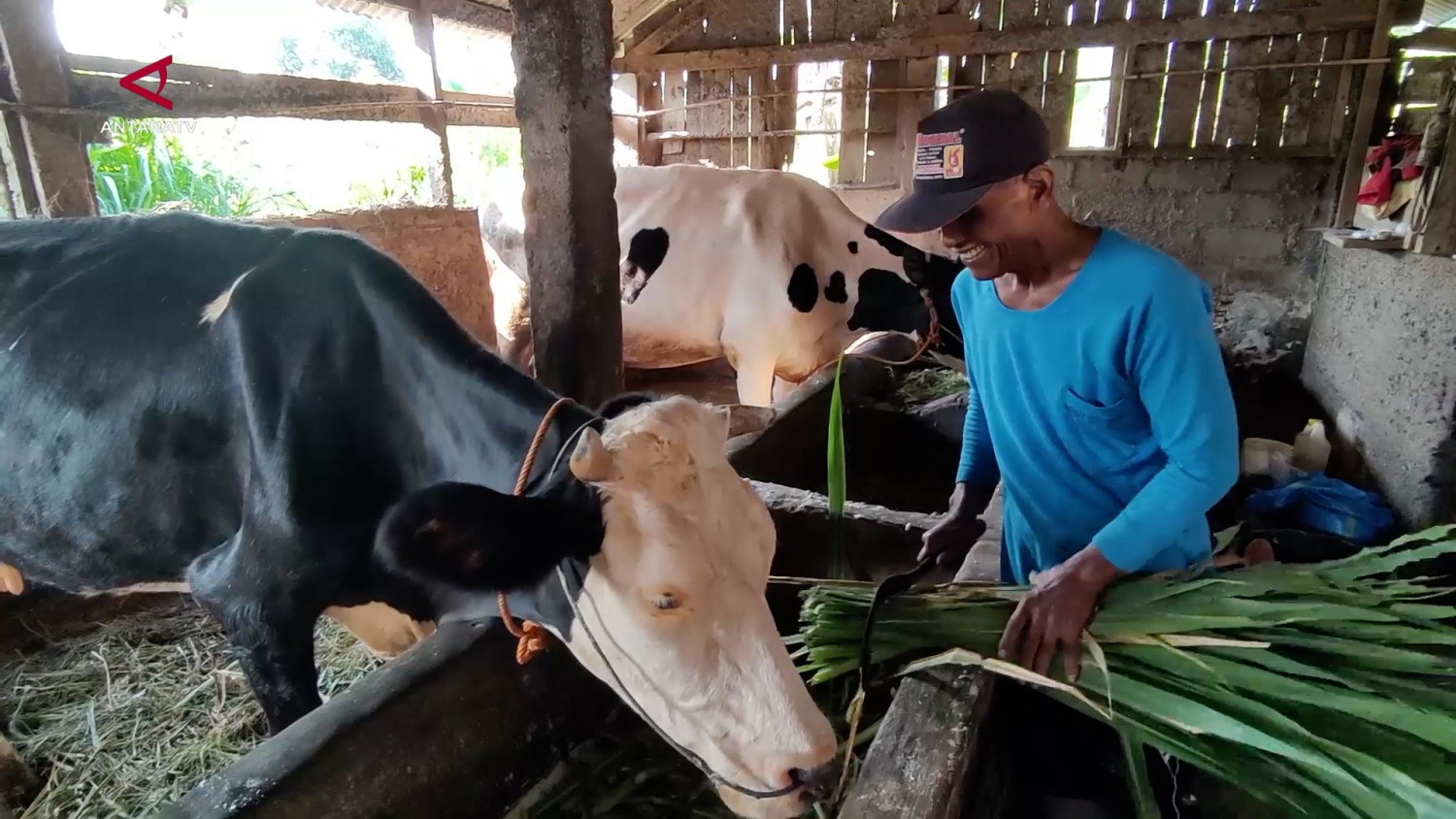
The dry season has directly impacted milk production at the Rejeki Lumintu Livestock Farmers Group in Semarang City, Central Java. The reduction in green fodder or fresh grass has forced farmers to alter feeding patterns by increasing the portion of supplementary feed, such as tofu dregs and cassava tubers, to maintain maximum milk production.
Andiningtyas Mula Pertiwi, Head of the Livestock Division at the Central Java Agriculture and Livestock Service, on Friday, 24 July, urged farmers to pay attention to the availability of feed intake so as not to disrupt milk production quality during the dry season. Farmers are also encouraged to implement feed bank management, a system for managing storage, procurement, and preservation of feed to ensure the availability of animal feed, especially during the dry season.
Andiningtyas stated, ‘We have routinely provided guidance and assistance to farmers to carry out processing. We direct them to process this green fodder into silage, for example, or ammoniation and fermentation as a preservation effort, so that when green fodder conditions are reduced or minimal, they can simply open their feed reserves or feed bank to give to the livestock.’
As a result of the dry season, dairy farmers are experiencing a decrease in milk production. Where previously one cow could produce an average of 10 to 20 litres of milk per day, during the dry season it only produces between 9 and 18 litres per day. The limited availability of green fodder has forced dairy farmers to change feeding patterns by increasing supplementary feed portions, such as tofu dregs and cassava tubers, to keep cows producing milk optimally.
Nurdin, Chairman of the Rejeki Lumintu Livestock Farmers Group, explained, ‘During the dry season, if it is not too severe, production still drops. To overcome this, we increase the supplementary feed, including tofu dregs and cassava, so that even though green fodder is a bit difficult to obtain, production remains stable. That is how we overcome it with supplementary feed when green fodder is scarce.’ The Central Java Agriculture and Livestock Service stressed that farmers must always maintain the cleanliness of their pens to anticipate bacteria or viruses that cause diseases in livestock.