
Dry Season Increases Landfill Fire Risk, West Java Prepares Mitigation Measures
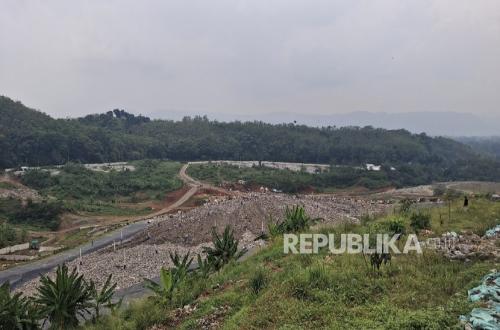
The West Java Provincial Environmental Agency (DLH) is strengthening mitigation measures to anticipate fires at the Sarimukti Final Processing Site (TPA) in West Bandung Regency during the dry season. This effort is being made because methane gas from waste piles has the potential to trigger fires when air temperatures rise.
Head of the Regional Waste Management UPTD of the West Java DLH, Arief Perdana, said one of the steps being taken is accelerating the covering of waste piles with soil and rearranging the piles so that methane gas does not concentrate in one spot.
“Firstly, we have allocated a budget this year for waste covering. The piles are being rearranged so that the methane gas is more evenly distributed. So we are adding heavy equipment to manage the piles and reduce the height of the mounds,” Arief said when contacted on Wednesday (8/7/2026).
In addition, the management has prepared hydrants and various fire extinguishing equipment, both large and small capacity, to speed up handling if a fire occurs.
Arief said the DLH is also cooperating with the West Bandung Regency Fire and Rescue Service to conduct simulations, exercises, and outreach to scavengers and waste truck drivers regarding fire prevention.
“The Fire Service is also helping to ensure the public is more careful about lighting fires at the landfill site. Outreach to scavengers has also been carried out, assisted by the Fire Service,” he said.
According to Arief, the methane gas content in the Sarimukti TPA expansion zone has not been measured in detail. However, piles of organic waste naturally produce methane gas which escapes more easily during hot weather, thereby increasing the risk of fire.
He explained that sources of ignition can also come from various triggers, including shards of glass reflecting sunlight or human activity. Therefore, covering the waste piles with soil is an important step to reduce the potential for fire.
“But the point is, if there is a pile of waste, especially organic waste, it will definitely react. For example, a piece of glass exposed to sunlight can become an igniter. If conditions are dry, it can trigger a fire. That is why it is important to cover the waste with soil. Covering with soil can reduce the risk of ignition,” Arief said.
The Sarimukti TPA experienced a major fire in August 2023 in the old zone which is no longer operational. The fire, which occurred during the dry season, was suspected to have been triggered by a cigarette butt, while methane gas in the waste pile caused the fire to spread quickly and become difficult to extinguish.