
Dry season and forest fires: Why does land burn more easily?
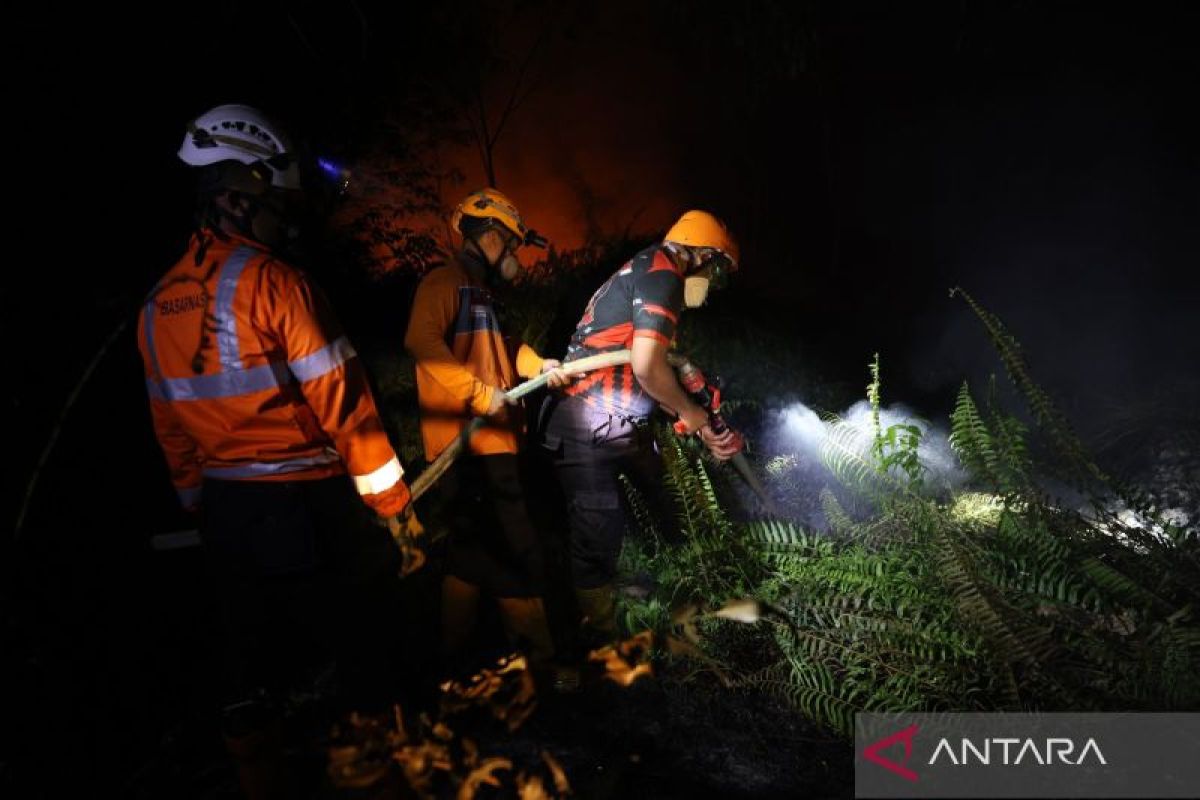
Forest and land fires have once again become a concern in several regions of Indonesia. In Kalimantan, the government is strengthening its response following an increase in fire activity and hotspots in a number of areas. President Prabowo Subianto also travelled to Riau on Monday (24/8) to inspect first-hand the handling of forest and land fires in Sumatra.
These conditions are occurring while most of Indonesia remains in the dry season. The Meteorology, Climatology and Geophysics Agency (BMKG) recorded that 535 season zones, or around 76.5 percent of Indonesia, had entered the dry season by early August 2026. Low-category rainfall also dominates most regions.
BMKG also noted that El Nino, which is in a very strong category, is making dry conditions even more concerning. This situation means the dry season and forest fires often go hand in hand. But why does dry land burn more easily?
- Vegetation becomes drier
When rain rarely falls, plants, grass, leaves, twigs and various organic materials on the ground surface lose their water content. These dry materials then ignite more easily when exposed to a fire source. Fires that do start can also spread more quickly because there is plenty of fuel available around them.
So the dry season does not directly create fire. The dry season makes environmental conditions more flammable when an ignition source is present.
- Soil loses moisture
It is not only plants that become dry. Soil can also lose much of its water content during a sufficiently long period without rain. The drier the land, the greater the risk of fire developing quickly. This is a particular concern in areas with peatland.
Peatland in its natural state stores a great deal of water. However, when the water table drops and the peat dries out, the organic material within it becomes more flammable.
- Fire spreads more easily
Dry conditions make it easier for fire to move from one patch of vegetation to another. Dry leaves, grass, shrubs and twigs can become fuel that helps fire move. If accompanied by strong enough winds, the spread of fire can occur even more quickly.
In monitoring forest and land fires in Kalimantan and Sumatra in August 2026, the National Disaster Management Agency (BNPB) also recorded changes in wind direction that could push smoke across regions, even across national borders.
- Water sources for firefighting can diminish
The dry season can also make water sources around fire locations more limited. When rivers, canals, ponds or other water sources experience reduced flow, the extinguishing process can become more challenging. Officers need sufficient water sources to cool burned areas and ensure the fire does not reignite.
This challenge becomes even greater if fires occur in locations that are difficult to reach.
- Peatland becomes highly vulnerable
Peatland is one of the ecosystems that requires the most attention during the dry season. Peat that remains wet is relatively difficult to burn. Conversely, when its water content drops too far, the organic layer can become fuel.
What makes it more complicated is that peat fires can spread below the surface. Flames may not be visible from above, but the underground layer still retains heat or embers. That is why peat fires can take a long time to be fully extinguished.
- Human factors remain the main trigger
Drought does increase the risk of fire, but fire still requires an ignition source. In many incidents, that source can come from human activity, including land clearing by burning or negligence when using fire.
Dry conditions then make an initially small fire more likely to develop into a widespread blaze. In August 2026, police even named dozens of suspects in forest and land fire cases in several parts of Sumatra and Kalimantan.
This means the relationship between drought and forest fires does not imply that every dry season will inevitably produce fires. Human factors still play a major role in determining whether an ignition source appears or not.
- El Nino can strengthen dry conditions
The El Nino phenomenon is also a factor that needs attention. Simply put, El Nino can alter Indonesia’s weather patterns so that several regions experience drier conditions and lower rainfall. If it occurs simultaneously with the dry season, land conditions can become even drier.
BMKG projects that the peak of the 2026 dry season will occur from August to September, with August being the peak month for the widest areas. Under conditions like these, vigilance against forest and land fires needs to be increased, especially in areas with a history of fires and land that burns easily.
If simplified, the relationship can be described like this: drought makes the environment drier, while an ignition source triggers the fire. When vegetation and soil have high water content, fire is harder to ignite and spread. Conversely, when environmental conditions are very dry, materials such as grass, leaves, shrubs and peat become more flammable.
That is why the dry season is often a period requiring extra vigilance against forest and land fires.
BMKG data shows these conditions are currently occurring in Indonesia in August 2026. In addition to most regions having entered the dry season, hotspots with a high confidence level are still being monitored, especially in Kalimantan and Papua.
Although closely related, the dry season is not the sole cause of forest and land fires. Fire still requires an ignition source. Human factors, land conditions, water management, vegetation, wind and regional characteristics can all influence the occurrence and spread of fires.
Therefore, tackling forest and land fires cannot be achieved simply by waiting for the rainy season to arrive. Preventing ignition sources and monitoring vulnerable areas remain essential.