
Drug Case of Ko Erwin Network: Patron Highlights Account Trading Practices
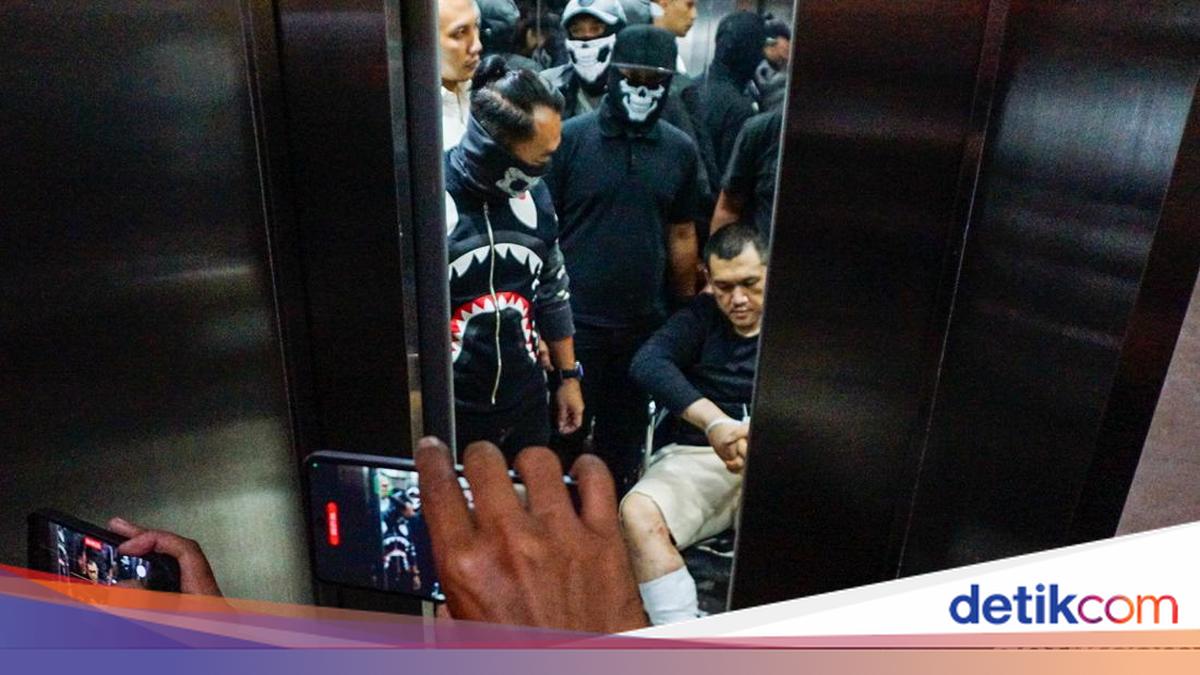
Patriot Anti-Narcotics (Patron) has highlighted the prevalence of the practice of creating bank accounts that are then sold to third parties. The Ko Erwin drug case serves as one example of this practice.
“This practice not only violates the principles of prudence in the banking system but also has significant potential to be used as a means of crime, particularly in narcotics distribution and Money Laundering Criminal Acts (TPPU),” said Patron’s General Chairman, Muannas Alaidid, to reporters on Sunday (19/4/2026).
Muannas explained that, from a criminal law perspective, such actions cannot be separated from the element of intent. According to him, there are three relevant forms of intent in this context.
“First, intent as purpose. In this condition, the consequence of the act is indeed the primary goal of the perpetrator. In this situation, the perpetrator clearly meets the full intent element because they know and desire the consequence to occur,” said Muannas.
The second point, said Muannas, is intent as certainty. According to Muannas, in this form, the perpetrator may not make the consequence the primary goal but knows that it will certainly occur as a result of their actions.
“Third, intent as possibility (dolus eventualis). In this situation, the perpetrator knows exactly what the account will be used for but still carries out the act. In criminal law, this attitude is still categorised as intent because the perpetrator is considered to know and accept the risk (willful blindness),” he stated.
Muannas assessed that claims of ignorance do not automatically eliminate criminal liability. He sees this approach as a way to ensnare parties who provide accounts for illegal activities.
“Normatively, such acts have the potential to be charged under Articles 3, 4, and 5 of Law No. 8 of 2010 on TPPU related to efforts to conceal or disguise the origin of criminal proceeds. Additionally, it can be linked to Article 55 of the Criminal Code regarding participation in criminal acts,” he said.
He then cited the case of fund collection in the Ko Erwin drug case. Muannas warned the public not to get involved in account trading in any form.
“The case uncovered by law enforcement, including the arrest of account owners used as fund collectors for the Ko Erwin drug network belonging to drug lord Erwin Iskandar alias Ko Erwin, is real evidence that this practice has serious legal consequences,” he added.
“Never lend or sell accounts to anyone for any reason. Legal responsibility remains attached to the rightful owner, even if they are not the one operating it. If there are parties offering to create an account and then buy it, it should be suspected that there is potential for it to be used for crime,” he continued.
Bareskrim Enforcement
Previously, Bareskrim Polri conducted pursuits related to drug lords in the network of Andre Fernando alias The Doctor. Bareskrim again arrested two account owners who served as fund collectors for ‘The Doctor’.
The two arrested individuals are Muhammad Jainun and Ronny Ika Setiawan. Both played roles as account owners for fund collection from the drug lord.
“Muhammad Jainun and Ronny Ika Setiawan have been arrested and are undergoing preliminary examination,” said the Head of the NIC Task Force of the Drug Crimes Directorate of Bareskrim Polri, Commissioner Kevin Leleury, in his statement on Sunday (19/4/2026).
The two suspects, Muhammad Jainun and Ronny Ika Setiawan, are part of the syndicate of drug lord Hendra Lukmanul Hakim alias Pak Cik. Both received transfers of payments from intermediaries of Andre Fernando.
Meanwhile, the Andre Fernando network used collector accounts in the names of Muhammad Riiki and Dedek Lusiana to receive drug payments from Drug Lord Erwin Iskandar alias Ko Erwin.