
Drought Threat: Legislator Proposes Emergency Wells and Weather Modification
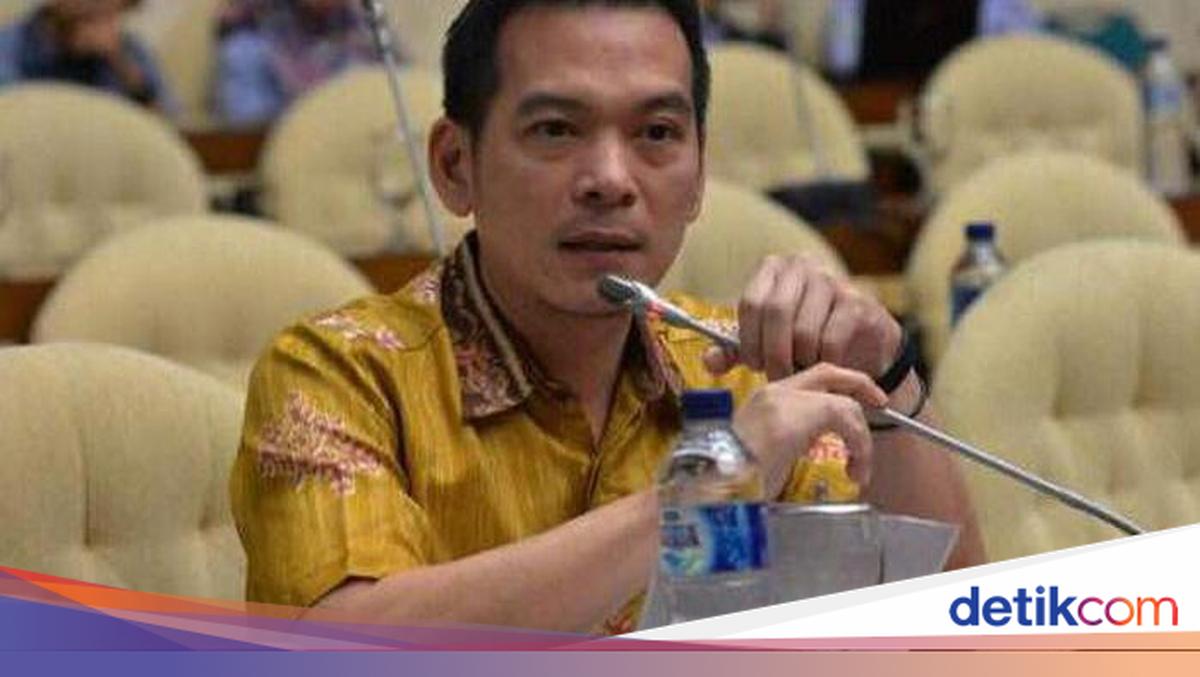
Daniel Johan, a member of Commission IV of the Indonesian House of Representatives (DPR RI), has warned the government against complacency regarding several regions in Indonesia predicted by BMKG to face the highest drought potential. Daniel Johan proposed several steps that the government could undertake.
Daniel Johan initially stated that Commission IV of the DPR has repeatedly warned the government about this potential drought. However, he noted that the time for mere prevention has passed.
“During our working meeting, we firmly cautioned the government not to be complacent in facing the threat of El Niño, which climate experts predict will be the strongest in the last 150 years. The strong El Niño we are facing is a natural factor that must be anticipated through various means. However, I must emphasise that our current condition has shifted from the prevention stage to the impact control stage,” said Daniel Johan when contacted on Saturday (1/8/2026).
Daniel Johan noted that the impacts of the drought are already being felt by the public. He received reports that many areas, particularly in Kalimantan, have not experienced rainfall. “This is because the impact is already palpable; in many areas, it has not rained for almost two months, and particularly in Kalimantan, hotspots and haze have begun to appear. Data from 93 sub-districts in West Java affected by drought also serves as a loud alarm that this crisis has entered a stage requiring a rapid response,” he said.
Consequently, he stated that extraordinary efforts are now required, suggesting two specific actions. “First, the drilling of emergency wells to meet the community’s water needs, but this must be managed carefully to avoid long-term groundwater degradation; we must not let today’s emergency solution become tomorrow’s problem. Second, weather engineering or weather modification to trigger artificial rain, especially in the areas most affected by drought and hotspots,” he continued.
Daniel Johan ensured that Commission IV of the DPR RI will continue to provide full attention to this situation, particularly regarding food security and agricultural production, which are most vulnerable to drought. He urged the government—including BMKG, the Ministry of Agriculture, BNPB, and local governments—to accelerate these mitigation steps in a coordinated, rather than sectoral, manner.
“We must not allow handling to be slow because each agency is acting independently. We will certainly push for political and budgetary support so that funding for drought management can be allocated and reallocated from other budgets. If funding is insufficient, it will impact the response, and the negative multiplier effect will be enormous. We do not want this, so the budget must be ready as this can be categorised as an emergency situation,” he added.
BMKG Predictions
Previously, BMKG stated that the peak of the 2026 dry season is predicted to occur from August to September. BMKG predicts that most parts of Java, Bali, and southern Kalimantan will be areas with the highest drought potential.
BMKG Senior Secretary Guswanto stated that rainfall in these areas is expected to remain below normal until early October. This condition necessitates early anticipation of potential drought, forest and land fires, and water crises.
“The regions with the highest drought potential during the August-September 2026 dry season peak are most of Java, Bali, Nusa Tenggara, southern Kalimantan, and southern Sulawesi. These areas are predicted to experience below-normal rainfall until early October before rain begins to return,” said Guswanto on Friday (31/7).
Java is expected to be one of the most vulnerable regions. In addition to rainfall remaining below normal until October, water demand in this area is also very high as it serves as a centre for agricultural activity and is inhabited by a dense population.
Meanwhile, Bali and Nusa Tenggara are also predicted to face a fairly long dry season. Climatologically, these regions more frequently experience droughts, so the risk of forest and land fires is expected to increase during the peak of the dry season.
In Kalimantan, particularly the southern and central regions, below-normal rainfall has the potential to increase the number of hotspots that could trigger forest and land fires.
South Sulawesi is also expected to experience a rainfall deficit until September, necessitating vigilance regarding its impact on the agricultural sector and water availability.
“The peak of the dry season is expected to occur from August to September. The beginning of the rainy season is expected to arrive in October in some western parts of Indonesia and will expand in November,” said Guswanto.