
Drought Risk in Cirebon Continues to Rise
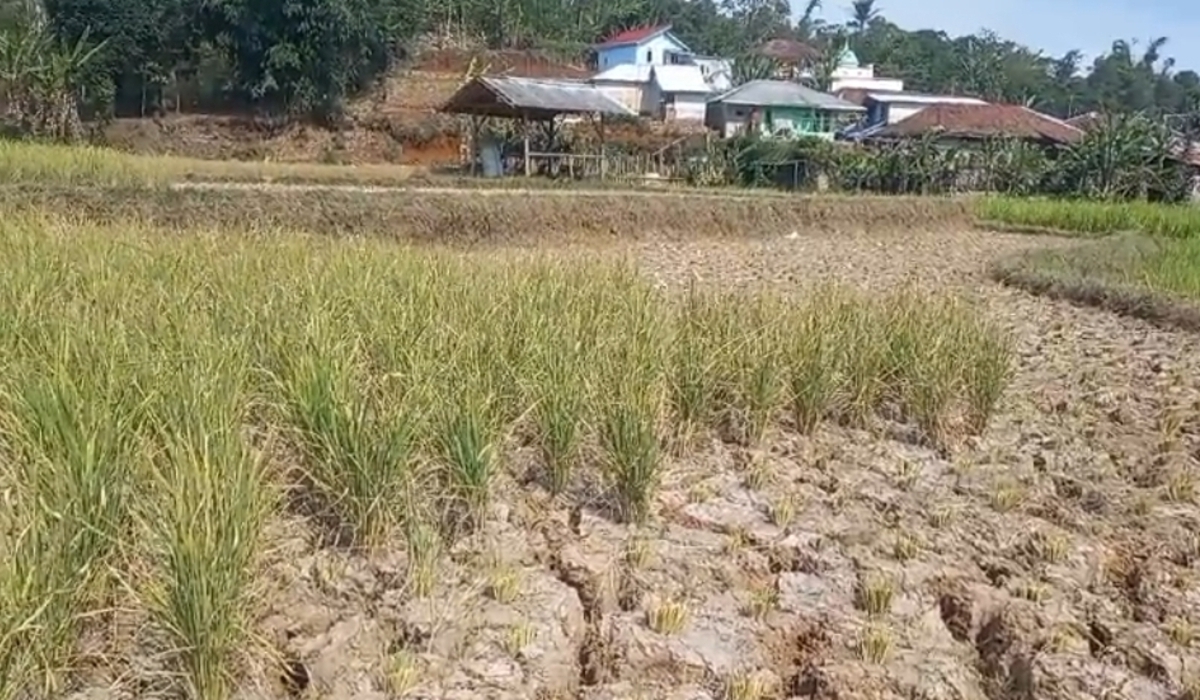
The potential risk of drought in the Ciayumajakuning region, which includes Cirebon, Indramayu, Majalengka, and Kuningan, is continuing to increase. The Head of the Meteorology, Climatology and Geophysics Agency (BMKG) at the Kertajati Meteorological Station, Muhammad Syifa’ul Fuad, explained that the dry season in the Cirebon region is strengthening this August. “The duration of days without rain in most of the Ciayumajakuning region is currently classified as fairly long to very long,” Fuad stated on Thursday (6/8). The recorded days without rain across most of the area vary between 30 and 60 days.
Fuad predicted that rainfall throughout August 2026 in the Ciayumajakuning region would be in the below-normal category. As a result, the potential risk of drought in several areas is increasing. “This condition is influenced by several phenomena, one of which is El Niño, which is currently monitored as active and of strong intensity,” he said. This condition contributes to reduced cloud formation over Indonesian territory, including the eastern part of West Java such as Ciayumajakuning.
Facing the strengthening potential for drought, the BMKG has urged local governments, relevant agencies, and the public to increase vigilance against the various impacts that may arise from a drier-than-usual dry season. For the agricultural sector, farmers are asked to develop strategies for adjusting planting schedules according to current water availability. “Farmers are urged to prioritise the use of plant varieties that are more resistant to drought conditions, optimise the efficient use of irrigation, and conserve water,” Fuad said. Farmers are also asked to increase monitoring of land and crop conditions to reduce the risk of crop failure.
Meanwhile, for the water resources and energy sector, managers of reservoirs, weirs, and retention basins are advised to conduct regular calculations and monitoring of raw water availability. In addition, they should develop strategies to control energy demand during the dry season to anticipate the potential decline in hydroelectric power production. Preparedness for the potential of forest and land fires is also increasing, and thus vigilance must be heightened. “Especially in areas with dry vegetation. Patrols, education, and strict supervision of illegal land burning must be increased,” Fuad stated.