
Drought in Tasikmalaya: 40 Hectares of Rice Fields Fail to Harvest, 230 Hectares at Risk of Crop Failure
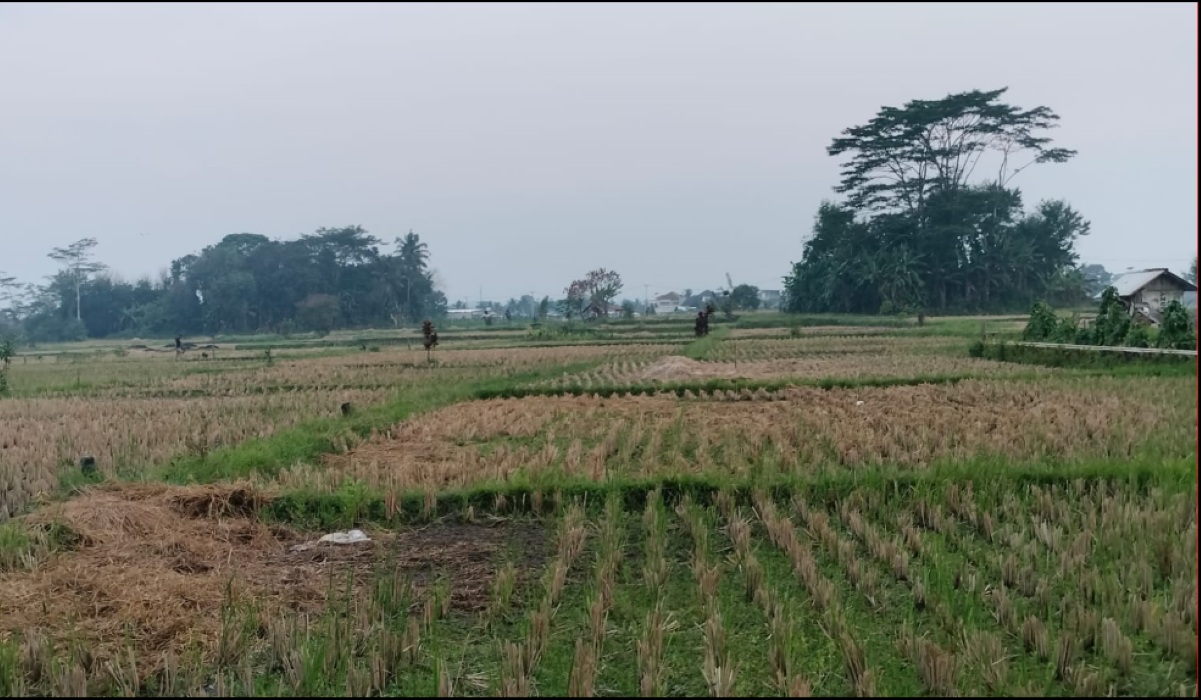
A prolonged dry season hitting Tasikmalaya City, West Java, has begun to have a serious impact on the agricultural sector. At least 40 hectares of rice fields in Cigantang Village, Kawalu District, have been reported to have suffered crop failure, known locally as ‘puso’. Additionally, approximately 230 hectares of land spread across 10 districts are now at risk of planting failure due to the lack of water supply.
The Chairman of the Regional Leadership Council (DPW) of the Indonesian Independent Farmers Movement for West Java, Yuyun Suyud, revealed that the situation in Kawalu District is beyond saving. The rice plants, which had just begun to develop yellowing grains, died prematurely.
“The failed agricultural land in Kawalu District has reached 40 hectares. The condition cannot be salvaged because after planting, the plants turned yellow, produced grains, and then entered an extreme drought, leading to total crop failure,” said Yuyun, commonly known as Abah Uyung, on Tuesday (7/7/2026).
According to Yuyun, similar phenomena are occurring in the Tamansari District, where the affected area exceeds that of Kawalu, as well as parts of Cibeureng District. The drought, which has persisted for the last three months, has forced farmers to abandon their cultivated lands while hoping for micro-insurance for farmer protection.
Besides weather factors, the threat of planting failure across 230 hectares in Tasikmalaya City is also triggered by disrupted water distribution. Yuyun mentioned that the Cikunteun River flow is currently undergoing repairs by the River Basin Organisation (BBWS).
“This failed planting land is spread across Kawalu, Tamansari, Tawang, Cibeureum, Purbaratu, and Indihiang Districts. The repairs to the Cikunteun River flow directly impact the water availability for the 230 hectares of land,” he added. Currently, only about 60 to 70 hectares of land can still be managed through water downstreaming programmes.
On the ground, farmers are working hard to save the remaining crops. Dadang Sutardi from the Sukaraja Farmers Group reported that 10 hectares of land in his area are threatened with planting failure. Some farmers are now heavily reliant on water pump assistance and flows from the Cimere Cimanggung River because permanent irrigation channels are non-functional.
“In Sakaruji Village, Sukaraja, the location is rain-fed. Currently, the condition is relatively safe because there is a scheduled water distribution for 15 to 20 minutes. However, if no rain falls in the next month, planting failure is certain,” concluded Dadang.
Source: jawawa.id (https://jawawa.id/newsitem/drought-in-tasikmalaya-40-hectares-of-rice-fields-fail-to-harvest-230-hectares-at-risk-of-crop-failure-1783421517)
Originally published by Media Indonesia (https://mediaindonesia.com/nusantara/908395/kekeringan-di-kota-tasikmalaya-40-hektare-sawah-puso-dan-230-hektare-gagal-tanam), translated from Indonesian