
Drought Hits IKN Residents in Karang Jinawi Village, PPU, Causing Clean Water Crisis
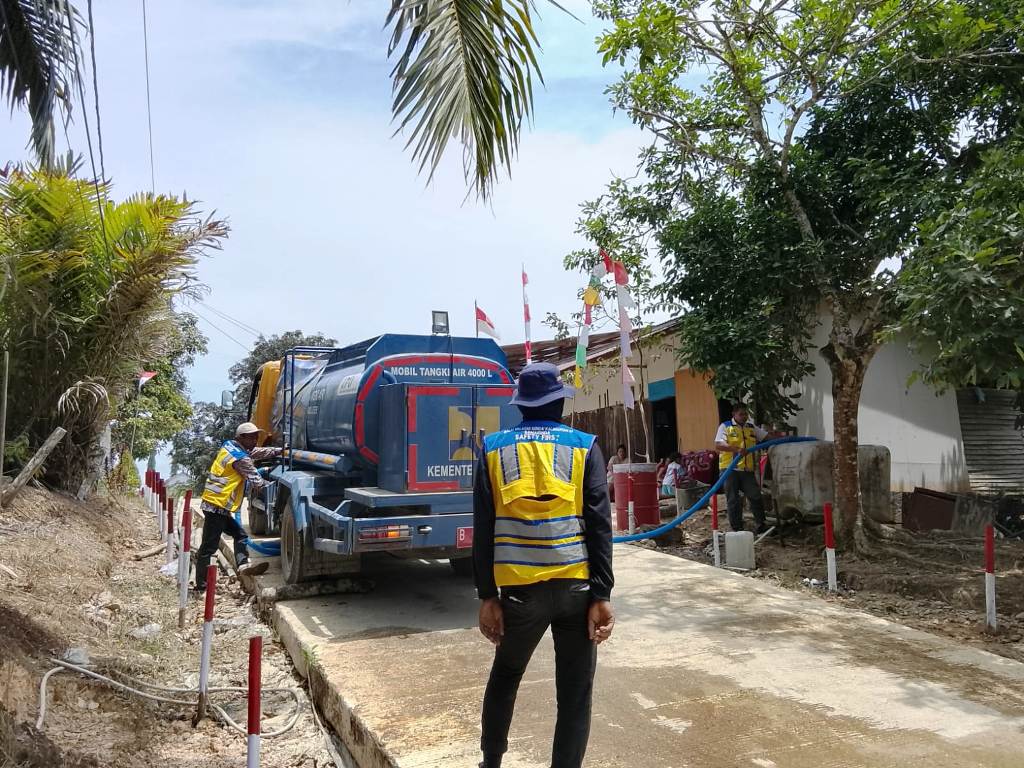
Residents of eight neighbourhood units (RT) living in the Nusantara Capital City (IKN), specifically in Karang Jinawi Village, Sepaku District, Penajam Paser Utara Regency (PPU), East Kalimantan (Kaltim), are experiencing a clean water crisis due to drought caused by this year’s long dry season.
Karang Jinawi Village Head Nur Yamansyah told Media Indonesia on Thursday (20/8) that the village has two hamlets with eight RTs, and all residents in those RTs have been directly affected by the drought and are now facing a clean water crisis, a situation that has persisted for the past month.
He explained that around 80 percent of the village’s residents normally depend on clean water supplies from the river, while the rest use absorption wells. However, due to the dry season, the river has dried up completely and residents’ absorption wells are no longer producing water.
To meet their needs, residents who own motorcycles or cars are forced to fetch water independently from a nearby embung, or small reservoir. But for residents from lower-middle income backgrounds who do not own motorised vehicles, they obtain clean water by purchasing it.
“Residents buy one tank of clean water for Rp100,000 to meet their daily needs,” he said.
He noted that the burden on residents has now been eased thanks to assistance from several parties in the form of clean water distribution. The aid has come from PT Itci Hutani Manunggal (IHM), the PPU Regional Disaster Management Agency (BPBD), the PPU Housing and Settlement Area Agency, and the Kalimantan IV Samarinda River Basin Office (BWS).
“Although we have received clean water assistance, the need for clean water for all residents in the Karang Jinawi area is still relatively high and widespread. Therefore, we request that the relevant agencies continue distributing clean water to our area regularly throughout the dry season,” he pleaded.
Meanwhile, Head of the PPU BPBD, Nurlaila, said that water distribution in Karang Jinawi Village is being carried out in eight RTs, from RT 01 to RT 08. The clean water distribution process is conducted directly to integrated tanks or storage facilities that have been prepared in each RT.
“To date, the total water distributed has reached 11 trips, or around 62,000 litres. We source the water from the embung in RT 02 using a portable machine, which is then supplied to tanker trucks for redistribution,” she concluded.