
Drought hits 10 villages across six districts in Purbalingga
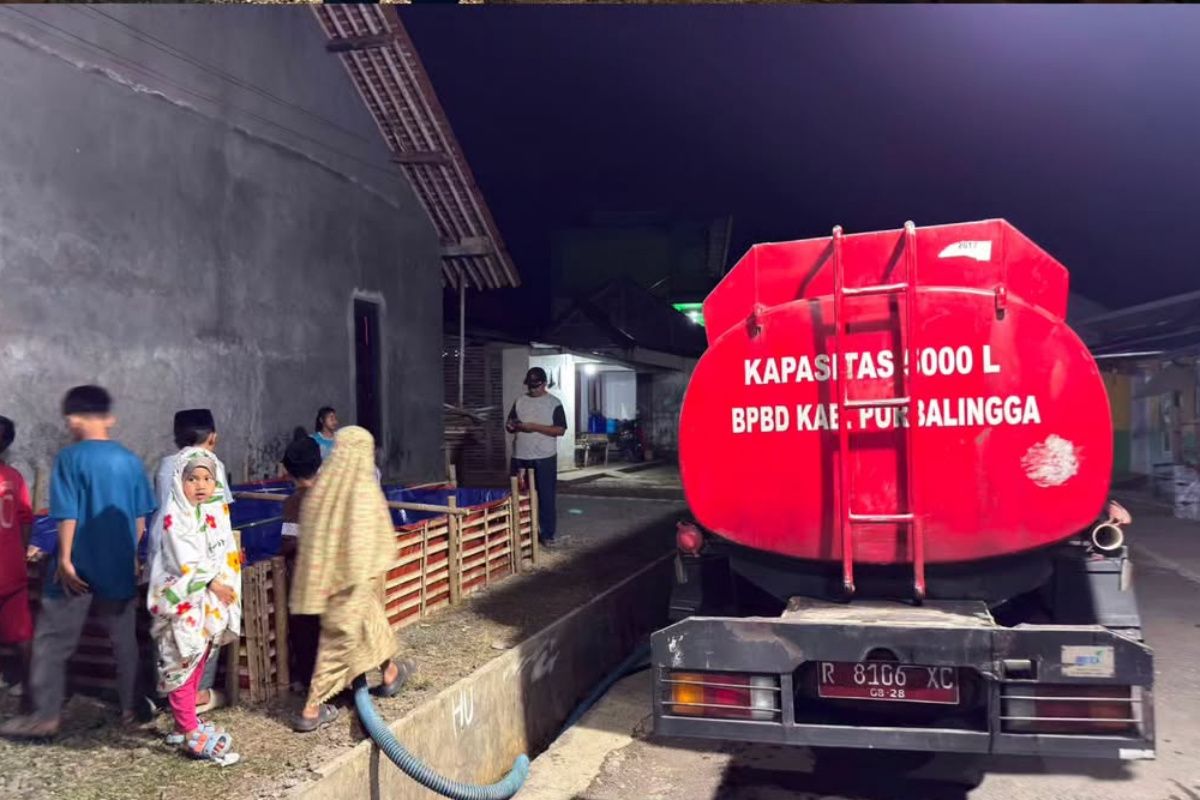
The Regional Disaster Management Agency (BPBD) of Purbalingga Regency, Central Java, has recorded that 10 villages across six districts have been affected by drought, with a number of residents now requiring clean water supplies during the dry season. The six districts are Karangreja, Karanganyar, Pengadegan, Kejobong, Kemangkon, and Rembang. BPBD Purbalingga Chief Executive Revon Haprindiat stated on Monday that the number of affected villages could still increase as the dry season is expected to continue for some time. He noted that several springs in the Purbalingga area have begun to experience a decrease in water discharge, reducing the clean water supply in several regions. In addition to the dry season, some water networks have yet to recover from damage caused by flash floods and landslides in January 2026. This situation means BPBD must continue distributing clean water aid to Serang Village and Kutabawa Village because the water networks in both villages have not returned to normal. BPBD is collaborating with the regional water utility company, Perumdam Tirta Perwira Purbalingga, to provide clean water assistance to affected communities, and the water supply from the company remains sufficient to meet distribution needs. The agency has urged residents to use water wisely during the dry season by conserving clean water, using water as needed, and protecting water sources to ensure availability until the rainy season arrives. In addition to addressing the impacts of drought, BPBD also reminded the public to increase vigilance against the potential for forest and land fires during the dry season. Residents are advised not to clear land by burning, not to discard cigarette butts carelessly, and to ensure fires are completely extinguished after use, especially when active in forest areas or on hiking trails. Mountain hiking routes are considered particularly vulnerable to forest fires because firefighting efforts are difficult due to limited access and minimal water availability in mountainous areas, making prevention the most effective step to minimise the risk of forest and land fires during the dry season.