
Drought Forces Farmers in Subang to Harvest Rice Early
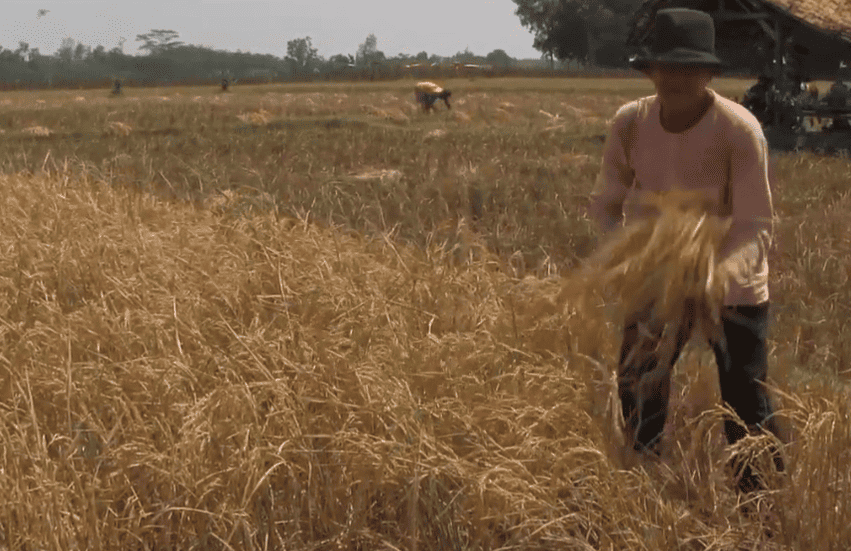
The impact of the dry season has begun to strike the agricultural sector in Subang Regency, West Java. In Ciistal Hamlet, Cimayasari Village, Cipeundeuy District, a number of farmers have been forced to carry out early harvesting of their rice crops to avoid total losses caused by the increasingly severe water crisis.
The situation has been triggered by the status of farmland in the area, which consists of rain-fed paddies. Without a permanent irrigation system, the farmers depend entirely on rainfall, which has yet to arrive during the dry season.
Suhada, a local farmer, said the decision to harvest early was taken because the rice plants had begun to wither and were at risk of dying. “Rice that has dried out and is threatened with dying because there is no water supply has to be harvested to reduce the amount of losses,” he said on Tuesday (28/7).
According to Suhada, the absence of supporting irrigation access is a longstanding problem in his area. Although the farmers have repeatedly proposed the construction of water channels to the Subang Regency Government, there has been no realisation or serious response from the relevant parties to date.
“These are rain-fed paddies, there is no water channel. So we only rely on rainwater. We have already asked for an irrigation channel to be built, but there has been no response,” Suhada complained.
The decision to harvest early has had a direct impact on a drastic decline in production output and farmers’ income. Under normal weather conditions with sufficient water supply, Suhada’s land is capable of producing 2 to 3 tonnes of rice. However, as a result of the drought, this harvest has plummeted sharply, causing financial losses.
According to data from the Subang Regency Government, the impact of the drought has spread to at least 45 villages across 15 districts. The total area of paddy fields experiencing drought across the whole of Subang has now reached 1,348 hectares.
This situation is a heavy blow to farmers in Cipeundeuy. They strongly hope the government will soon provide a long-term solution, particularly the construction of irrigation infrastructure, so that their land no longer depends on unpredictable weather conditions.