
Drought Disaster Affects 15 Regencies and Cities in West Java
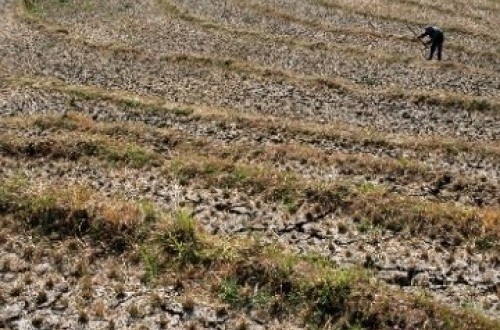
The West Java Provincial Regional Disaster Management Agency (BPBD) reported that 15 regencies and cities in West Java have been affected by a drought disaster. In detail, 89 sub-districts across these 15 regencies and cities are experiencing drought conditions. “The areas affected by drought are 89 sub-districts in 15 regencies and cities in West Java,” said Hadi Rahmat, Public Relations Expert of the West Java BPBD, when confirmed on Tuesday (28/7/2026). Of the 15 affected regencies and cities, he mentioned that Bogor Regency was the most impacted, with 24 sub-districts experiencing drought. This was followed by Tasikmalaya Regency with 12 affected sub-districts and Bekasi Regency with 9 affected sub-districts. Meanwhile, the number of affected residents reached 61,505 families or 205,567 individuals. Amidst the drought conditions, the agency continues to distribute clean water to the affected areas. “4 million litres of clean water have been distributed to the 15 regencies and cities,” he said. Hadi added that visible signs of drought in the 15 regencies and cities include low rainfall, dry and cracked soil, reduced water sources from wells and springs, crop failure, and disruption to community activities. On the other hand, the Bandung Meteorology, Climatology and Geophysics Agency (BMKG) urged the public to be vigilant against extreme cold weather in the Greater Bandung area during the dry season. The lowest air temperature was recorded at 16 degrees Celsius. Acting Head of BMKG Bandung Edi Wibowo stated that the Greater Bandung area entered the early dry season in July. Furthermore, extreme cold temperatures tend to occur during the dry season, from night until morning. “During the dry season, in the daytime, the sun’s rays are at their maximum because there is little or no cloud cover, resulting in the earth’s surface receiving maximum radiation,” he said on Tuesday (28/7/2026). At night, he continued, the earth releases energy. Because there are no clouds, Edi said that at night until early morning, the radiation stored on the earth’s surface is released to the maximum. “This condition then causes the earth’s surface to cool rapidly because it loses energy maximally. The impact is minimum temperatures or extreme cold air at night until early morning,” he said. Additionally, a contributing factor to the cold air during the dry season is the winter season in Australia. A relatively high air pressure pattern in Australia causes the movement of cold air masses towards Indonesia, better known as the Australian monsoon wind. “Which is also the main cause of the dry season in Indonesia. This Australian monsoon wind carries cold and dry air from the Australian region to the Indonesian region, which is located in the southern hemisphere,” he said. Edi added that the minimum temperature in Bandung City was recorded at 16.6 degrees Celsius on 26 July 2026.