
Drought and Soaring Fertiliser Prices: These Asian Countries Face Food Crisis Risks
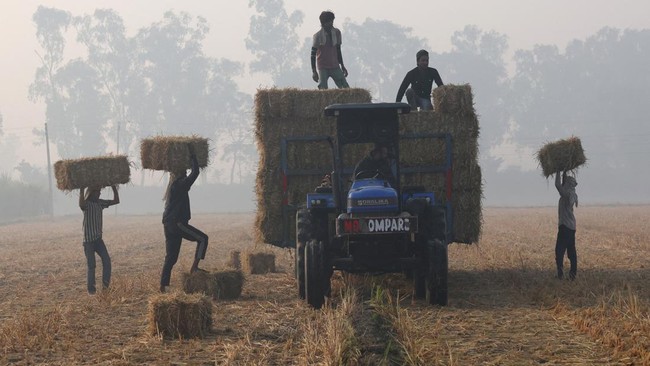
Jakarta, CNBC Indonesia — The threat of a food crisis is once again looming over Asia. A strengthening El Niño is causing drought in several countries, while surging energy and fertiliser prices amid conflict in the Middle East are adding to pressure on agricultural production.
The impact is beginning to emerge in various areas. In Cambodia, about two tonnes of dead fish were found floating in a lake in May. In Indonesia, falling lake levels have revealed the ruins of Somang Village, which had long been submerged. The Philippines, meanwhile, has warned of possible cuts to water supplies for Manila residents.
According to The Economist, the El Niño phenomenon, which developed from May 2026, is expected to peak towards the end of the year. The World Meteorological Organization (WMO) forecasts that it could last until February 2027.
Asia is among the regions most vulnerable to food insecurity, as hundreds of millions of people still depend on agriculture. Reduced rainfall can disrupt food production just as farmers face rising energy and fertiliser costs.
Drought spreads, threatening food production
Several Asian countries are already feeling the pressure on their agricultural sectors. India has recorded monsoon rainfall around 13% below normal, making this its driest monsoon season in a decade. The season accounts for nearly 70% of India’s annual rainfall.
In the Philippines, seven provinces have experienced drought, and the government has warned that conditions could spread until early 2027.
Indonesia faces similar risks. According to data from the Meteorology, Climatology and Geophysics Agency (BMKG) as at 13 October 2026, the ENSO index stood at +3.08, indicating a very strong El Niño.
Forest and land fires are also a concern. The Ministry of Forestry recorded 202,004 hectares affected by fires between January and July 2026, a 69% increase on the same period the previous year.
Indicative data from the National Disaster Management Agency (BNPB) as at 14 October 2026 showed that about 96,058 hectares had burned across six priority provinces, with the largest area in West Kalimantan at 38,311 hectares.
Risks to agriculture are also rising. BMKG forecasts that the start of the rainy season will be delayed across about 61.08% of Indonesia’s land area, potentially disrupting planting schedules and the availability of irrigation water.
Thailand is facing similar pressure. Dwindling water reserves have led the government to ask farmers in the central region not to plant a second rice crop. Krungthai Bank estimates that Thailand’s rice production could fall by 18% through mid-2027.
Fertiliser prices rise as food inflation looms
The drought threat comes as Asian farmers face higher production costs due to the conflict in the Middle East.
According to The Economist, the World Bank expects average fertiliser prices in 2026 to rise by 38% compared with the previous year. Disruptions to fuel and fertiliser supplies are increasing agricultural costs, while dry weather threatens harvests.
The pressure is beginning to show in food inflation. In India, annual food inflation rose from 2.1% in January to 6% in August 2026. In Sri Lanka, food inflation reached 7% in September.
The issue is not only price but also food availability. According to US Department of Agriculture (USDA) data cited by The Economist, Bangladesh’s rice reserves amount to less than 4% of its annual consumption.
This means disruptions to production or higher import prices could be harder to manage in countries with limited food reserves.
Which Asian countries are most vulnerable?
To assess the impact, The Economist compiled an El Niño vulnerability index covering 11 developing countries in Asia.
The index considers the extent to which economies are exposed to agriculture, as well as governments’ capacity to cushion the impact through food reserves, public debt conditions and the reach of social protection.
Sri Lanka, Bangladesh and Cambodia emerged as the most vulnerable countries. Thailand and Malaysia, by contrast, have relatively greater resilience.
The effects vary between countries. In India, the main risk is to farmers’ incomes as harvests are disrupted. In the Philippines and Bangladesh, consumers are more vulnerable to rising food prices.
Risks also extend to the energy sector. The Asian Development Bank (ADB) has warned that drought could reduce hydropower generation.
At the same time, higher temperatures increase demand for air conditioning, potentially driving up coal use and adding to energy costs.
Risk of poverty and pressure on public finances
The economic impact of El Niño could last longer than the drought itself.
A study of the 1997 El Niño estimated that global economic losses reached nearly US$6 trillion over the following five years, with Asia bearing much of the impact.
The United Nations (UN) also estimates that food and energy price shocks this year could push an additional 132 million people worldwide into poverty if rising costs are passed on to households in full without government protection.
About 91 million of them would be in Asia.
This presents governments with the challenge of keeping food affordable despite limited fiscal headroom. Subsidies and social assistance can help, but require greater funding if the pressure persists.
Can governments contain the crisis?
Despite the growing risks, governments still have time to take preventive action before El Niño peaks.
India has begun encouraging farmers in dry areas to switch to crops that require less water, such as pulses. The Philippines is also distributing drought-resistant seeds.
Alongside strengthening rice reserves and irrigation, governments need to arrange disaster-response funding in advance.
One approach considered effective is anticipatory action: releasing assistance based on early-warning indicators, such as rainfall forecasts or falling reservoir levels.
According to the UN, every US$1 spent on anticipatory measures could save up to US$7 in losses and post-disaster assistance needs.
Funding remains limited, however. In June 2026, the World Food Programme (WFP) and the Food and Agriculture Organization (FAO) requested US$202 million to protect 8.8 million people in 22 countries. By the period covered by The Economist, only US$40 million had been raised.
In Indonesia, rice supplies are currently relatively secure. Perum Bulog recorded stocks of about 4.48 million tonnes as at September 2026, while national paddy production continues to follow a seasonal pattern, with the harvest peaking early in the year.
Even so, a strengthening El Niño towards the end of 2026 could disrupt the next planting season. Strengthening irrigation, managing rice reserves and assisting farmers will therefore be important to protect production and stabilise food prices in 2027.
Ultimately, the success of efforts to deal with El Niño will depend not only on the ability to forecast drought, but also on how quickly governments act before production disruptions turn into a food crisis.
Source: jawawa.id (https://jawawa.id/newsitem/drought-and-soaring-fertiliser-prices-these-asian-countries-face-food-crisis-risks-1792140825)
Originally published by CNBC Indonesia (https://www.cnbcindonesia.com/research/20261015125917-128-776463/kekeringan-harga-pupuk-melonjak-ini-negara-asia-rawan-krisis-pangan), translated from Indonesian